
Dark Fall Nail Ideas 2026: Purple, Chrome, and Deep Color
A dark manicure can look powerful in the first glance and disappear in the next. Indoor light, a ring, or a folded sleeve may turn a carefully chosen shade into a single heavy patch, leaving the hand flatter than intended. The trick is not to add more drama; it is to give darkness one visible point of tension so the surface keeps its depth when the hand moves.
Choose that point before you choose the final length. Ask where the eye should land, how much empty surface should remain around it, and whether the shape can carry the decision through ordinary gestures. When the answer is clear, the manicure feels deliberate even if the rest of the hand stays quiet, and maintenance becomes part of the choice instead of an unpleasant surprise.
Purple Curves on a Sharp Black Canvas
Long stiletto nails give the purple-black design room for its dense curling pattern. The visible surface is saturated with violet panels and black ornamental lines, so the eye follows the curves from the base toward each pointed end instead of reading one flat block of color. A dark solid accent keeps the pattern from becoming identical everywhere, while the pale sleeve makes the contrast feel even more deliberate.
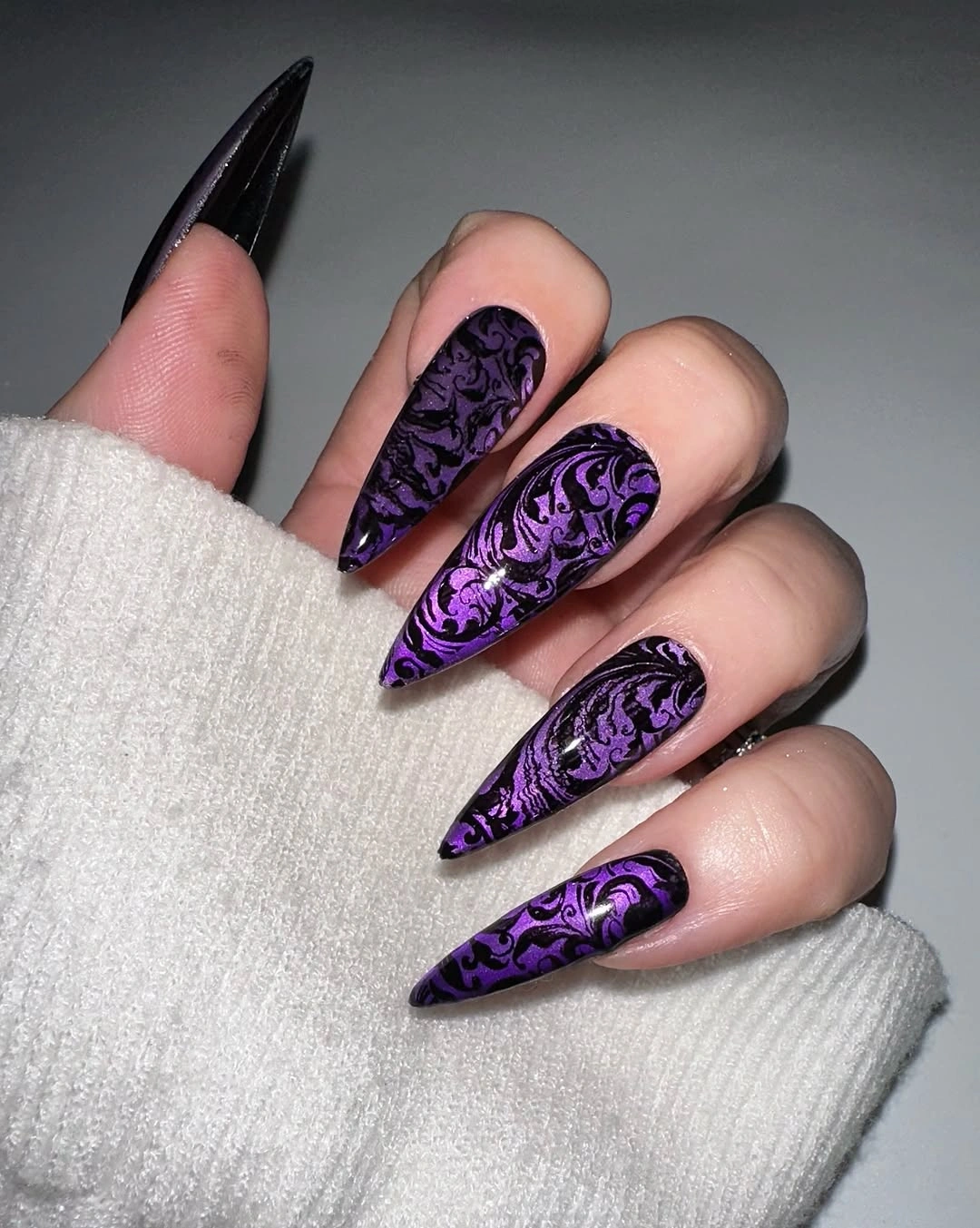
The appeal comes from tension between a severe silhouette and a decorative interior. The point makes the design feel elongated, but the rounded curls soften that direction and give the manicure an almost textile-like rhythm. If you want the same after-dark energy with less commitment, keep the violet-black contrast on medium almond nails and allow only one or two fingers to carry the full linework.
This is a look to choose when you enjoy detail that remains visible from a distance, yet it is not the easiest option to maintain. Fine curves can lose their clarity as the free edge grows, and a sharp tip makes small chips noticeable. A shorter version should preserve the dark base and one concentrated purple accent rather than trying to squeeze every curl into a smaller canvas.
Fractured Silver Through Charcoal Shine
Here the dark palette is built from charcoal, black, and reflective silver rather than one dominant color. Long pointed nails carry cool pale strokes, smoky sections, and small crack-like marks that interrupt the gloss in different places. The arrangement feels dimensional because the reflective parts catch the light while the darker panels hold the manicure together and stop it from becoming a purely metallic surface.
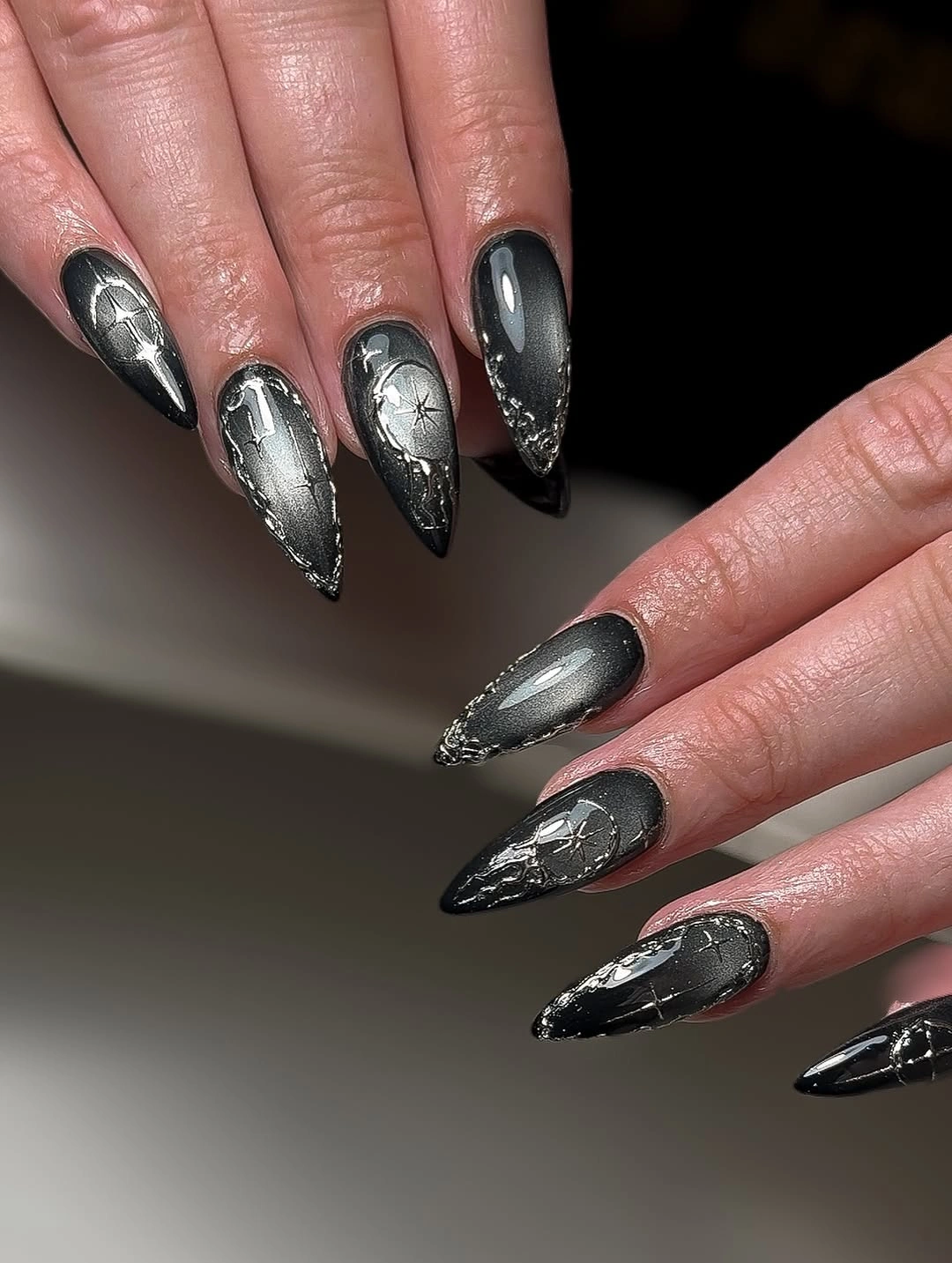
The shape matters because every silver mark is given a narrow lane along the point. That creates a broken, almost mineral-like rhythm without requiring a repeated motif on every nail. A softer interpretation would use a charcoal base with silver on two accent nails, or move the same contrast onto a shorter almond shape where the reflective detail stays visible without making the silhouette the whole story.
Reflective designs reward a smooth, even surface because highlights reveal dents and rough edges immediately. They also ask for a little restraint in styling, since jewelry or heavily patterned clothing can compete with the pale marks. If you prefer the mood of dark fall nails but want less visual fragmentation, leave several nails plain charcoal and place the fractured detail only where your hand naturally becomes the focal point.
Red Flame Lines Against Deep Burgundy
Red and burgundy create a warmer kind of darkness here, with glossy rounded almond nails carrying pale flowing lines. Some surfaces are vivid red, others lean toward deep brown-black, and the light curves loop across them like a controlled flame or vein pattern. The design remains readable because the pale marks are thin and directional, rather than filling the red with a second dense illustration.
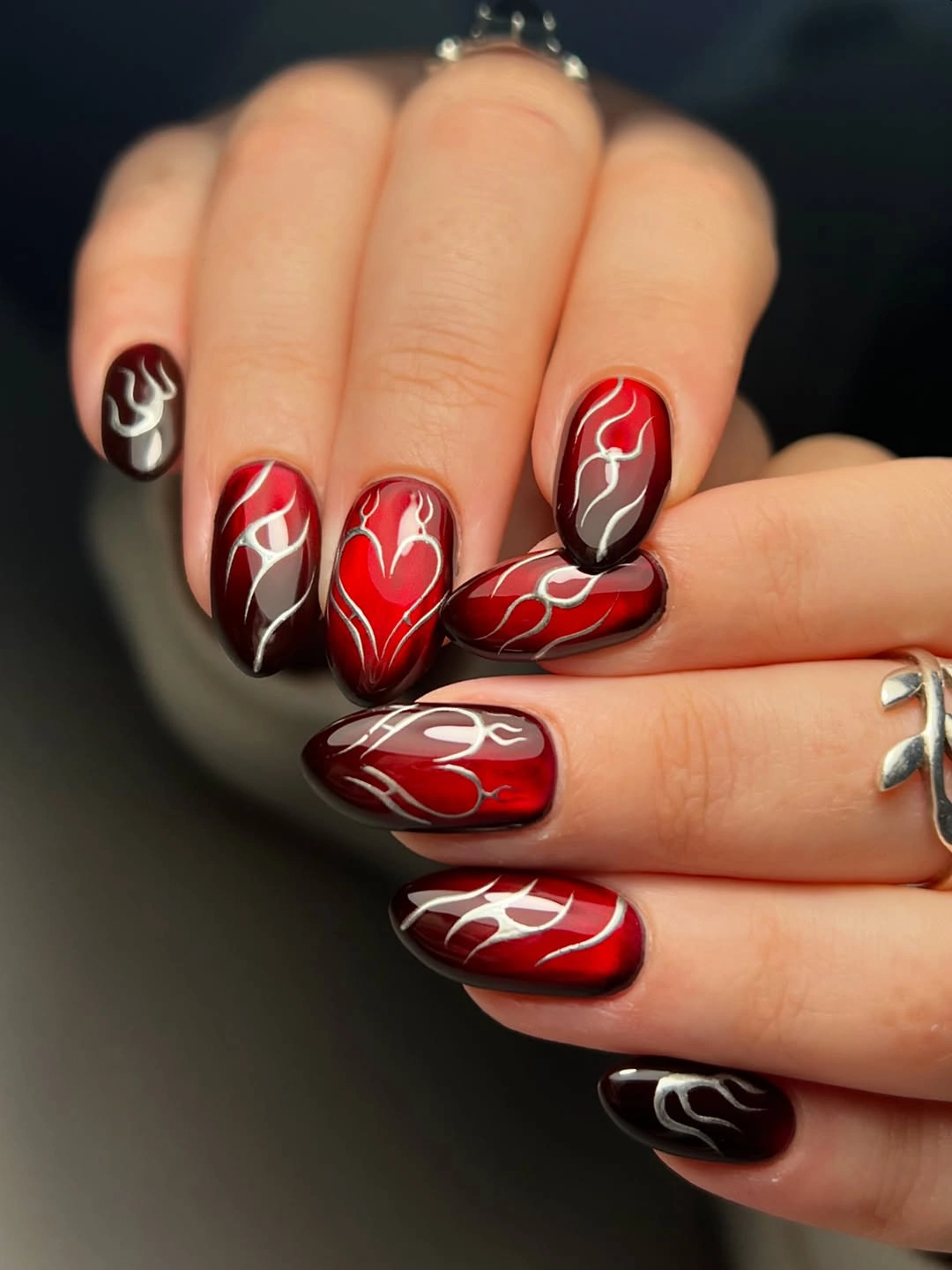
The strongest decision is the relationship between the base colors. The red gives the hand a point of warmth, while the darker nails create relief so the pattern does not become uniformly bright. For a calmer adaptation, keep the pale linework on two fingers and use a single blackened cherry shade elsewhere; the contrast will still feel intentional, but the manicure will read more quickly in everyday light.
Curved detail near the tip has a practical limit because grow-out changes the spacing that made the lines feel balanced. Ask for the most important loops to sit closer to the center of the nail, where they have more breathing room, and choose a rounded almond or short squoval if you want less maintenance. The result keeps the warmth of burgundy fall nails with design without relying on maximum length.
Quiet Plum with a Hidden Sparkle
These dark plum nails do not need a painted motif because the color shifts gently between nearly black and a subtle burgundy glitter. The medium almond outline softens the depth, and the fine sparkle appears only when the hand catches the light rather than announcing itself across the whole surface. It is a useful example of how one finish change can give a solid manicure more atmosphere without adding visual clutter.
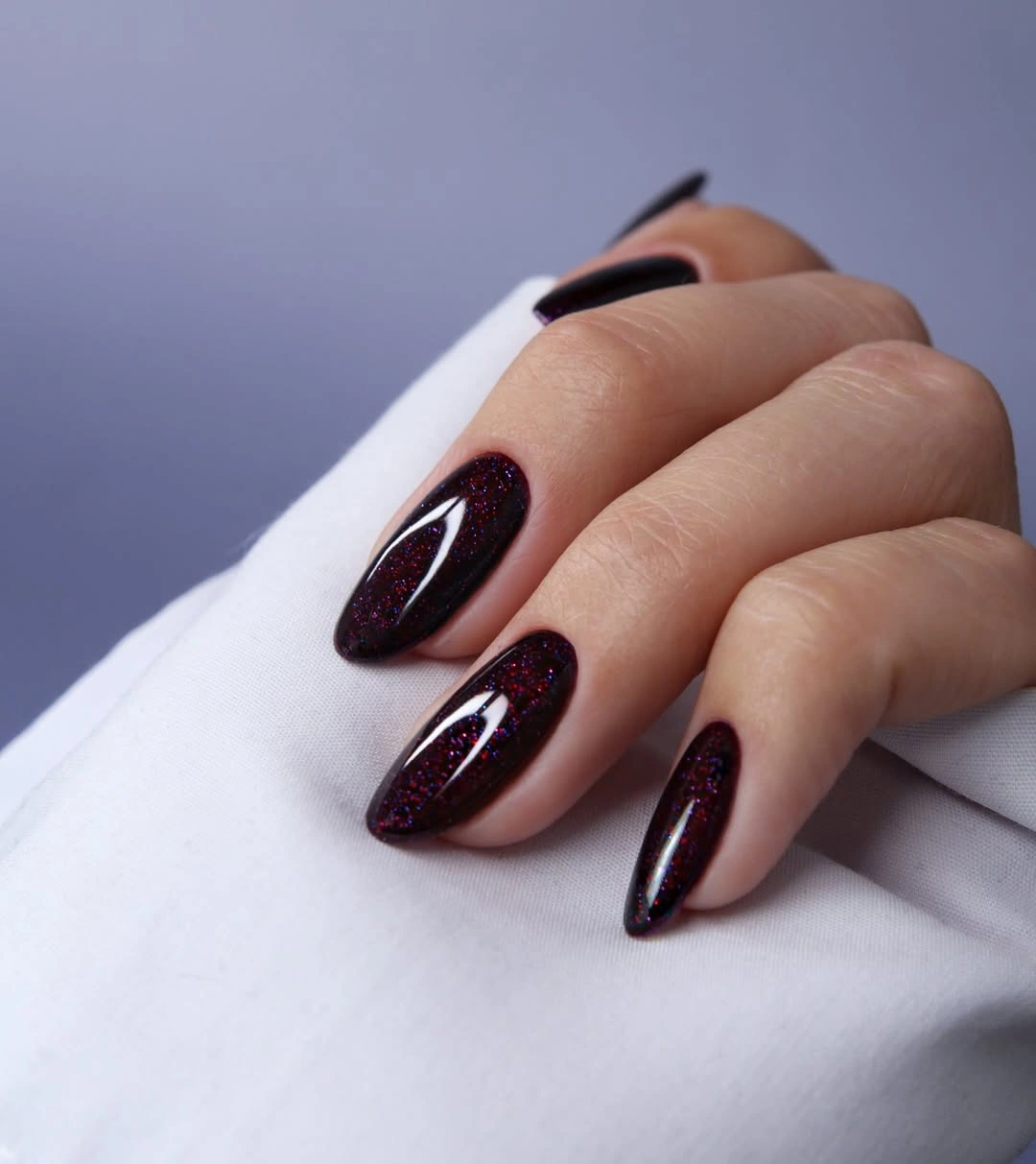
The understated surface works because the silhouette remains clean and the color is allowed to stay almost uninterrupted. A short almond or rounded shape would keep the same quiet depth, especially if you prefer a polished look that can move between casual clothes and darker evening pieces. The key is choosing a plum with enough tonal variation to avoid looking flat, not piling on extra decoration.
Very dark polish makes the edge of every chip more visible, so neat preparation and regular attention to the tips matter more than a complicated design would suggest. If the nails are short, keep the glitter fine and the finish glossy so the surface catches a little light. This is the place to pause between busier ideas and let a single deep color do the visual work.
Gold Stripes Lengthening Dark Brown
A dark brown nail crossed by two narrow gold-looking vertical stripes creates a much more measured kind of drama. The lines follow the length of the nail, so they reinforce the direction of the pointed shape instead of cutting it across with a horizontal border. Because the brown base remains visible on both sides, the metallic detail reads as a slim architectural accent rather than a full glitter finish.
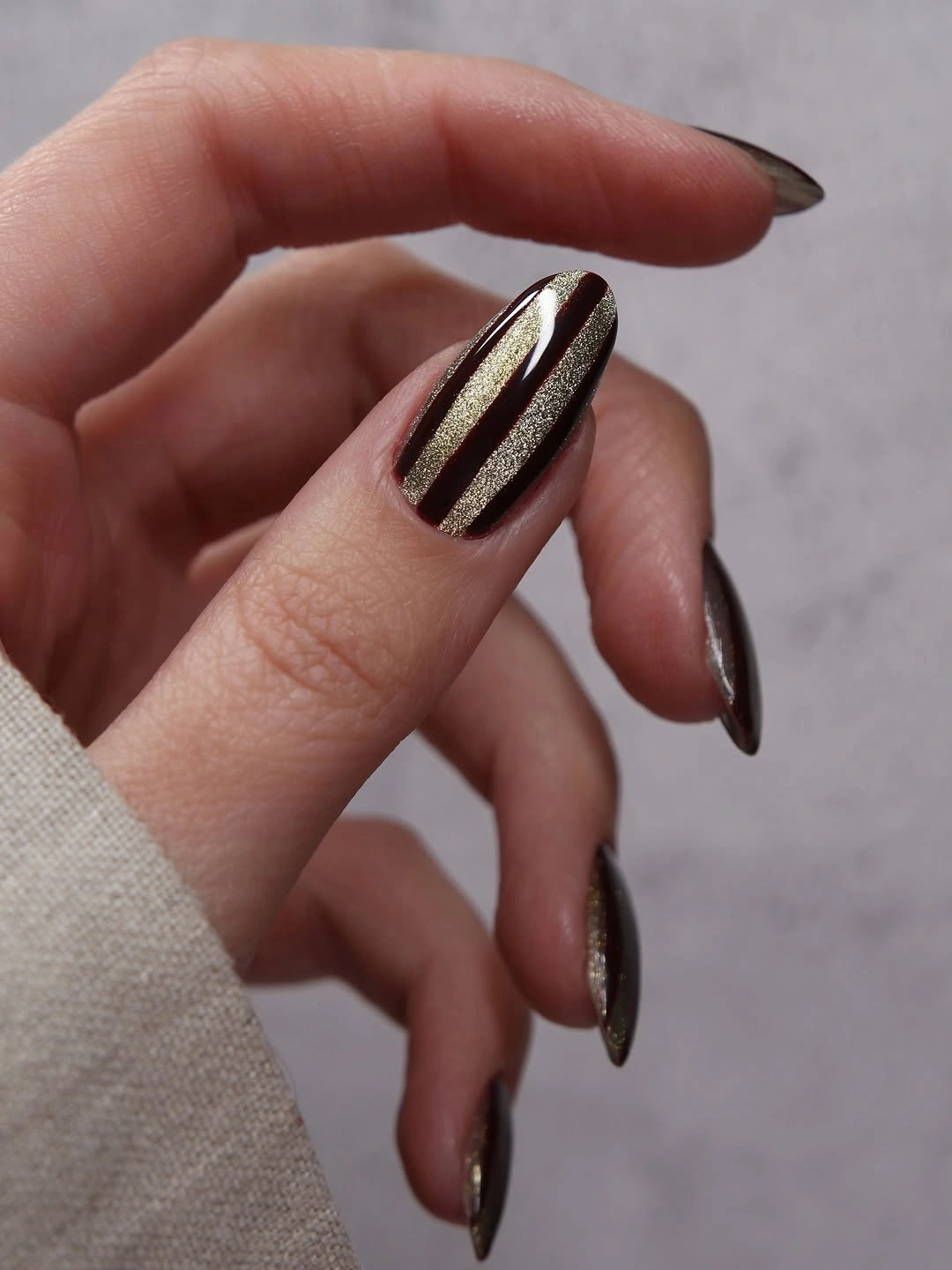
Vertical placement is doing the practical styling here. It makes the nail appear longer and gives the eye a clear path, but it also means the spacing has to stay clean from base to tip. On a shorter oval or almond, one central stripe can preserve the idea with less pressure on precision; two parallel lines are best reserved for the nails with enough surface to keep them distinct.
The design is especially easy to pair with warm metals because the gold note echoes a ring without copying it. Keep the rest of the hand in espresso, brown-black, or another quiet dark tone so the stripes remain the focal point. Narrow lines can expose small shifts as the manicure grows, so a simpler single stripe may be the more comfortable choice if you want the look to last between appointments.
Mixed Dark Finishes with One Red Thread
This set earns its interest through variation: one nail is black and textured, another is rounded burgundy, and red surfaces carry darker borders with a slim glitter-like accent. The colors belong to the same deep family, but the finishes keep the hand from looking repetitive. Instead of forcing every finger into one pattern, the manicure lets texture, shine, and placement share the work.
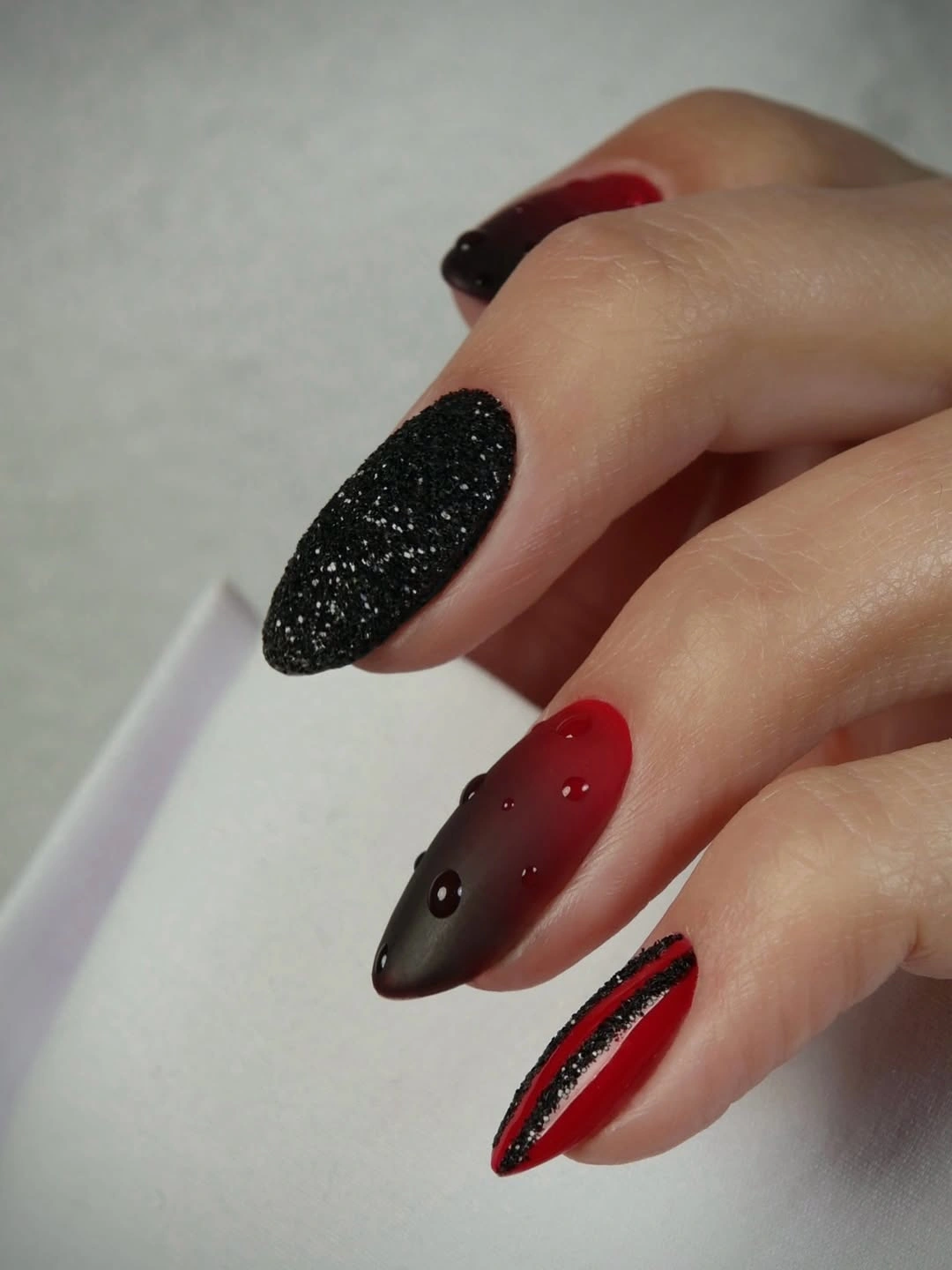
The mix feels balanced because no single bright red nail is left without a darker neighbor. That creates a steady visual rhythm across the hand and makes the design easier to adapt than a full set of elaborate details. For shorter nails, keep the glossy burgundy and textured black, then use red only once; the palette will remain fall-ready while the composition gets more breathing space.
Several finishes usually require more attention than a uniform color because each surface shows wear differently. Texture can catch the light beautifully but may make a small rough patch more apparent, while the narrow red accent can lose its clarity at the edge. A two-finish edit is the sensible fallback when you want a dark manicure without making every finger a separate maintenance task.
Plum Magnetic Glow on Shorter Ovals
Short oval nails can still carry a rich after-dark effect when the center of each surface holds a bright purple-pink glow. The base stays deep, while the reflective band moves through the middle and leaves the edges darker, giving the manicure a softly lit appearance without a painted motif. The compact shape is important because it keeps the glow approachable instead of turning it into a length-first statement.
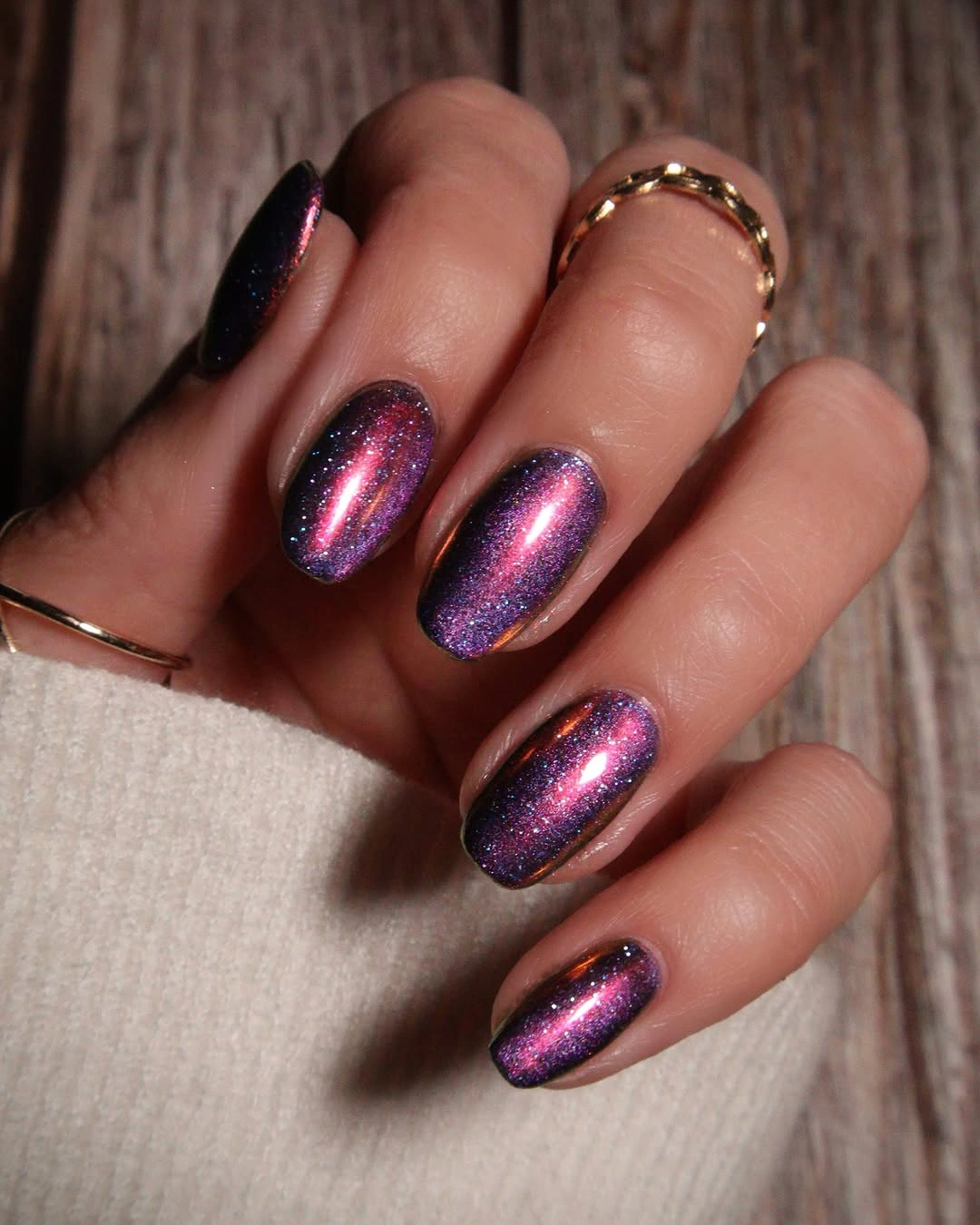
Centered reflection works as a visual guide, drawing attention down the nail and making the short outline feel deliberate. A berry or blackened plum base would preserve the same contrast if you prefer less violet, and the effect can stay on two accent fingers while the rest remain a quiet solid shade. That kind of placement keeps the light from competing with every ring or sleeve.
The surface needs to remain even for the centered band to look intentional, so small dents or uneven shine may become more visible than they would on a creamy solid. Keep the glow controlled rather than adding stones or linework, and the manicure will retain its atmospheric quality. This is a good compromise when you want reflective color but do not want to commit to long points.
Emerald Reflection on Dramatic Points
Long green stiletto nails turn the color itself into a moving surface. Deep emerald shifts toward blue-green and lighter reflective tones as the hand changes angle, while the smooth finish leaves the points completely clean. The lack of painted decoration is a strength here: the silhouette and color movement create enough information, so adding motifs would only interrupt the reflective flow.
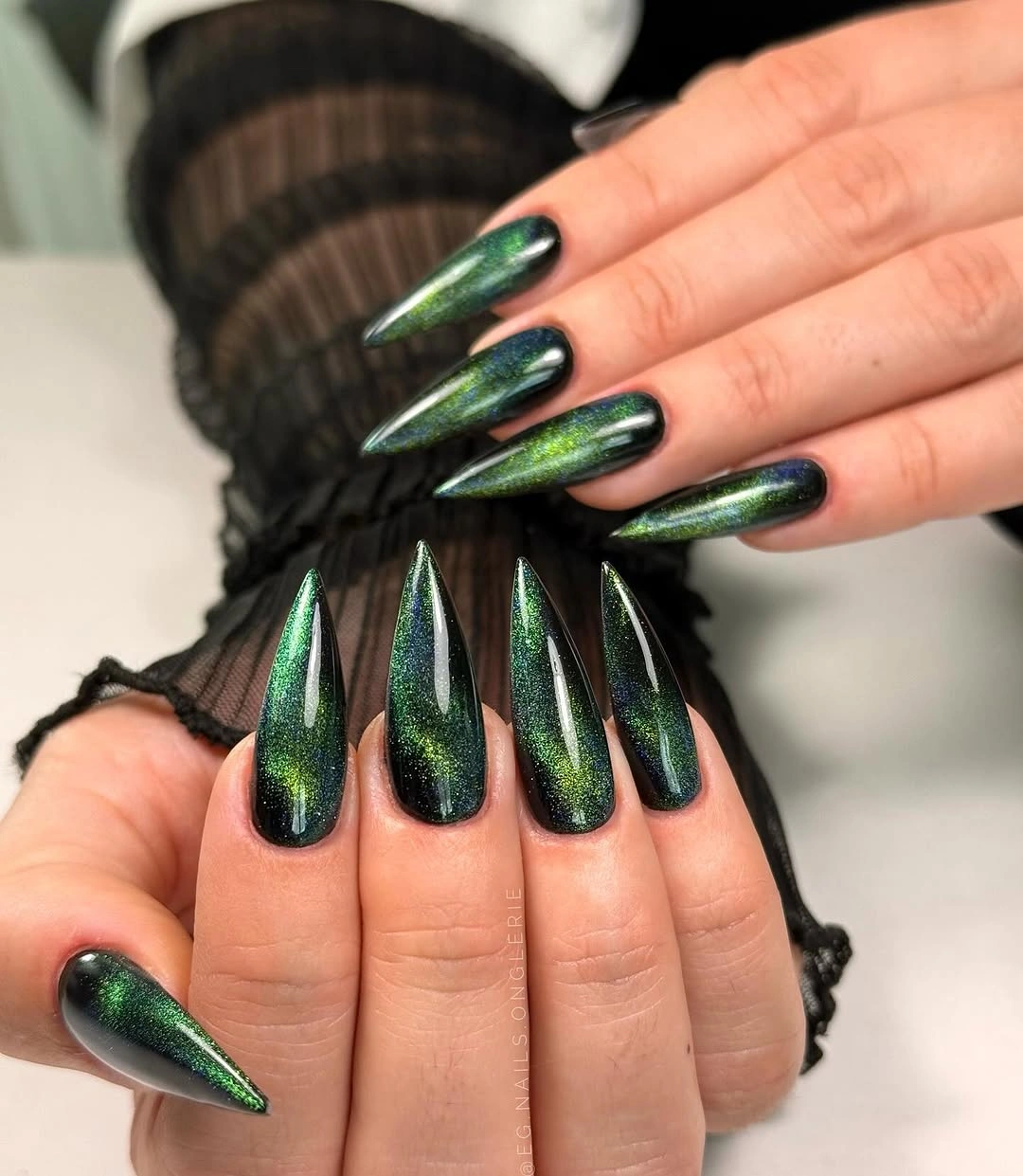
The long point gives each green transition a narrow, elegant lane, making the manicure feel sharp even though the color is jewel-like. If the silhouette feels too demanding, a medium almond will carry the same emerald shift with less visual weight and better daily tolerance. A shorter oval can also make the color feel calmer, particularly when the rest of the outfit already has a strong texture.
Reflective surfaces show uneven application and edge damage immediately, and long points create a practical commitment beyond the color itself. Keep the styling around them simple when you want the green to remain readable, and consider a single reflective finish rather than adding metallic accents. The result is strongest when the eye can follow the color change from base to tip without interruption.
Deep Green Curves with Jewelry-Like Accents
Deep emerald nails become more ornamental when rounded green panels meet gold and pale silver accents. Some fingers stay glossy and dark, while others carry curved metallic-looking shapes that echo the jewelry around the hand without turning the manicure into a matching set. The almond length leaves enough space for the curves to feel intentional, and the dark base prevents the accents from looking scattered.
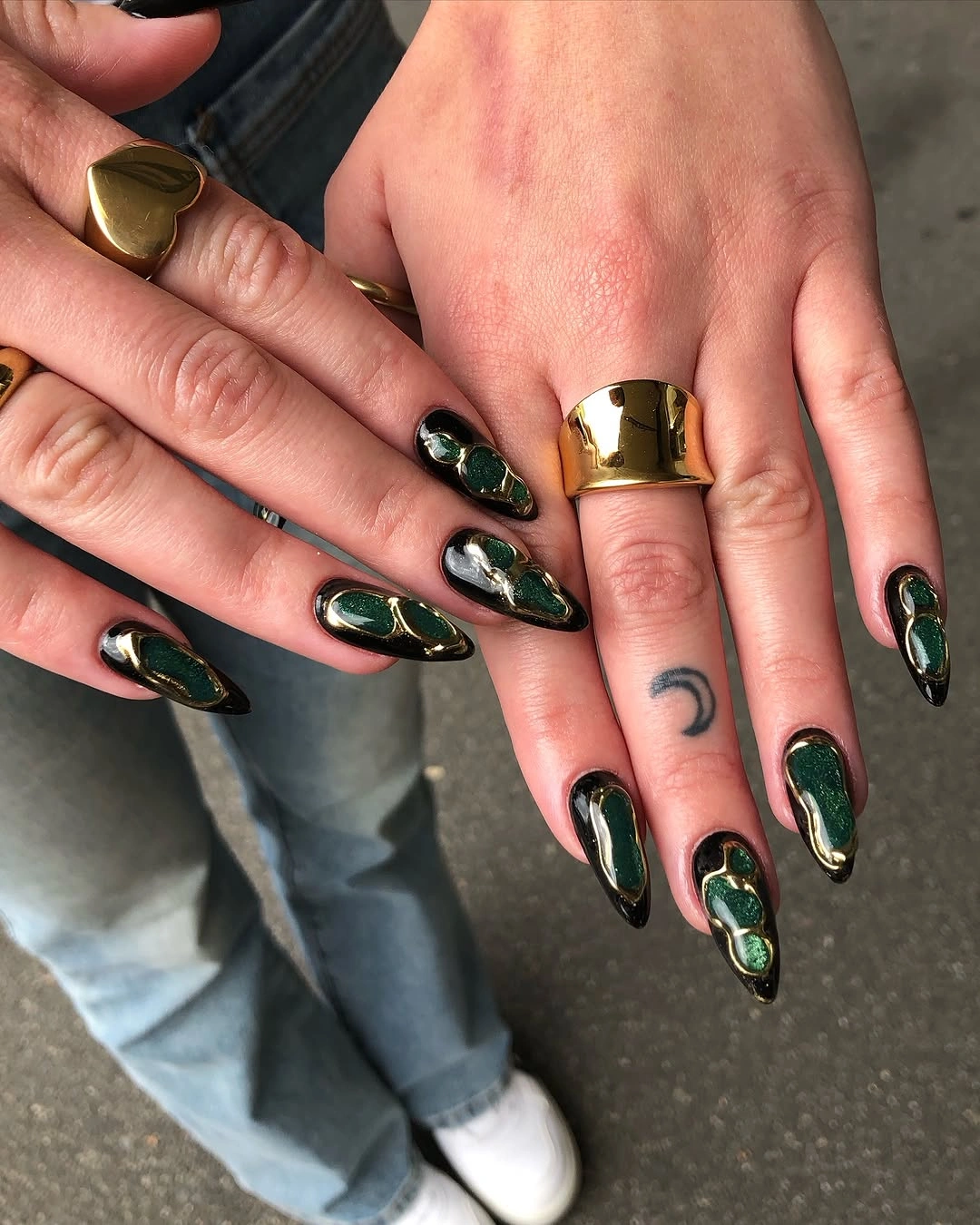
Curved placement softens the pointed outline and gives the eye a place to rest, especially when one hand is shown with several rings. The practical adaptation is simple: keep the green base on every nail and place one metallic curve near the side of two fingers. That preserves the jewelry-like idea while reducing the number of small areas that need to stay crisp as the manicure grows.
The tradeoff is attention. Metallic accents and dark gloss can draw focus to every edge, and any raised-looking detail may feel less comfortable around fabric or hair. If you want the richness of fall green nails with a calmer finish, use one muted gold line over an otherwise plain emerald set and let the color carry the rest.
Autumn Color Patches on Black Almonds
These almond nails use a very dark base as a frame for irregular patches in muted green, burgundy, cream, and purple. The colored areas resemble a small autumn collage because they repeat across the hand without forming one literal motif. Their edges remain organic and varied, which keeps the manicure from looking like a strict grid or a flat multicolor print.
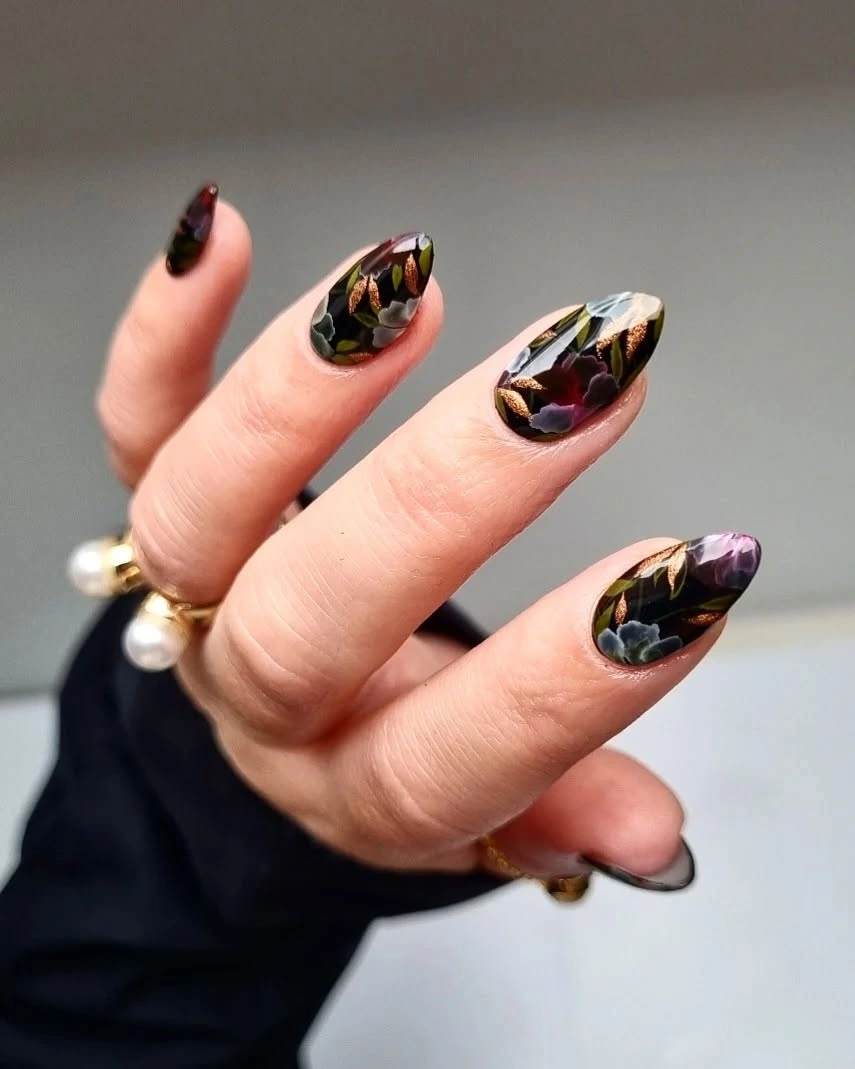
The dark background is what makes the softer colors feel dimensional. Each patch gets a clear boundary, but the glossy surface still allows the colors to blend visually when the hand moves. For a wearable edit, choose two patch colors and reserve the full collage for two accent nails; that gives shorter nails enough open space to keep the color differences legible.
Irregular color placement is forgiving in one way and demanding in another. It does not need every nail to match exactly, but small patches can lose their identity if the nail is too short or if the finish becomes dull. Keep the base deep and let the accent colors stay muted rather than adding more saturation, especially if your clothes already carry a print.
Black Squares with Silver Lace Texture
Long square nails turn black and pale gray into a structured surface that feels closer to lace than to a simple print. Several nails carry dense repeating texture, while others stay glossy black and let the patterned squares breathe. The large ring adds sparkle around the hand, but the manicure remains central because its contrast and texture are strong enough to hold attention on their own.
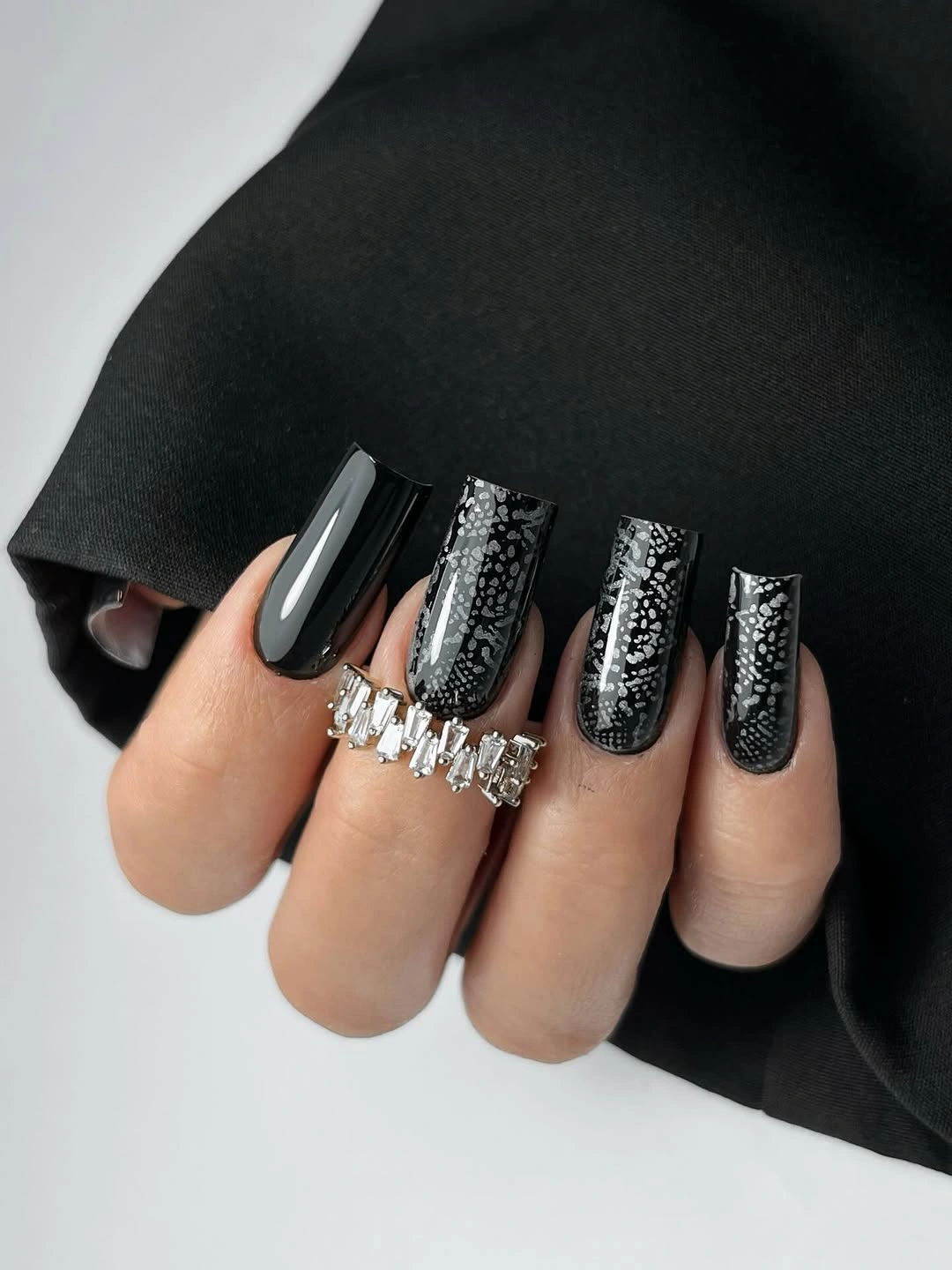
The square silhouette acts like a frame for the pale pattern, giving the repeated marks a stable edge and making the hand look deliberately graphic. On shorter nails, use the texture on one or two fingers and keep the rest black; a smaller amount of pattern will read more clearly than trying to scale every tiny mark down. Matte black could soften the contrast, but gloss makes the pale details pop.
Dense texture changes the maintenance conversation because it makes chips, rough corners, and uneven edges easier to spot. Long square corners also demand more awareness around knitwear and hair. Choose this direction when you enjoy a strong silhouette, and scale the pattern back when the priority is a manicure that can move quietly through a busy week.
Teal Panels with Repeating Green Lines
Deep teal nails are divided by pale green curves and small reflective sections that create a repeated cell-like pattern. The design is more organized than a freeform marble, but the lines are not so rigid that the hand feels mechanical. Medium-long shapes give the pattern enough room to repeat across several fingers while the dark base keeps the color grounded.
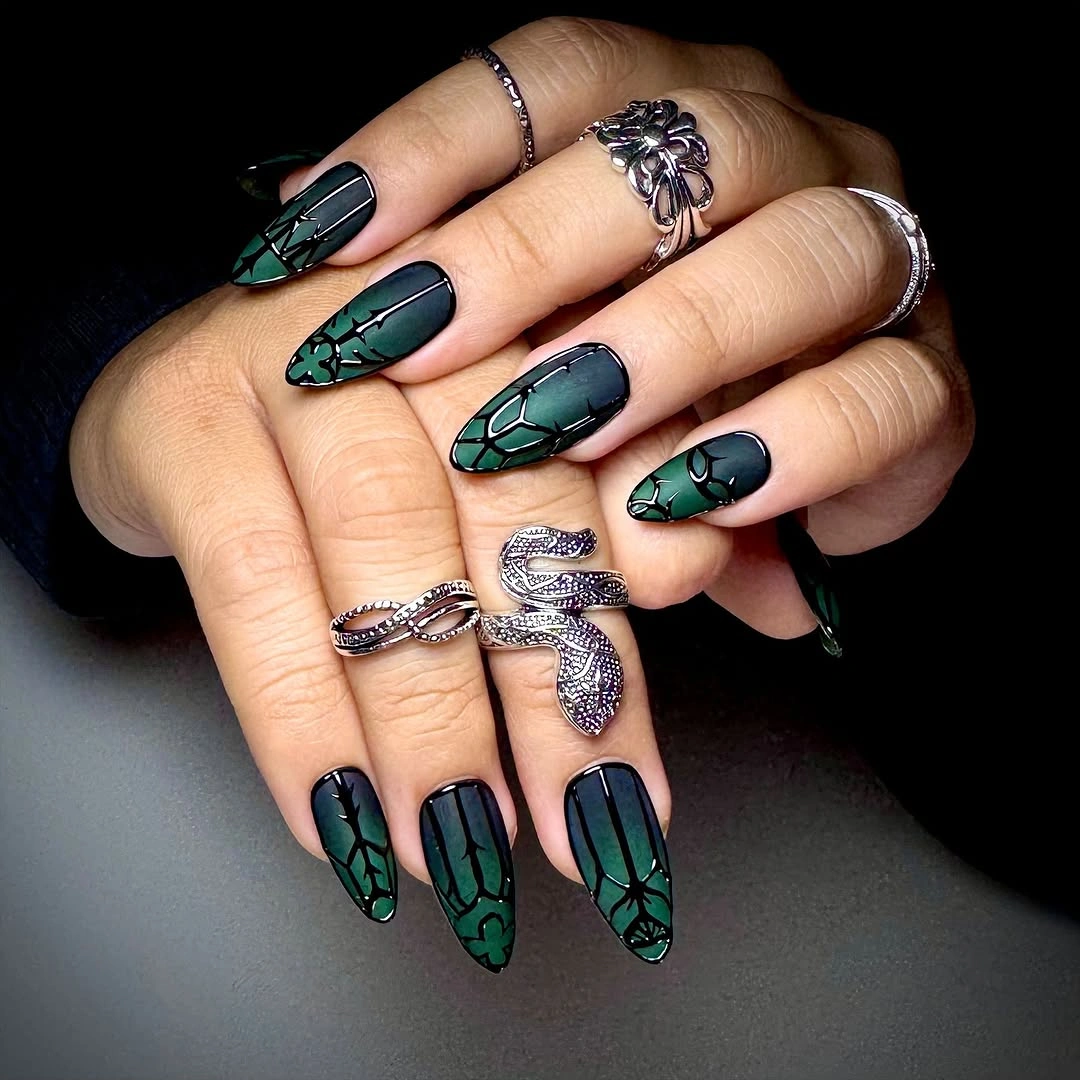
The visual rhythm comes from repetition, not from identical placement. Each nail can carry a slightly different segment while the shared palette tells the eye that the set belongs together. If you want a more wearable version, keep the pale green pattern on two nails and use a plain teal on the rest; that preserves the contrast while reducing density around the tips.
Small divisions need clean spacing because too many close lines can merge into a dark blur when viewed from a normal distance. Leave negative space between the segments and avoid adding a third bright color unless it serves a clear focal point. The result works best when the pattern feels like a controlled pulse across the hand rather than a separate illustration on every finger.
Oil-Slick Teal and Violet Almond Shine
These long almond nails are almost entirely free of painted design, yet they look active because the surface shifts between teal, violet, green, and blue in the light. The almond outline remains smooth and uninterrupted, allowing the reflective finish to create movement from one nail to the next. It is a darker manicure that feels colorful without becoming busy.
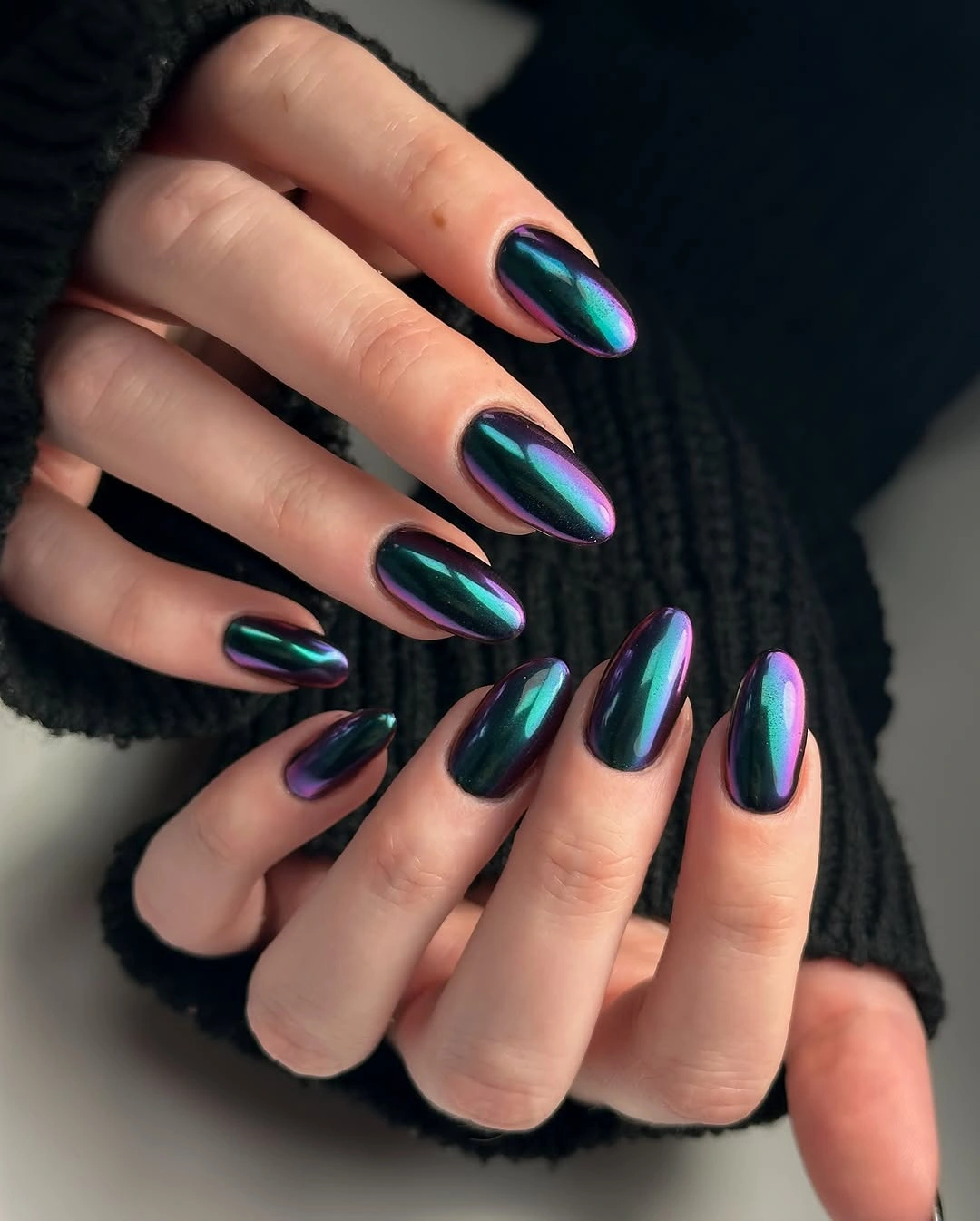
The most useful lesson is that a strong finish can replace decoration when the color changes are visible enough. A shorter oval or medium almond would keep the same oil-slick impression while feeling less formal, and a deep plum base could tilt the effect warmer without changing its structure. Keep the rest of the styling quiet so the reflection has room to register.
Multicolor reflection also exposes surface inconsistencies, because every highlight traces the shape of the nail. That is the honest limit of this otherwise simple idea. If you prefer lower contrast, choose a finish that moves through two nearby dark tones instead of three or four, and the manicure will still carry atmospheric depth without looking overworked.
Translucent Tips with Studded Smoke
Translucent nude-gray tips make room for several darker decisions at once: burgundy panels, black and red curves, pale sections, and small reflective studs. The pointed nails are dramatic, but the transparent-looking areas keep the arrangement from becoming one opaque block. That breathing space is what allows the mixed accents to remain distinguishable across the hand.
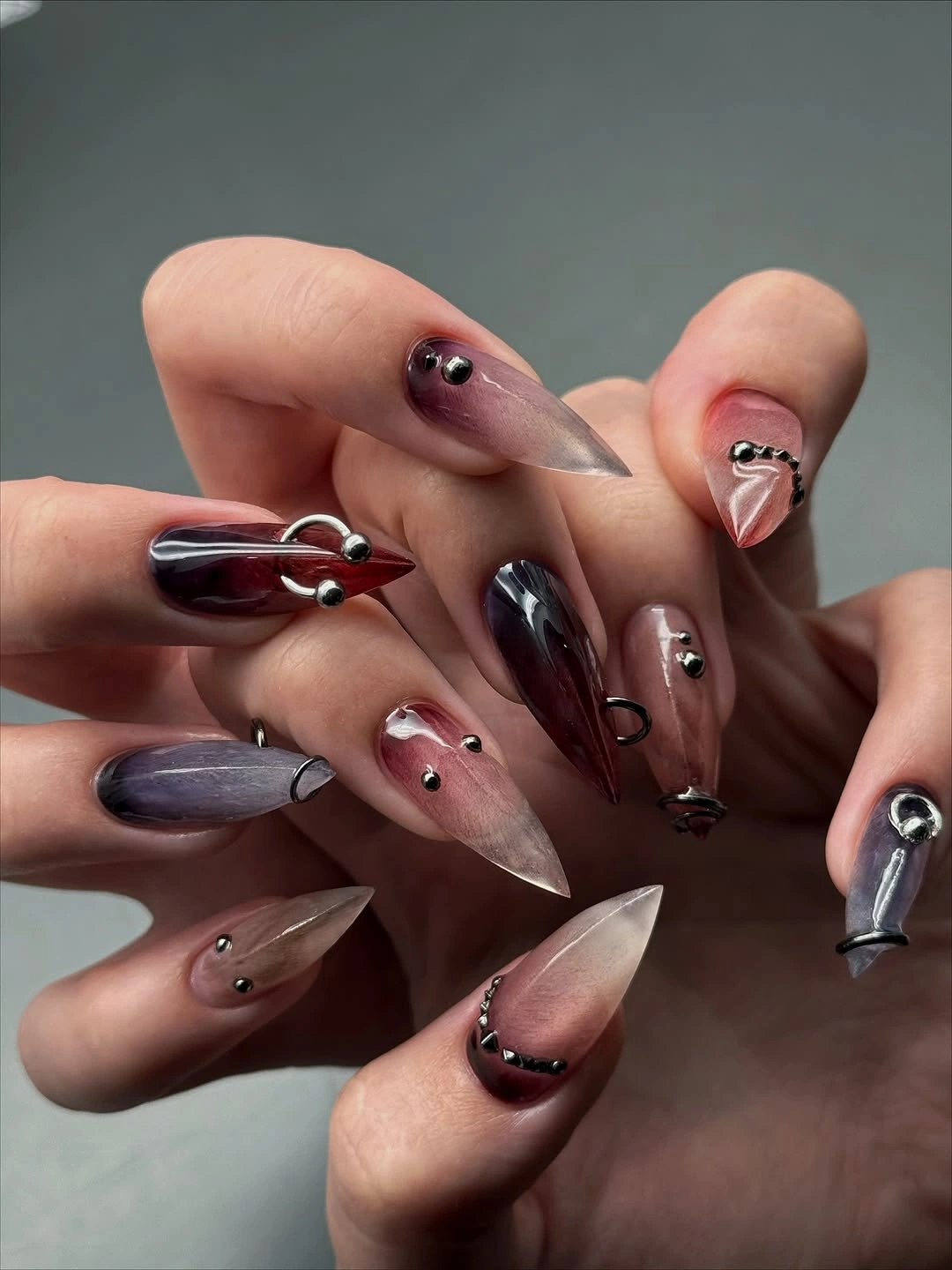
The balance depends on alternating visual weight. A dense dark accent is surrounded by lighter space, and a small stud supplies a bright point without taking over the whole nail. For shorter nails, choose the translucent base with one burgundy curve on two fingers; the open background will still suggest smoke and depth even when the tip is less pointed.
Studs and long points raise the upkeep cost because the manicure has both edge-sensitive details and a shape that can catch on fabric. Keep the accents sparse and place the most important one away from the free edge. That is a practical way to borrow the mood of fall nail inspiration while keeping the design readable instead of overloaded.
Black Starbursts with Clear Silver Tips
Glossy black nails narrow into pale or clear-looking tips, and thin white starbursts sit near the center of several surfaces. The small bursts provide a point of light against the dark base, while the pale ends keep the stiletto silhouette from disappearing into the background. The result feels graphic and nocturnal without relying on a crowded pattern.
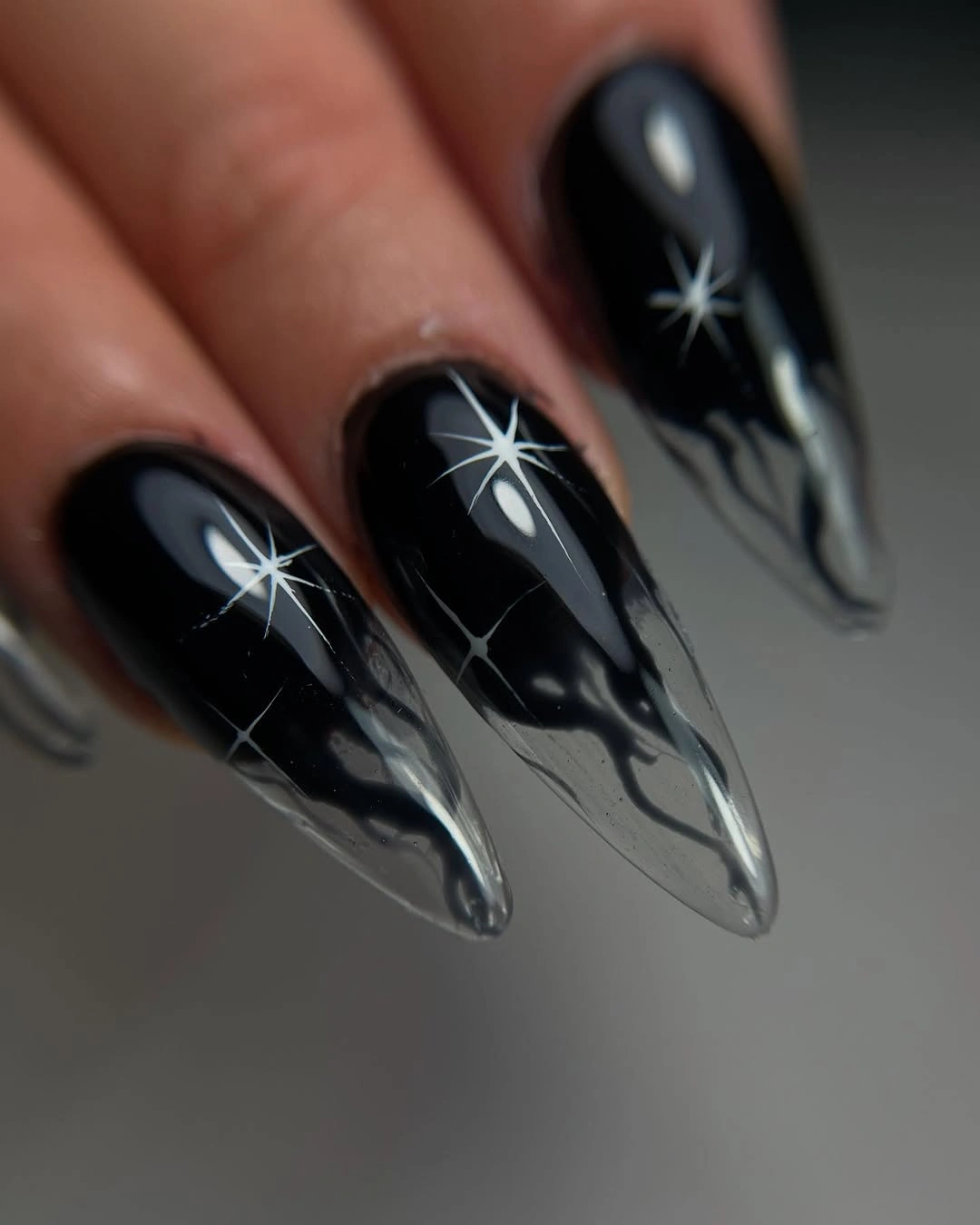
The design works because the bright detail is concentrated rather than repeated as a large motif. One starburst can anchor a nail while the surrounding black stays quiet, making the manicure easier to adapt to medium almond or short pointed shapes. If the tips become too light for your style, replace them with a narrow gray reflection and keep the starburst as the only high-contrast mark.
Thin white lines need careful placement and will show wear sooner than a solid color, especially close to the edge. Keep the bursts slightly inward and avoid adding stones that would compete with their fine shape. The best version feels like a small flash inside the black, not a full constellation covering every available surface.
Blackened Cherry on Long Almonds
A near-black cherry shade turns long almond nails into one continuous dark silhouette. In the light, the deep red-wine undertone becomes visible, but the surface stays free of pattern and lets the shape carry the mood. This kind of color feels more dimensional than plain black while remaining simple enough to pair with rings, leather, soft knits, or a pale sleeve.
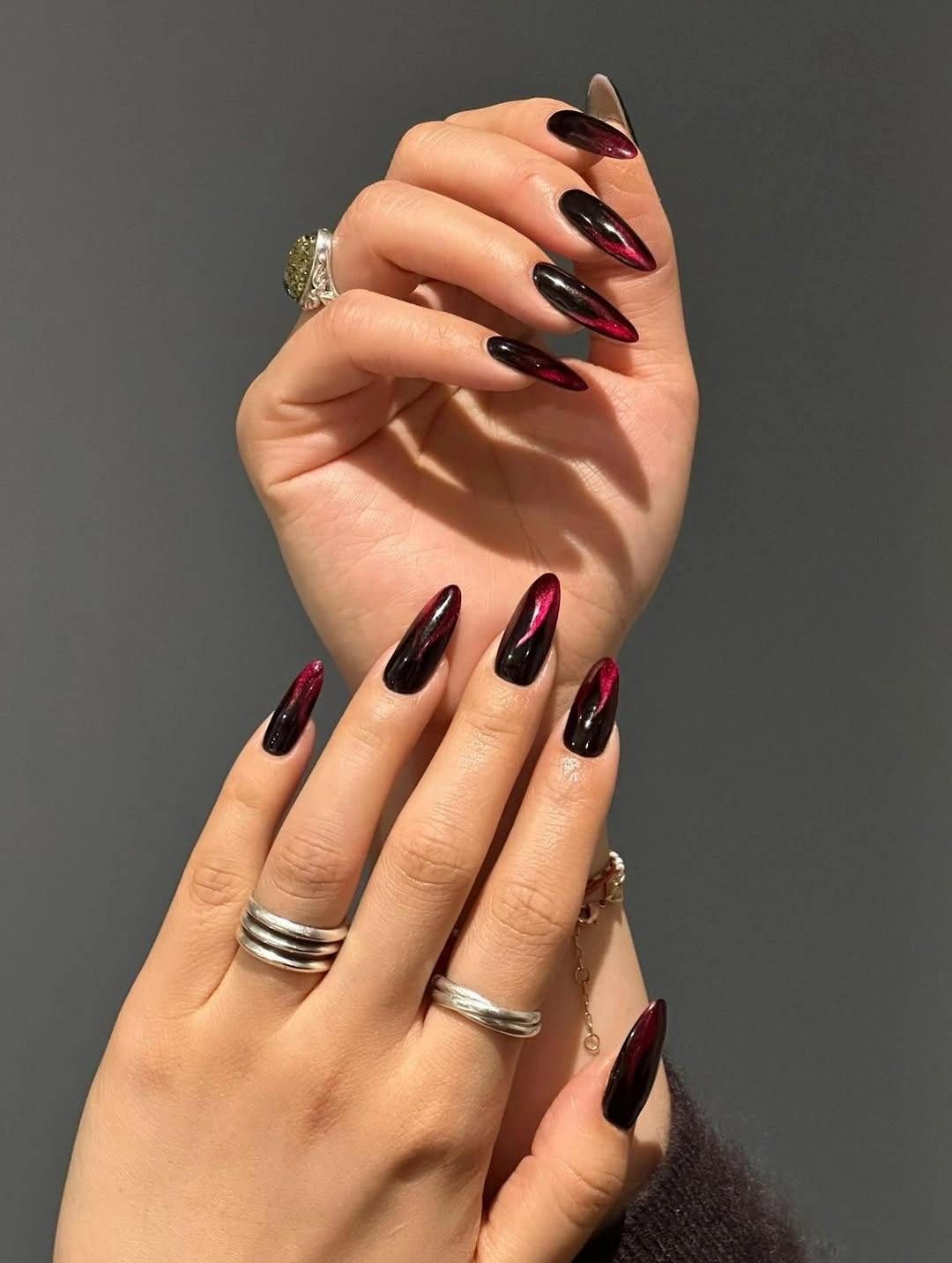
The lack of decoration makes the finish and outline more important than usual. A clean almond keeps the color from feeling too severe, and a shorter rounded shape can make the same shade look more relaxed without losing its depth. If you are choosing between a very dark red and a true black, notice which undertone supports your wardrobe instead of relying on the shade name alone.
Dark glossy coverage makes the edge of every chip visible, and long almond tips can magnify small differences in length. Keep the surface smooth and the color even, then let the simplicity be the point. This is a reliable base when you want to return to the stronger ideas later without carrying another motif through the whole manicure.
Deep Burgundy with a Softer Almond Outline
These almond nails sit slightly warmer than the previous blackened cherry set, with a glossy deep burgundy tone and rounded tips that soften the hand. There is no added linework or glitter to interrupt the color, so the eye notices the relation between length, curve, and reflective surface. The shade looks rich in shadow and clearer where the light reaches the center of each nail.
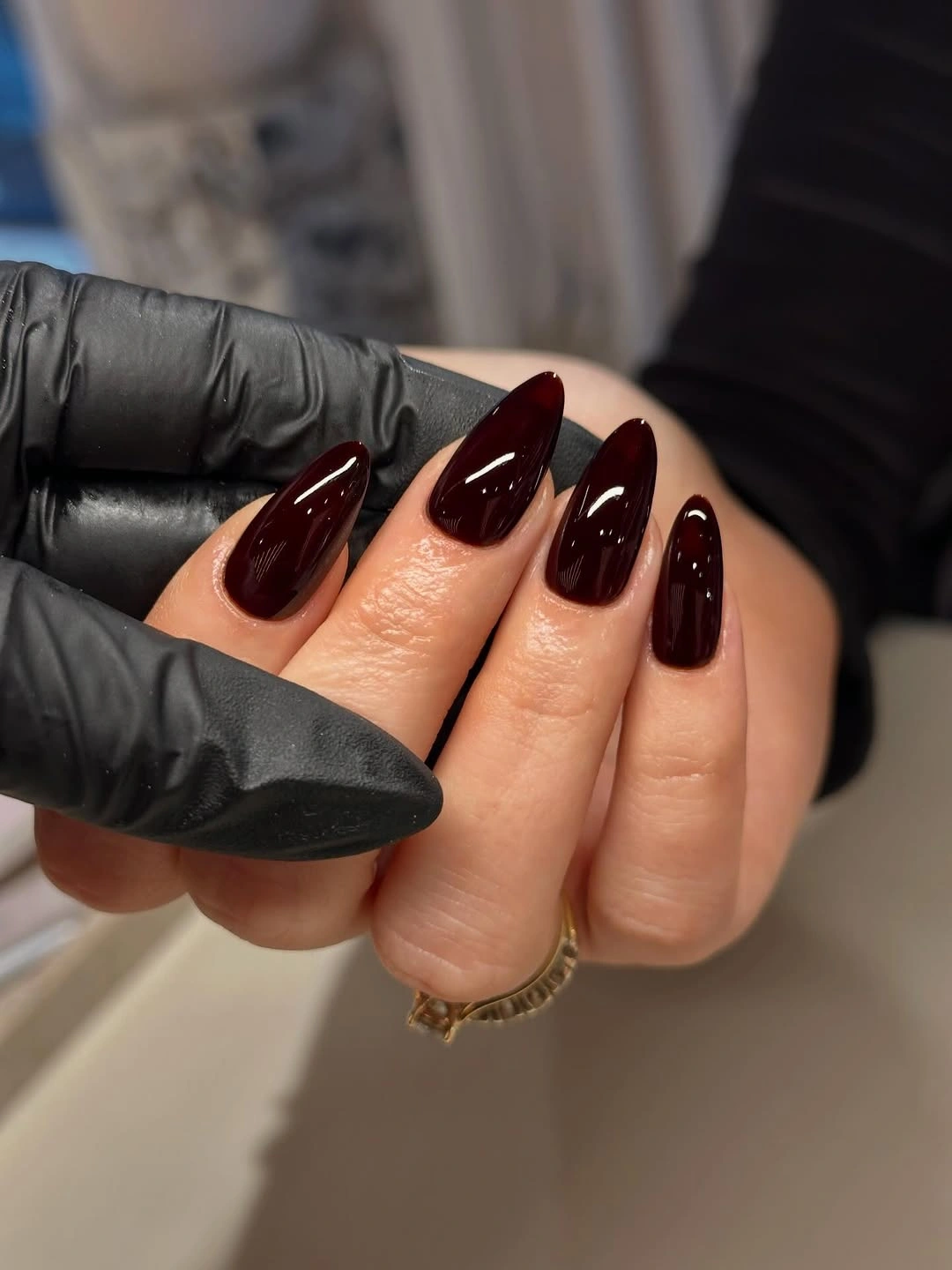
The shape changes the mood more than an extra decoration would. A rounded almond gives a deep color a gentler edge, while a short squoval would make it feel practical and compact. If you like the color but not the commitment of long nails, keep the base glossy and resist adding a motif; the warmth already supplies enough seasonal direction.
Uniform color is honest about upkeep because there is nowhere for a rough cuticle line or uneven tip to hide. A careful edge will matter more than a complicated accent, especially when the burgundy is dark enough to contrast with the skin. Choose this when you want the hand to look finished through color discipline rather than decorative effort.
Pale Loops Crossing Glossy Wine
Deep wine almond nails gain movement from pale looping lines that cross or echo one another across the surface. The base remains saturated and glossy, while the lighter marks break up the darkness without turning it into a light manicure. Each curve has enough space to read as a deliberate gesture, so the design feels drawn rather than randomly marked.
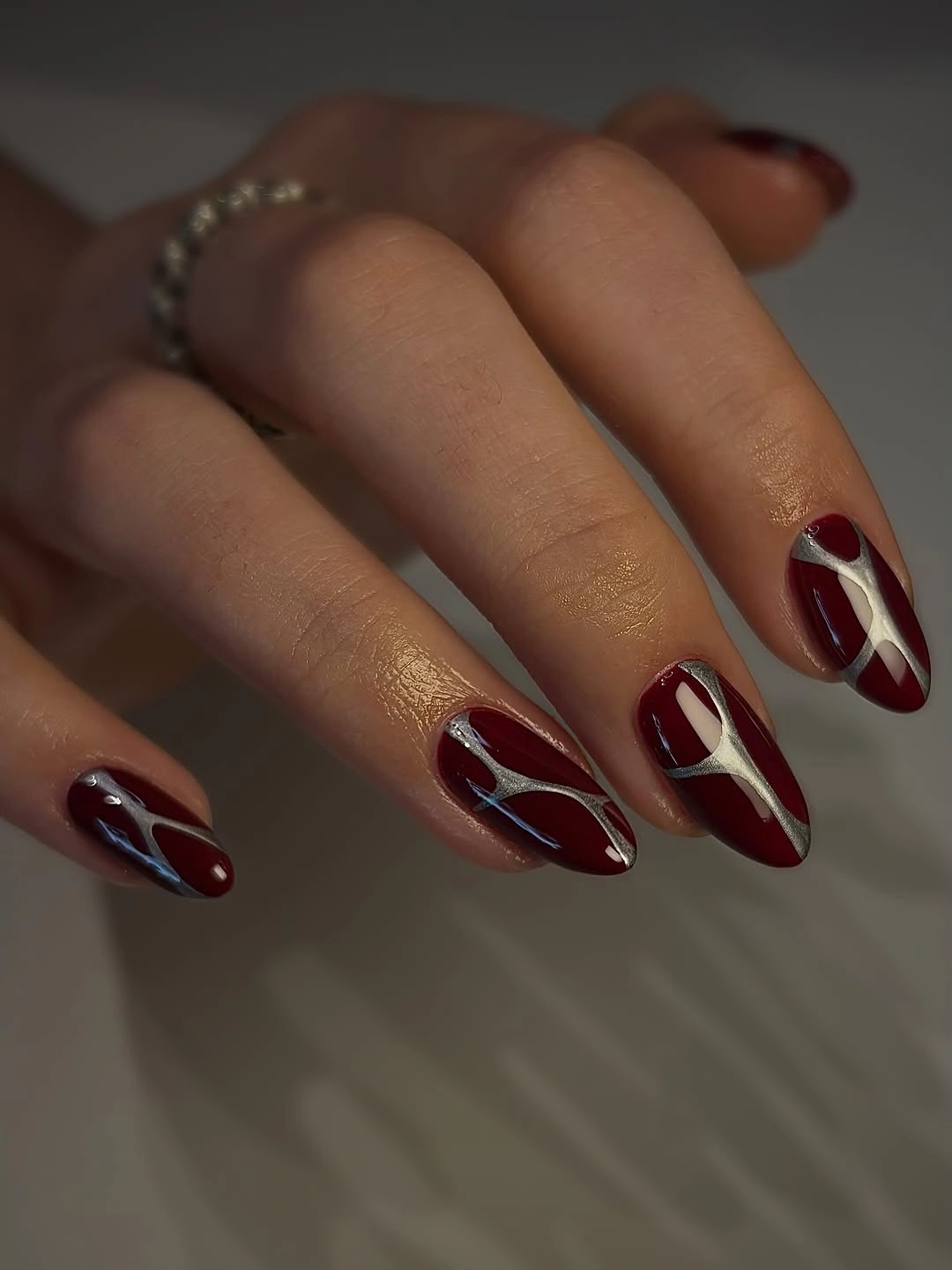
The contrast is strongest when the loops are not all placed at the same height. A slightly varied rhythm keeps the hand from looking stamped, and the glossy burgundy ties the differences together. On short nails, keep the linework to one or two fingers or use a single side curve; the design will remain recognizable even when the almond length is reduced.
Thin pale detail near the tip can become crowded as the nail grows, so the most important loop should sit closer to the center. Avoid adding a second metallic color unless the original lines need support, because the burgundy and pale contrast already has a clear job. This is a good choice when you want a decorated wine manicure that still leaves plenty of dark space.
Smoky Marble Inside Long Stiletto Tips
These long stiletto nails use transparent gray-black areas and cloudy pale wisps instead of a solid dark base. The marbled marks appear to drift through the tips, with small dark accents anchoring the lighter sections. The sharp silhouette makes the smoke-like movement feel elongated, but the clear space keeps the manicure from becoming visually heavy.
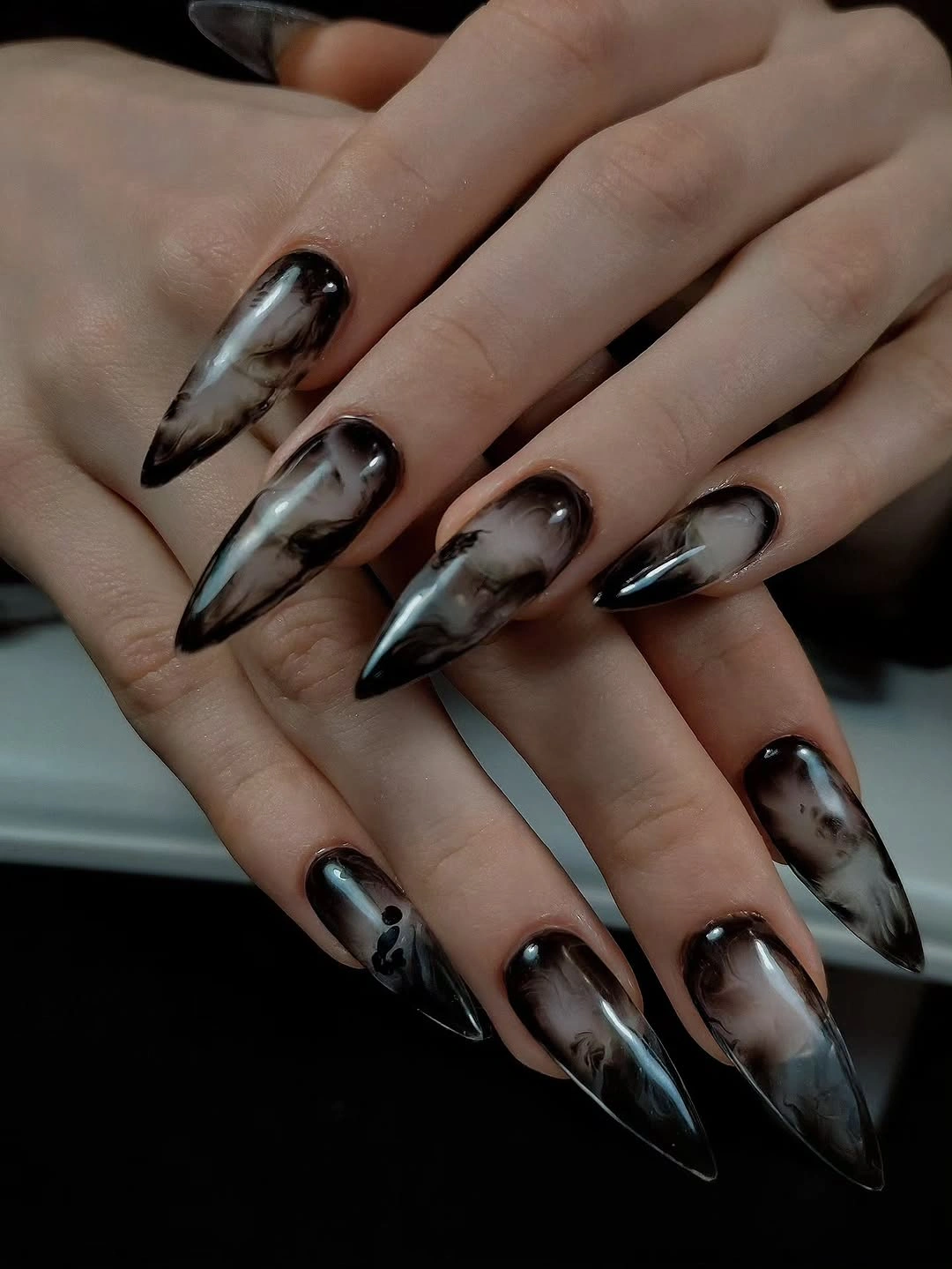
Negative space is the reason the pattern remains legible. The eye can follow each dark wisp across a pale area, then return to the pointed outline without meeting a wall of color. A shorter almond with one smoky accent finger would preserve the atmospheric contrast for daily wear, especially if the rest of the hand stays in a quiet gray or black.
Marble is naturally less uniform than a solid shade, so the balance depends on each nail having enough light and dark variation. The clear-looking finish may also reveal uneven coverage or edge wear earlier than a dense color. Keep the design airy rather than filling every pale gap, and the dark movement will remain more interesting than a crowded abstract print.
Matte Black with One Fine Silver Wave
Medium almond nails become quietly graphic through a matte black base and narrow silver curves placed away from the center. The matte surface lowers the intensity of the dark color, while the light line creates a small interruption that catches attention only after the silhouette has been noticed. The overall effect is controlled and clean rather than ornate.
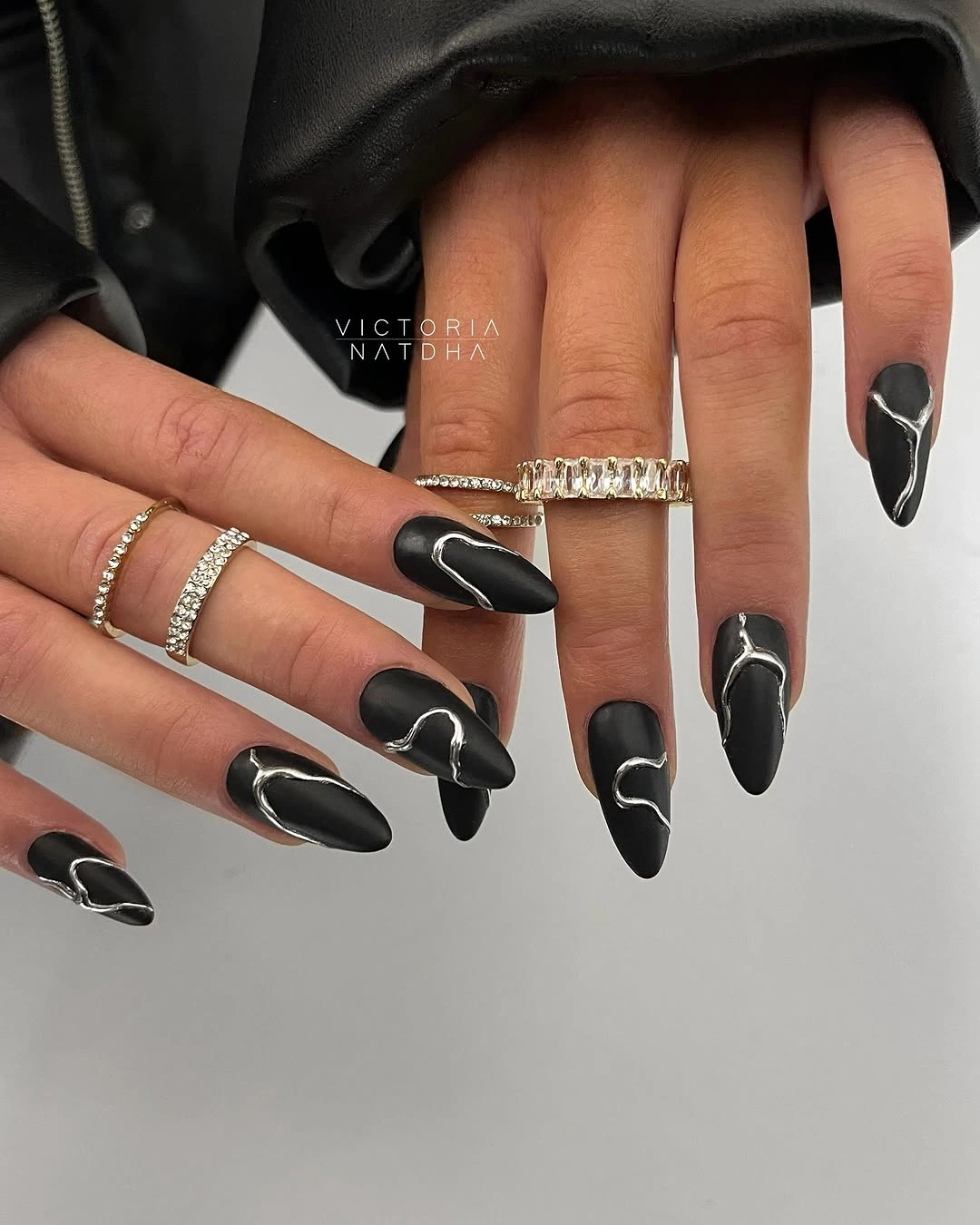
The off-center placement gives the manicure a little motion without crowding the nail. A single wave on two fingers would be enough for a shorter version, and a soft gray line could make the contrast less stark if black feels too severe. Keep the curves irregular enough to look hand-drawn but not so close to the edge that they disappear with wear.
Matte finishes show oils and handling marks, so the visual calm comes with a maintenance note that glossy color would hide more easily. Thin silver detail can also wear at the tip, making placement important. If you prefer the shape guidance of fall almond nails, this is a focused way to use it without adding a full pattern.
Short Espresso with a Nude Jeweled Accent
Short square nails make a dark brown-black base feel more wearable, especially when one pale nail interrupts the depth. That accent carries small clear-looking stones and a dark angular border, while the remaining fingers stay glossy and compact. The contrast is concentrated on one place, so the hand looks styled without needing every nail to carry a separate idea.
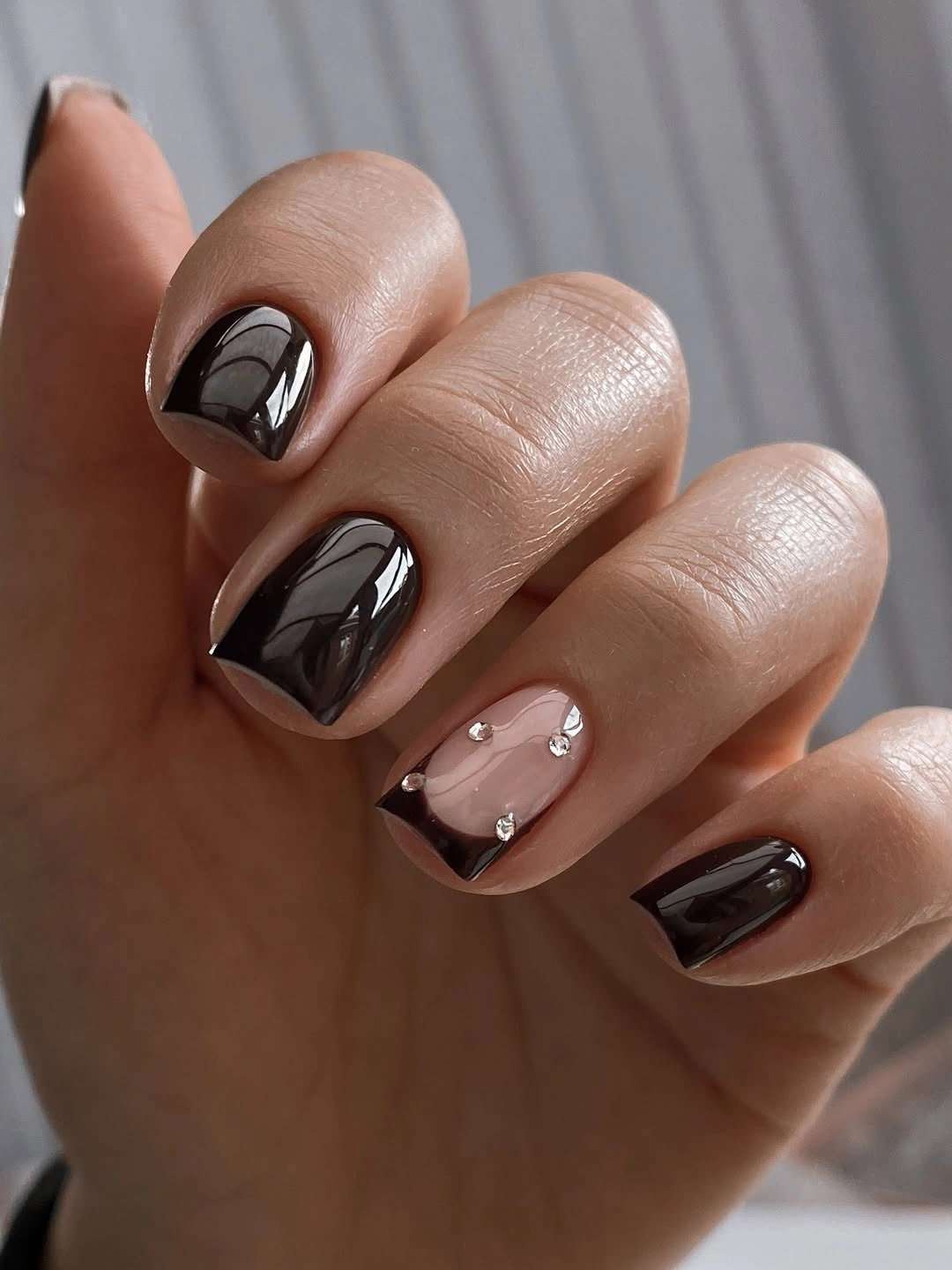
A single light accent is useful because it creates focus without demanding long length. Keep the base in espresso or blackened brown and place the pale detail on a finger that naturally shows when you reach or hold something. For an even simpler version, remove the stones and keep only the nude contrast; the short shape will still feel intentional.
Small embellishments can catch on knitwear and may need replacement before the dark base shows obvious wear. That is the honest tradeoff for the sparkle. If your priority is an easy manicure, use a small metallic dot or a pale painted angle instead, keeping the contrast close to the center where it is less exposed to daily friction.
Short Dark Nails with Layered Warm Texture
This mixed set brings brown, black, amber, and metallic-looking details onto short nails without making one repeated pattern the rule. Some surfaces are glossy and translucent, while others carry irregular layered marks that feel almost textural. The shared warmth keeps the different decisions connected, so the manicure reads as a deliberate color study rather than leftover accents.
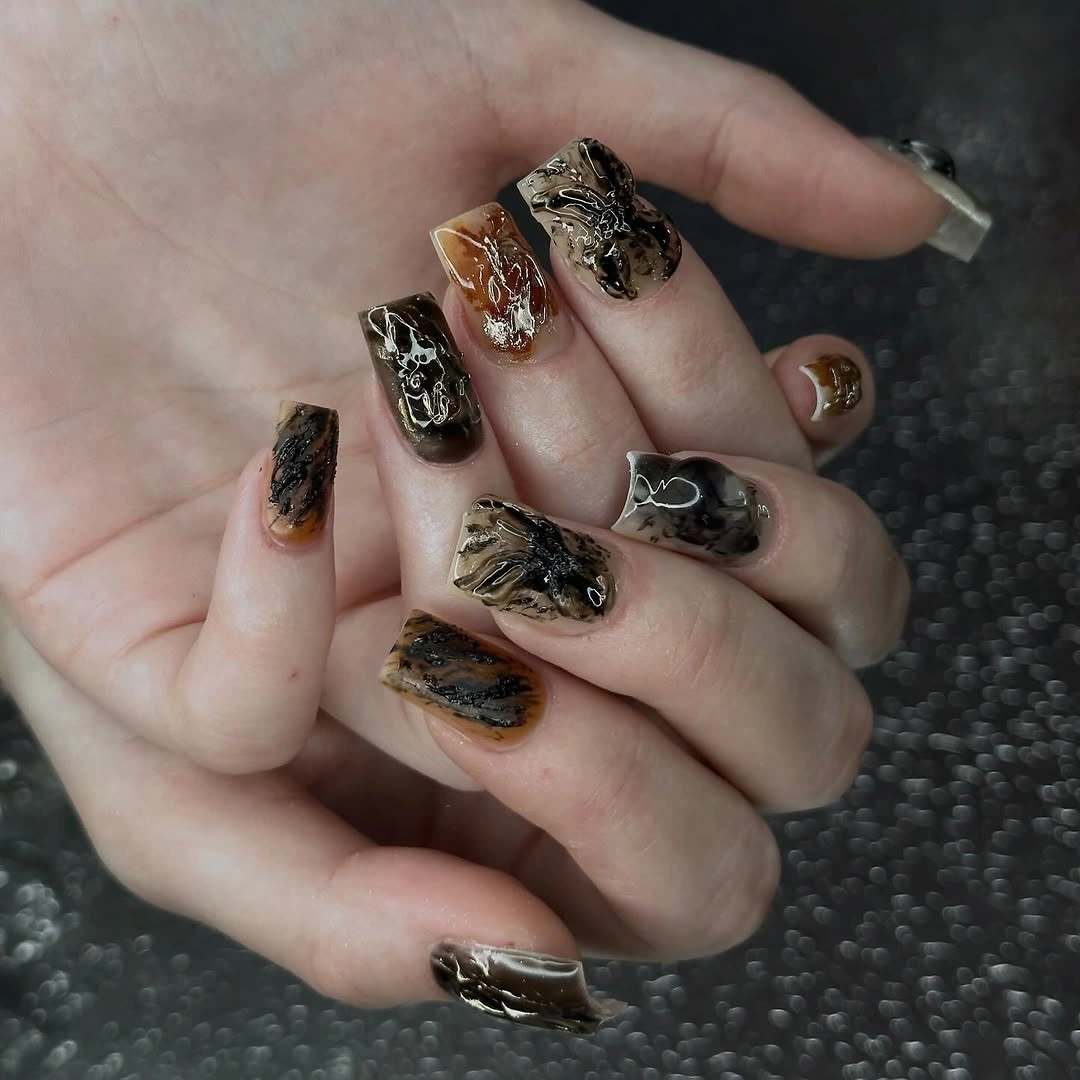
The compact shape benefits from the limited palette because the details already vary in finish and density. Choosing two of the visible directions – espresso gloss and a muted gold-brown accent, for example – would make the design easier to read on shorter nails. Keep the strongest texture on one or two fingers and let the solid tones provide relief between them.
A high-detail set can look crowded as the edges grow, especially when several small marks sit close together. The practical move is to preserve the color relationships while reducing the number of textures, not to copy every visible irregularity. That keeps the warmth and depth while giving the manicure a calmer rhythm for everyday wear.
Silver Lattice on Extreme Stiletto Length
The final design commits fully to a dramatic silhouette: extremely long stiletto nails carry silver patterned surfaces, dark panels, and several large reflective embellishments. The length is not a background choice here; it gives the lattice, stones, and narrow points enough space to register as one theatrical composition. Dark clothing behind the hand lets the pale details stay sharply visible.
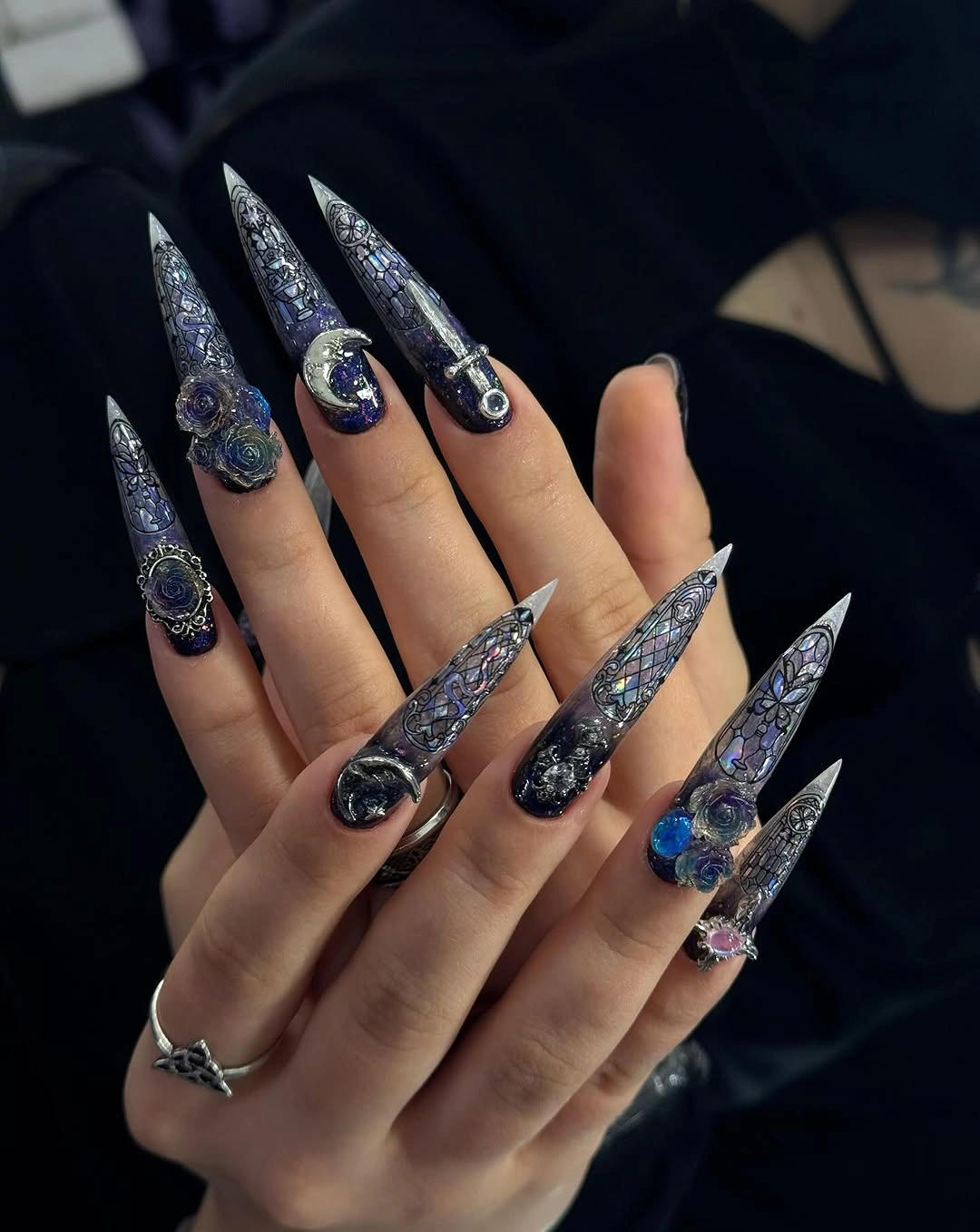
Because every nail has a strong focal detail, the eye moves from point to point rather than settling on one quiet accent. A practical translation would keep the silver lattice on one or two medium-length nails, then use a dark solid base on the rest. That preserves the contrast and ornament while bringing the proportions closer to something you can use through ordinary tasks.
The tradeoff is the clearest in this set: pointed length, dense decoration, and reflective pieces all increase the chance of snagging and make edge wear obvious. If you love the visual tension, treat it as an occasion-led direction and simplify the shape for regular wear. Darkness remains readable when the ornament is scaled thoughtfully, not only when the silhouette reaches its most extreme point.