
Fall Nails for Tan Skin Tone: Warm Color and Shape Ideas
Seasonal depth does not have to announce itself with the darkest shade on the table. Warmth can sit inside a brown reflection, a creamy base, or the narrow edge of a brighter color, and each choice changes how much of the nail remains visually quiet. On tan skin, the most revealing question is often not whether a color is rich, but where its richness stops.
For fall nails for tan skin tone, set the balance by checking whether the undertone supports the skin rather than fighting it, then let the shape decide how much detail is sensible. A compact nail can make a deep shade feel easy, while extra length asks for cleaner borders and more maintenance. If the result feels crowded, protect the open space first and reduce decoration before changing the whole color idea.
Bronze warmth inside a deep brown solid
Short rounded-square nails begin with a deep brown coat that looks darkest at the edges and warmer where a bronze or copper reflection crosses the surface. The set is uniform and free of visible art, so the interest comes from the relationship between saturated color and subtle shimmer. The compact shape keeps the rich shade from feeling too heavy.
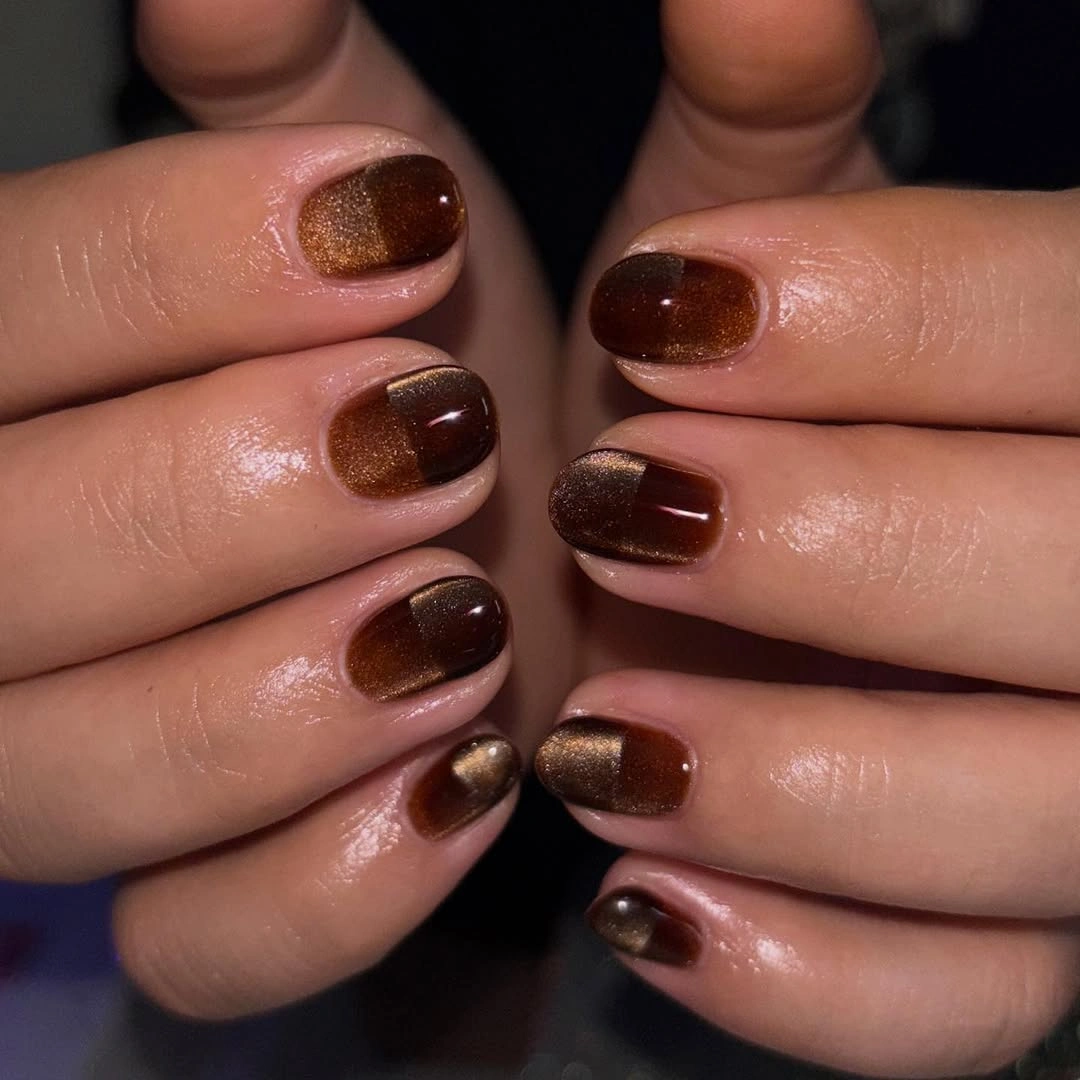
The warm reflection gives fall nails for tan skin tone more depth than a flat brown would, while the dark base still feels grounded. Because the shape is short, the manicure remains practical even though the color is strong. A slightly softer espresso tone would lower the contrast, but the same bronze shift could remain as the quiet detail. For a wider brown palette, compare the undertones in brown fall nails.
A glossy dark surface shows chips and uneven edges quickly, so the simplicity rewards careful maintenance. If the shimmer looks too noticeable in direct light, concentrate it on two accent nails and keep the others brown. The design is coherent when the bronze supports the depth of the base rather than turning into a separate glitter statement.
Pastel color movement across long coffin tips
Long coffin nails blend lavender, pink, and pale blue through a glossy gradient, with bright white streaks or reflective bands running through the color. The squared tips give the soft transition a clear frame, while the layered hues create movement along the length. The finish stays airy because the colors are pale and closely related.
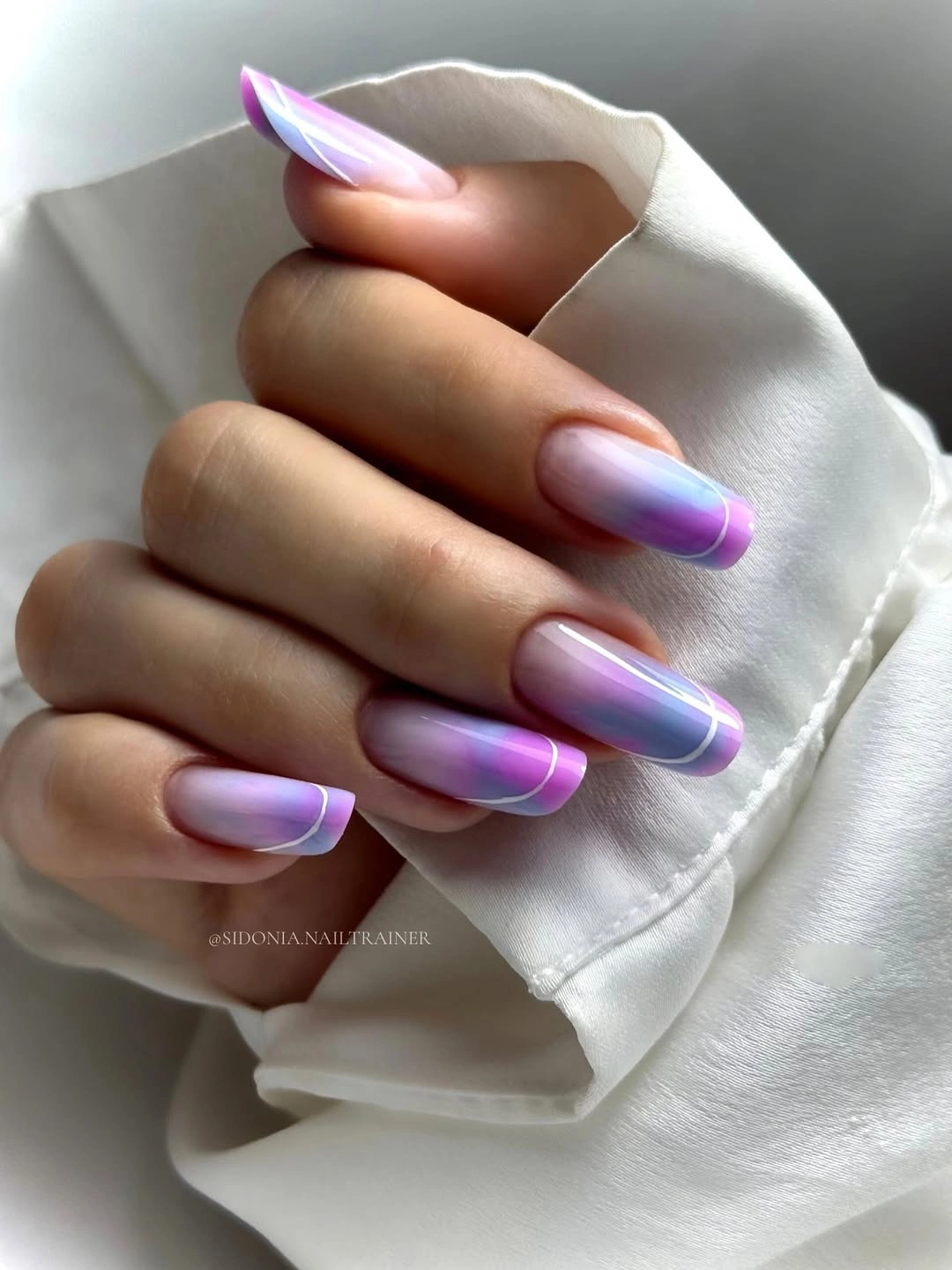
This is a cool counterpoint to the warm brown solid: the manicure feels lighter because the color changes across the nail instead of stopping at one dark block. On tan skin, the pale gradient has enough contrast to stay visible while keeping the overall mood soft. A shorter squoval can preserve two colors and one white streak, reducing the amount of surface that needs attention.
The long corners and reflective bands are the main practical limits, especially if the color transition is meant to stay smooth as it grows out. For a more seasonal adaptation, shift the pink toward muted mauve or the blue toward smoky denim. Keeping the white streak narrow will preserve the movement without letting the highlights overwhelm the gradient.
Milky white nails with silver focal curves
Medium-long almond nails use a soft milky white base, while two accent nails carry small silver curved or clustered details near the cuticle. The remaining nails stay plain, leaving generous negative space around the bright accents. The almond taper keeps the pale set graceful instead of blocky, and the limited decoration makes the shape easy to read.
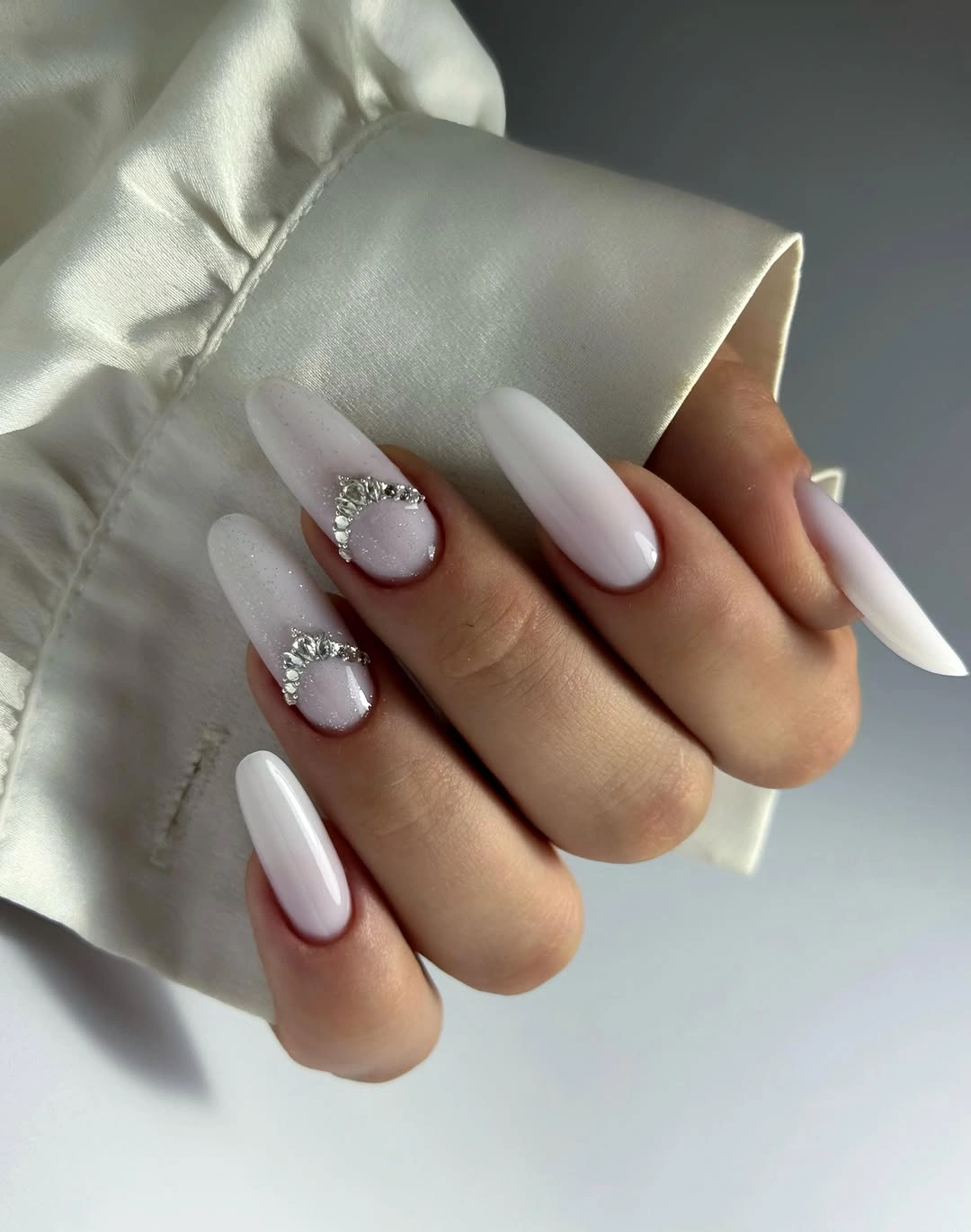
The design works because the silver details appear only where the eye needs a point of contrast. Against tan skin, the milky base remains warm enough to avoid looking stark, while the metallic accents add a cool flash. A shorter almond can keep one silver accent and plain white nails, making the set more practical without changing its proportion.
Pale surfaces show marks, and small embellishments may need more care than a flat line, so the quiet palette is not maintenance-free. If you prefer a simpler version, replace the clustered detail with one thin silver arc or dot. The open white space is part of the design; adding more accents would make the manicure less calm.
White square nails framed by black texture
Long square nails use an opaque-looking white base with two black accent nails that carry a fine textured or lace-like pattern. The white nails remain smooth and mostly plain, while the darker surfaces create a concentrated graphic break. The hard square edge reinforces the contrast between clean space and dense detail.
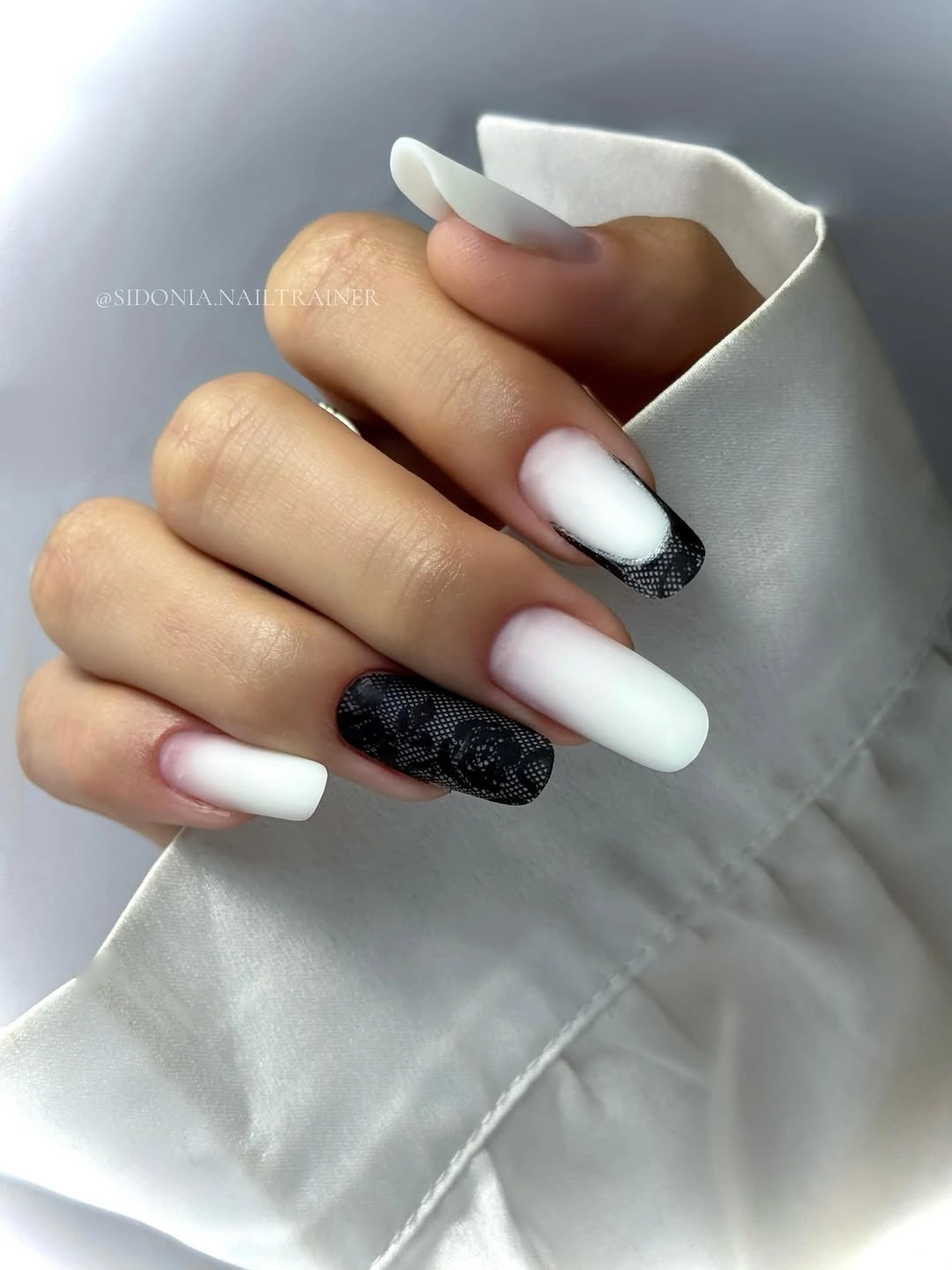
The design feels strong because black is used as a pair of accents rather than spread across the full hand. On tan skin, the white base and black texture have clear separation, so the manicure reads immediately even without a third color. A shorter squoval can keep one black accent and leave the rest white for a less statement-driven version.
The pale base will show wear, and the long square length makes the graphic contrast more demanding in daily life. If you want a softer interpretation, use a dark brown or charcoal edge instead of the full black texture. The important decision is still the frame between a bright field and a dense dark accent, not the exact pattern inside it.
Soft white solids with scattered pink flecks
Medium rounded nails alternate creamy white solids with pale pink accent nails that contain scattered pink and purple flecks. The marks are irregular and sparse, so they create a confetti-like surface rather than a dense glitter coat. The rounded shape and light palette keep the set gentle despite the color contrast.
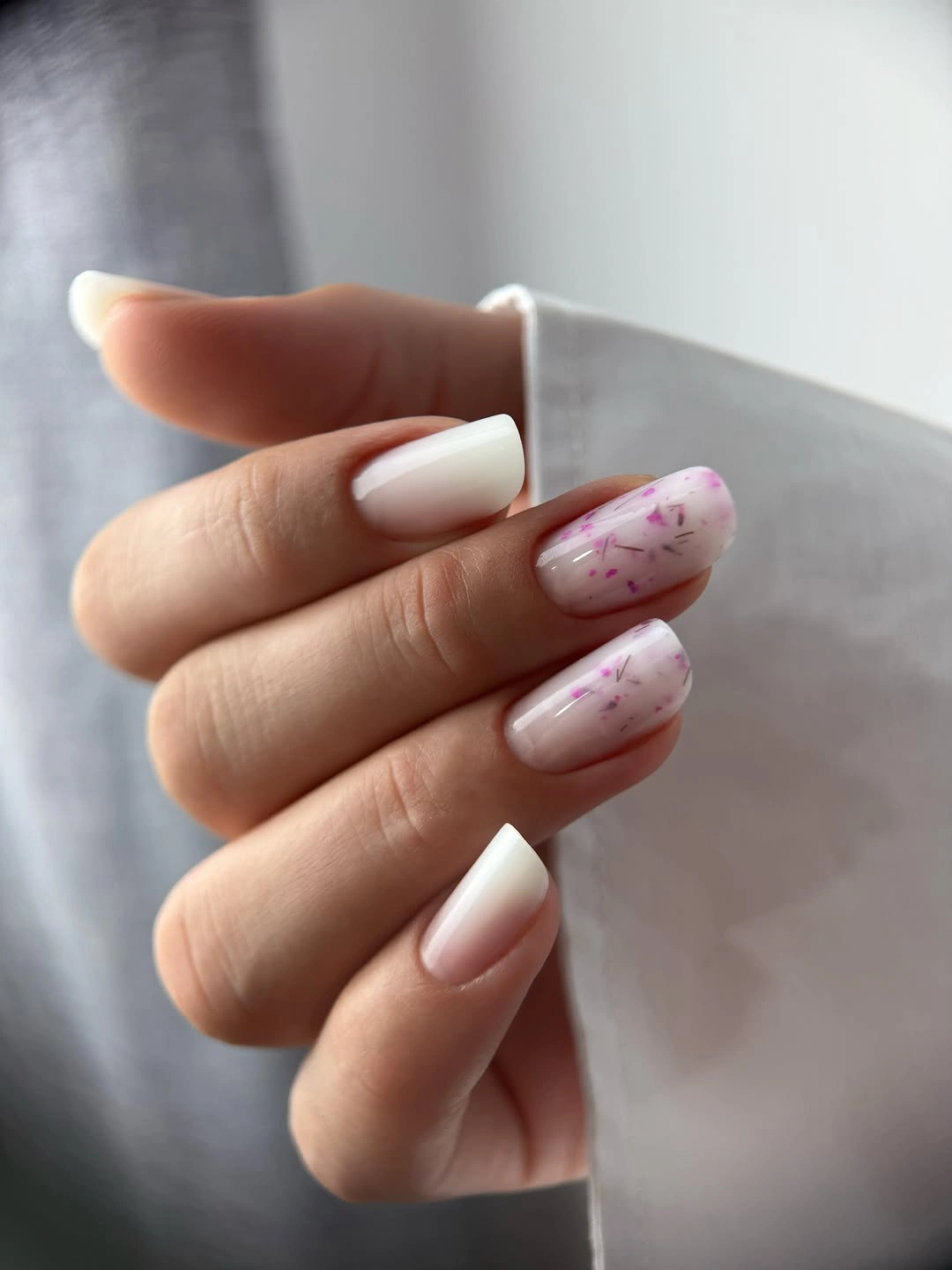
The flecks are most effective because the white nails remain open and quiet around them. On tan skin, the creamy base supplies a soft contrast while the pink and purple marks add small points of warmth and coolness. A shorter oval can carry this design easily, and one accent nail would be enough if you want an even cleaner result.
Pale colors reveal stains and small chips, while irregular flecks may look less even as they wear. For a richer fall version, replace some pink with muted plum or copper without increasing the density. The manicure stays balanced when the accents remain sparse and the white solids continue to act as relief.
Berry patterns mixed with tiny gold details
Long pointed nails combine burgundy panels, white areas with black spots or checks, nude-pink sections, and small gold beads or outlines. Each nail changes slightly, but the warm berry and graphic black-and-white elements return often enough to create a common thread. The sharp length gives the different motifs space to remain visible.
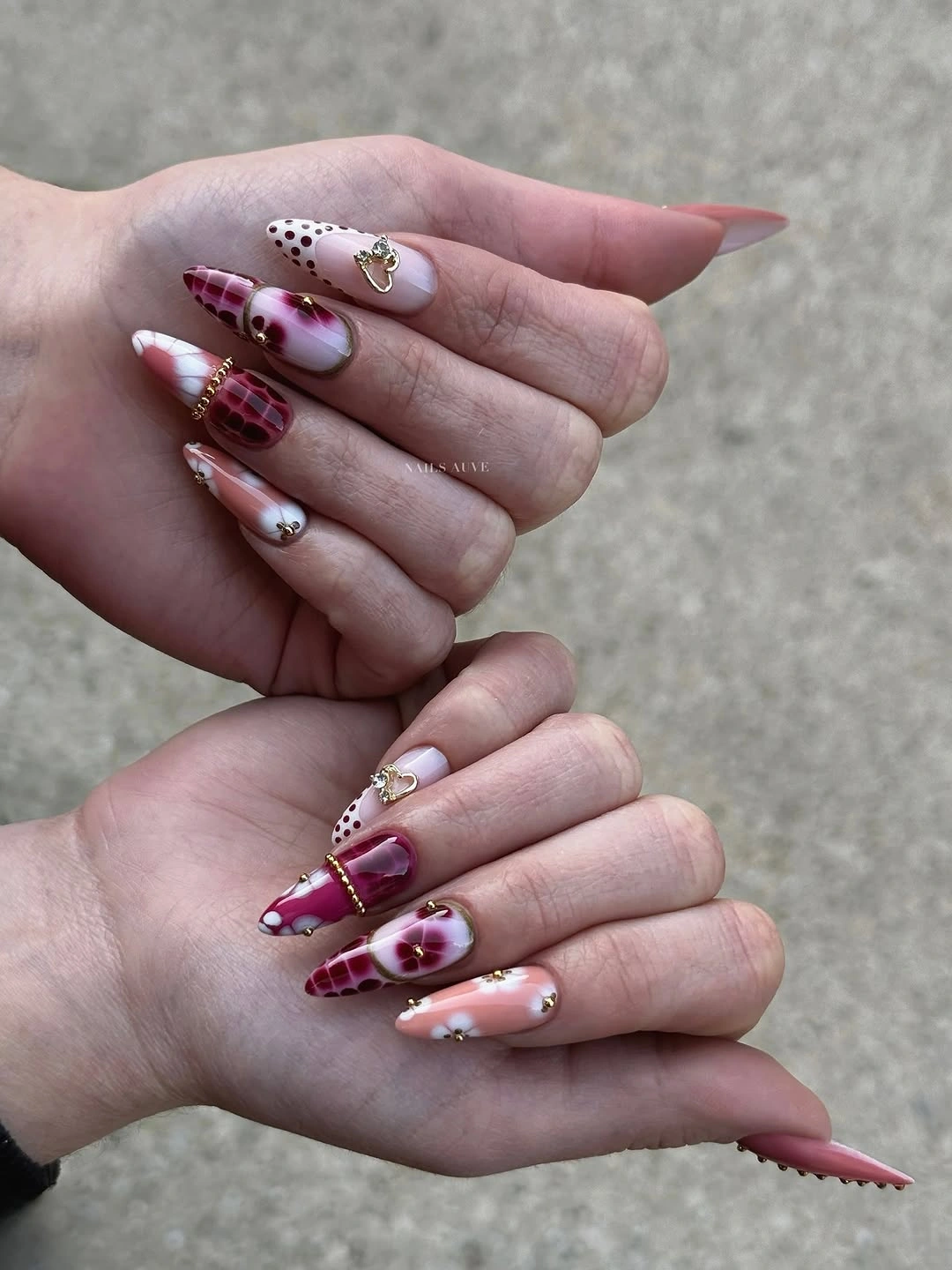
The mixed palette works because the gold details connect the berry and neutral sections without becoming another large color block. This is a more expressive route for fall nails for tan skin tone than a solid brown or cream, but the warm undertone keeps it grounded. A shorter almond can keep one burgundy accent and one spotted tip, reducing the number of motifs without losing the contrast.
Long points and small details create separate maintenance demands, and the set is less automatic to coordinate than a single shade. If you want to simplify it, choose two motifs only, such as burgundy plus black-spotted white. Keeping the gold sparse will help the design feel edited rather than crowded.
Bright yellow French edges on a nude base
Short-to-medium almond nails use a pale nude center with vivid yellow French tips and a tiny gold band or dotted detail on one or two nails. The yellow edges are consistent and curved, so the hand reads as one set even though the color is bright. The small shape keeps the tip idea practical and easy to see.
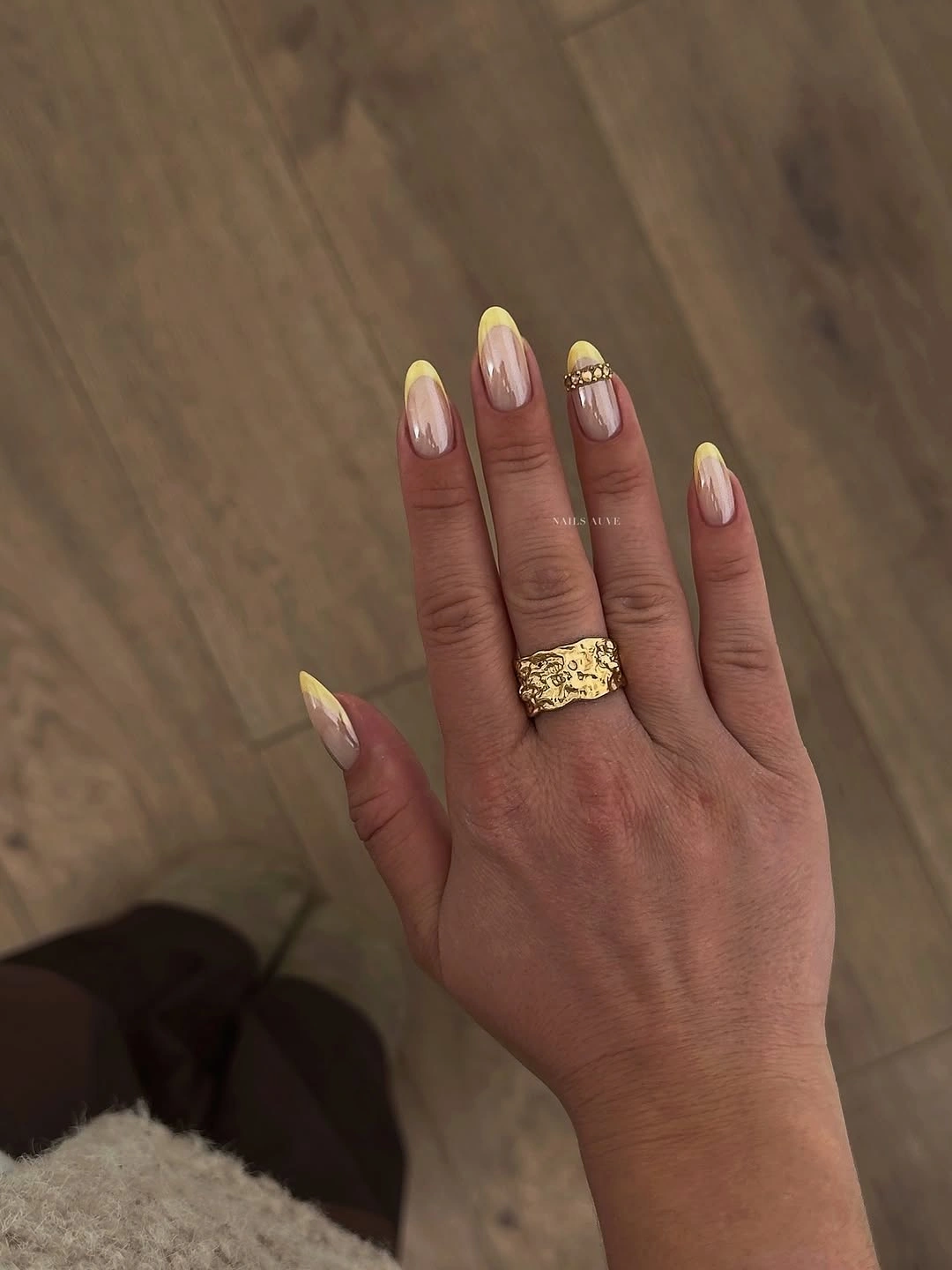
The nude space matters because it lets the yellow feel like a deliberate edge rather than a full block. On tan skin, the warm tip stays clear without needing a dark outline, and the almond taper keeps the design soft. A muted ochre or deeper mustard can move the same structure closer to autumn while preserving the bright placement.
The yellow curve will reveal uneven application quickly, so neat edges matter more than adding extra details. If the gold accent feels unnecessary, remove it and keep the French tip consistent on every nail. This look is strongest when the color remains concentrated at the edge and the center stays open.
Dark brown almond nails with a clean glossy finish
Medium almond nails are coated in a dark brown shade that sometimes reads almost black, with a glossy surface and no visible art. Rings add shine around the hand, but the manicure itself is completely monochrome. The almond taper prevents the dense color from looking blunt and gives the set a quiet confidence.
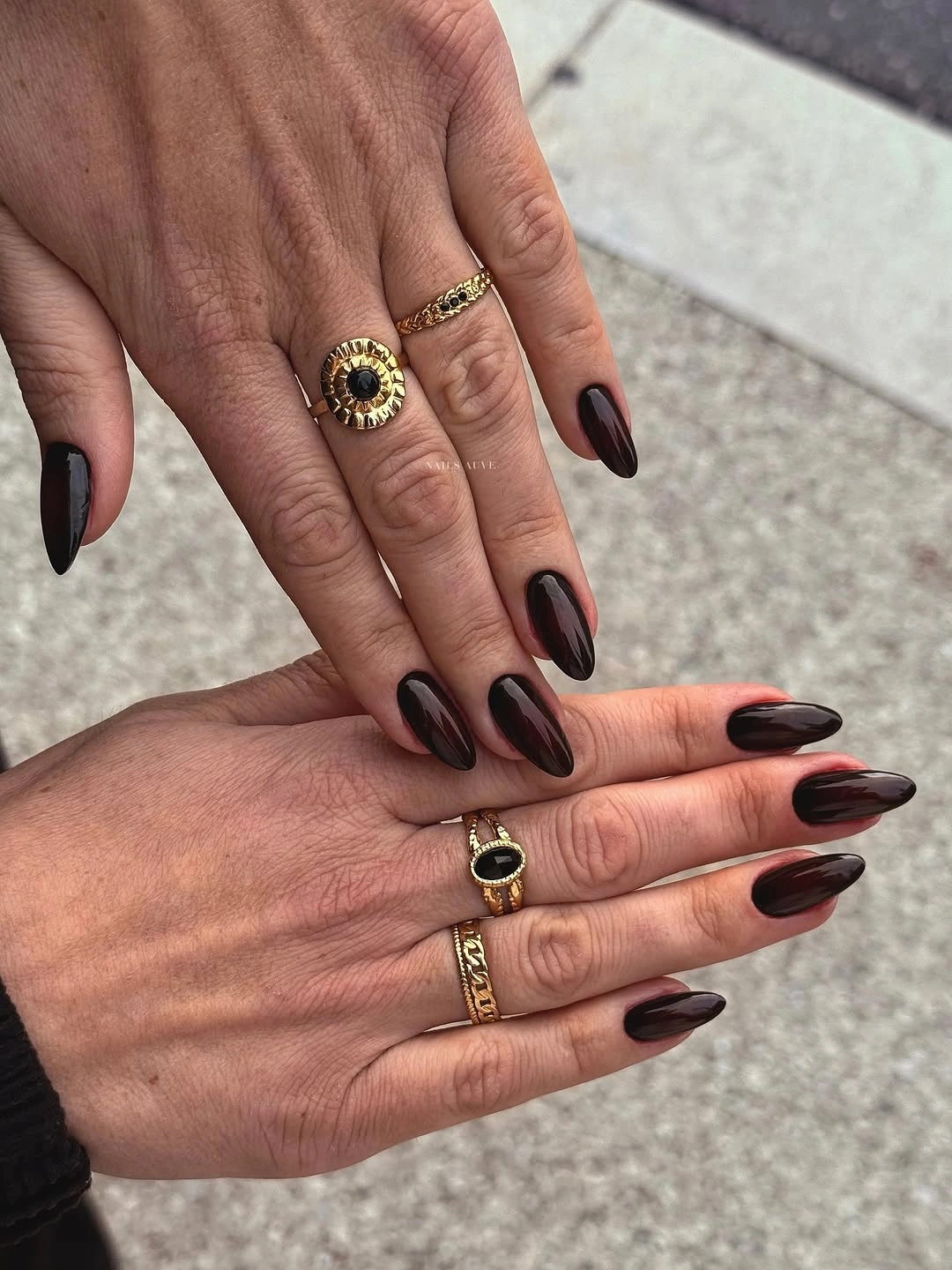
A near-black brown is a natural fit for fall nails for tan skin tone when you want depth without a pattern. The warm edge in the color keeps it from becoming a flat black, while the simple shape makes the result easy to repeat. A shorter oval would feel even more practical, and a softer espresso tone could lower the intensity. For more ways to compare rich undertones, browse these autumn nail color ideas.
The dark gloss reveals chips and cuticle gaps, so the clean outline has to carry the whole look. That is a fair tradeoff for a manicure with no small details to repair. If you want more contrast, use the shade on two accent nails and leave the rest nude, but avoid adding unrelated motifs that would dilute the single-color decision.
Layered berry panels on medium square nails
Medium square nails use a deep burgundy or red-brown glossy base with translucent-looking brown and copper panels near selected tips. The layered color stays close to the main shade, so the manicure reads as a tonal variation rather than a loud pattern. The square shape gives the panels a clear horizontal boundary.
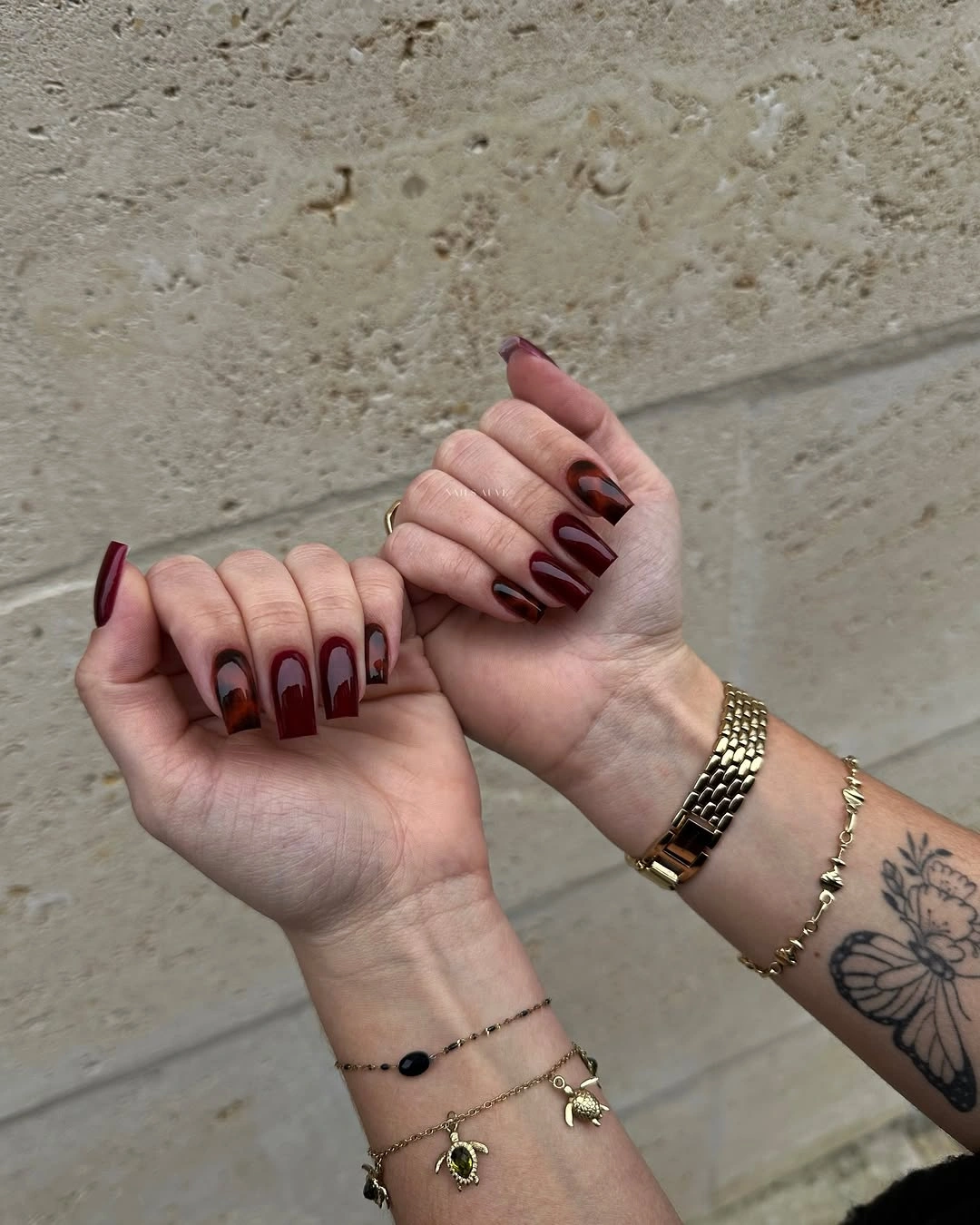
The subtle panels add dimension to a dark berry set without making every nail different. On tan skin, the warm red-brown palette feels grounded, while the lighter sections stop the manicure from becoming visually flat. A shorter squoval can keep one layered accent and repeat the base color elsewhere for easier maintenance.
The borders between tones need to stay clean, especially where the panels meet the free edge. If you want a softer version, use a transparent warm brown accent on two nails or move the contrast closer to the cuticle. The design works best when the layers remain quiet enough to support the berry base.
Short glossy black nails with casual contrast
Short-to-medium squoval nails carry a uniform glossy black coat, partly framed by a denim sleeve. There is no visible art, so the manicure depends on the compact shape, the reflective surface, and the contrast between black and blue fabric. The short length gives the dark color a practical, everyday outline.
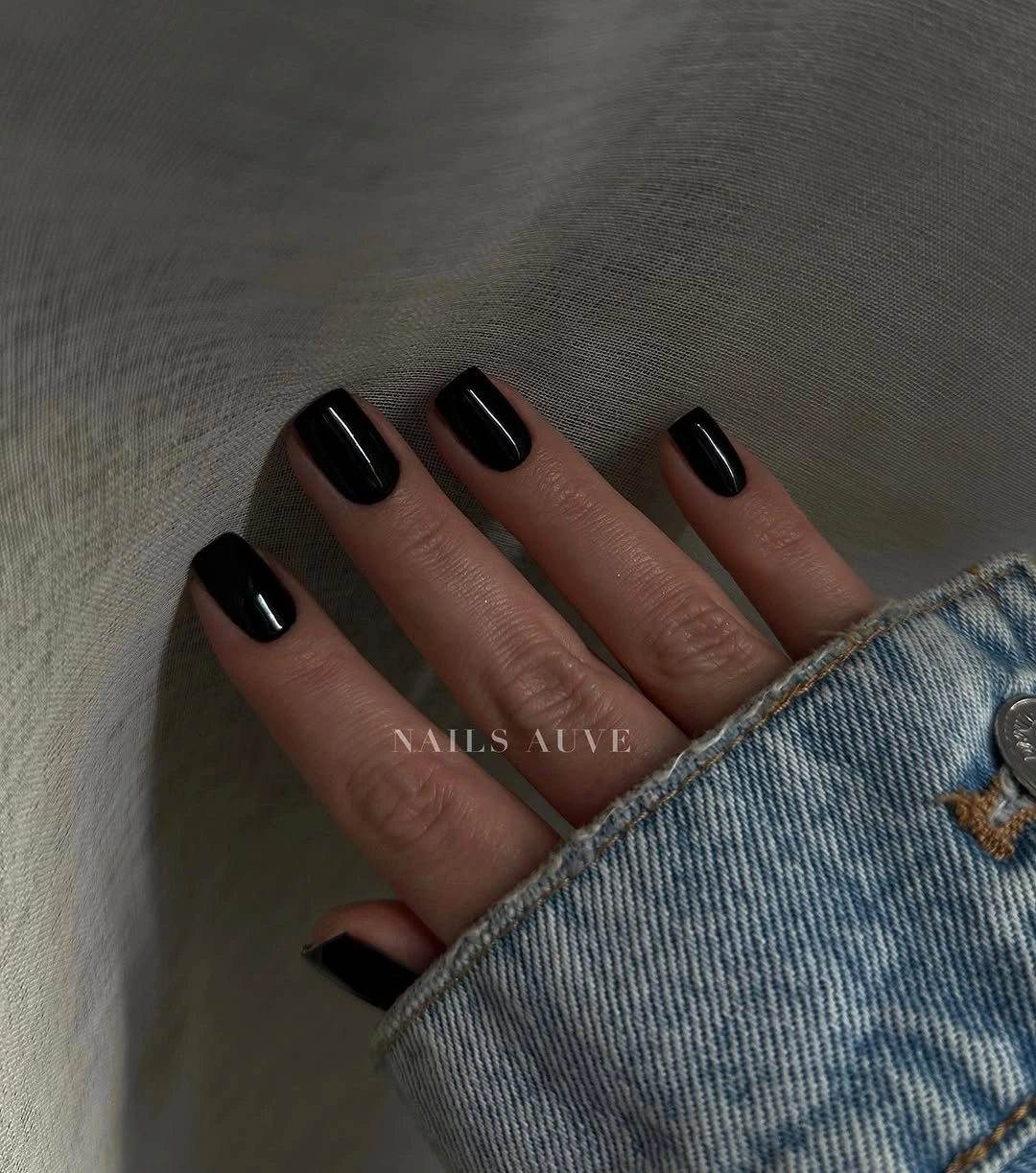
Black can look stark, but the short shape keeps it from feeling overly dramatic. On tan skin, the edge is clear and the glossy highlight gives the solid color enough movement. A charcoal or near-black brown would soften the contrast, while keeping the same compact silhouette and clean everyday outline. That short-shape logic is also useful in simple fall short nails. The same restrained logic can work in fall nail designs for office when the edge stays neat.
The plain surface leaves every chip visible, so timely touch-ups matter more than decorative repair. This is a useful option when you want fall nails on tan skin tone that work with casual clothing and do not require a complex pattern. If you need a lower-contrast version, use black only on the tips and leave the center sheer.
Earthy olive color on a short rounded shape
Short rounded-square nails use one glossy olive-green shade across the visible hand. The color sits between green and brown, giving the solid manicure an earthy quality without relying on a motif. A thin bracelet is nearby, but the nail design remains deliberately simple and keeps its focus on the muted undertone.
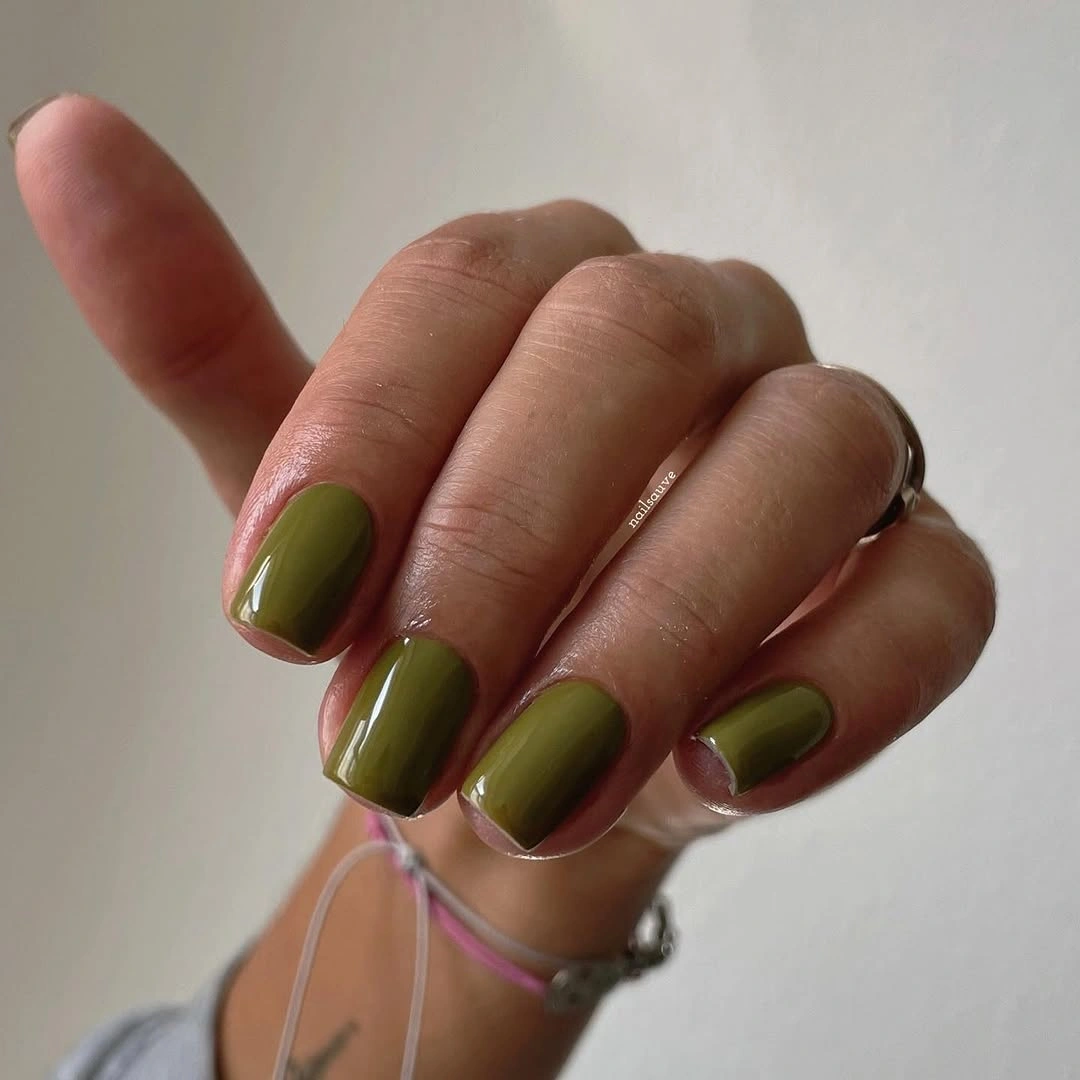
Olive is useful when brown and burgundy feel too expected but you still want a grounded fall color. On tan skin, the green undertone stays visible while the muted value keeps the contrast comfortable. A short squoval is already a practical fit, and a cream accent nail could be added if the full solid feels too quiet.
Because the coat is uniform, edge quality matters and dark chips will show. The color may also shift under warm or cool lighting, so choose the undertone with the rest of your wardrobe in mind. Keeping the set solid is the coherent move; extra art would take attention away from the earthy color that makes it distinctive.
Tonal neutrals rotate across square tips
Medium square nails alternate muted beige, taupe, brown, and burgundy solids, with one color assigned to each visible nail. There are no patterns or embellishments, so the design is created by the order of the shades and the relationship between light and rich tones. The square edge gives the tonal rotation a clean, deliberate structure.
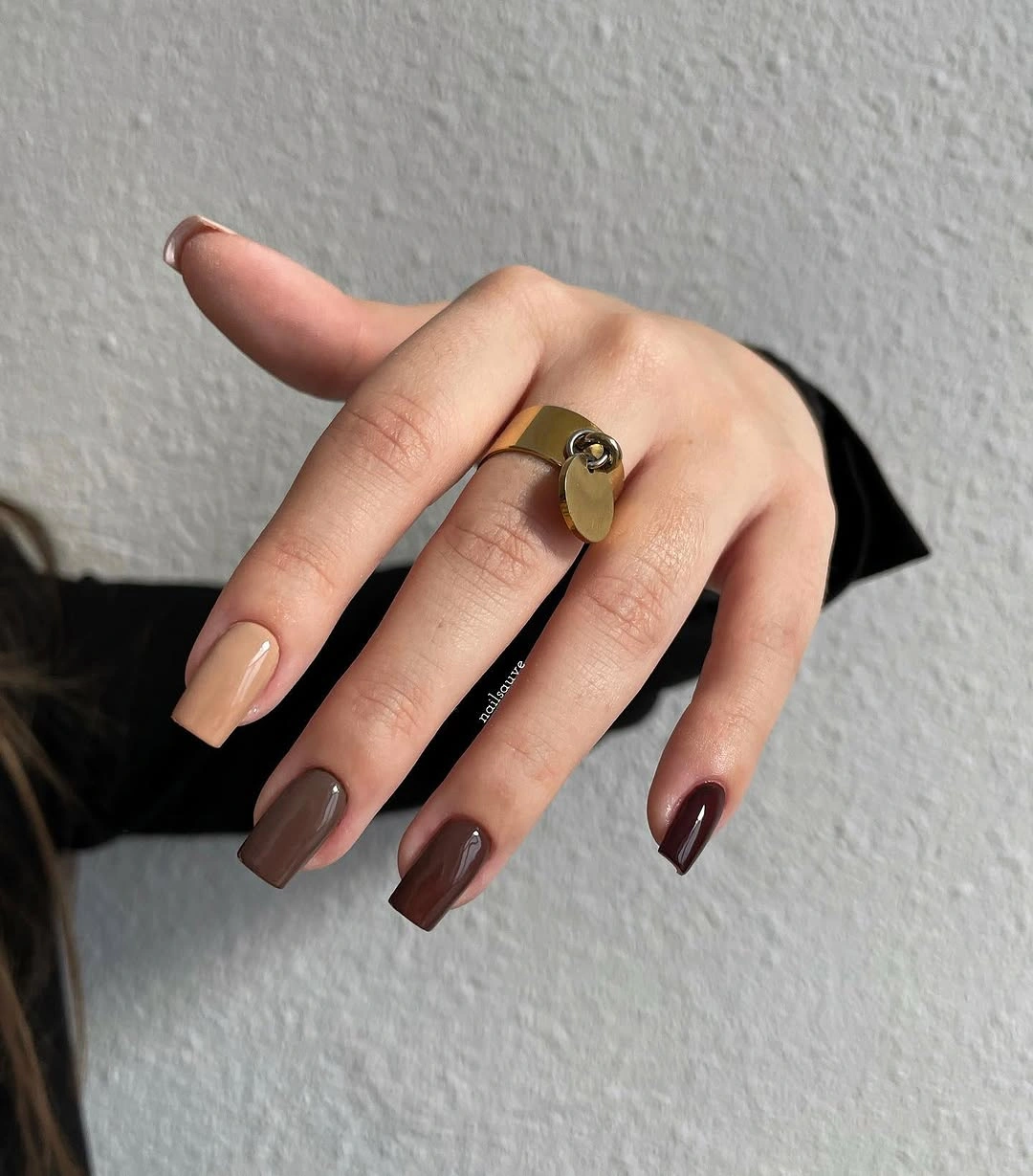
This palette feels seasonal because the colors move through warmth and depth without relying on one dramatic shade. On tan skin, the beige and taupe keep the hand open, while brown and burgundy add anchors. A shorter squoval can carry the same rotation, and limiting the set to three tones would make coordination even easier.
Multiple solids require more planning than a single coat, but they are still easier to maintain than a detailed pattern. Darker nails will show chips sooner than the pale one, so the set benefits from keeping the strongest shades on nails that receive less friction. The arrangement matters more than the exact names of the colors.
Warm creamy white with a clean finish
Short-to-medium rounded-square nails are covered in an even creamy white or ivory shade with a glossy surface and no visible art. The tone is softer than stark paper white, which lets it sit comfortably beside warm skin and a yellow-striped sleeve. The shape remains compact and uncomplicated, giving the warm neutral plenty of open space.
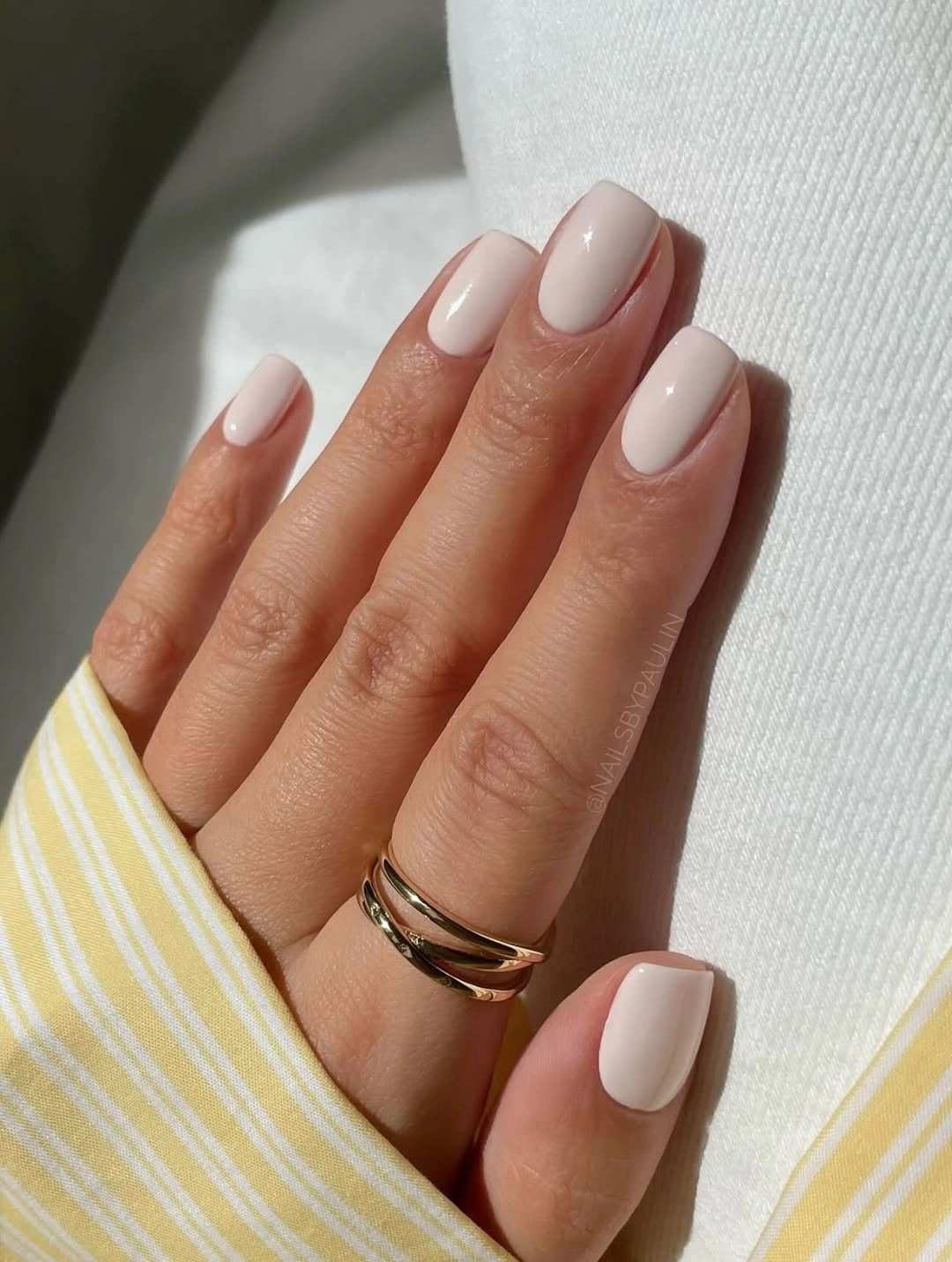
A warm white can feel seasonal when its undertone connects with the surrounding warmth, even without a brown or berry accent. On tan skin, it gives clear contrast while remaining gentler than a blue-white. A short squoval is practical, and one thin brown line could be added if you want a small fall reference without changing the base.
The light surface will reveal marks and uneven edges, so a plain manicure still needs care. If the contrast feels too strong, choose a sheer ivory or a soft cream with less opacity. The strength of this look is the quiet field of color, and adding several accents would turn a calm option into a different design entirely.
Purple layers with marbling and metallic points
Medium-long nails mix purple, lavender, and pale pink bases with milky marbling, silver or gold curved details, and small round embellishments. The set changes from nail to nail but remains within a cool family, so the varied motifs feel related rather than random. Selected nails are more decorative, while others provide solid color relief.
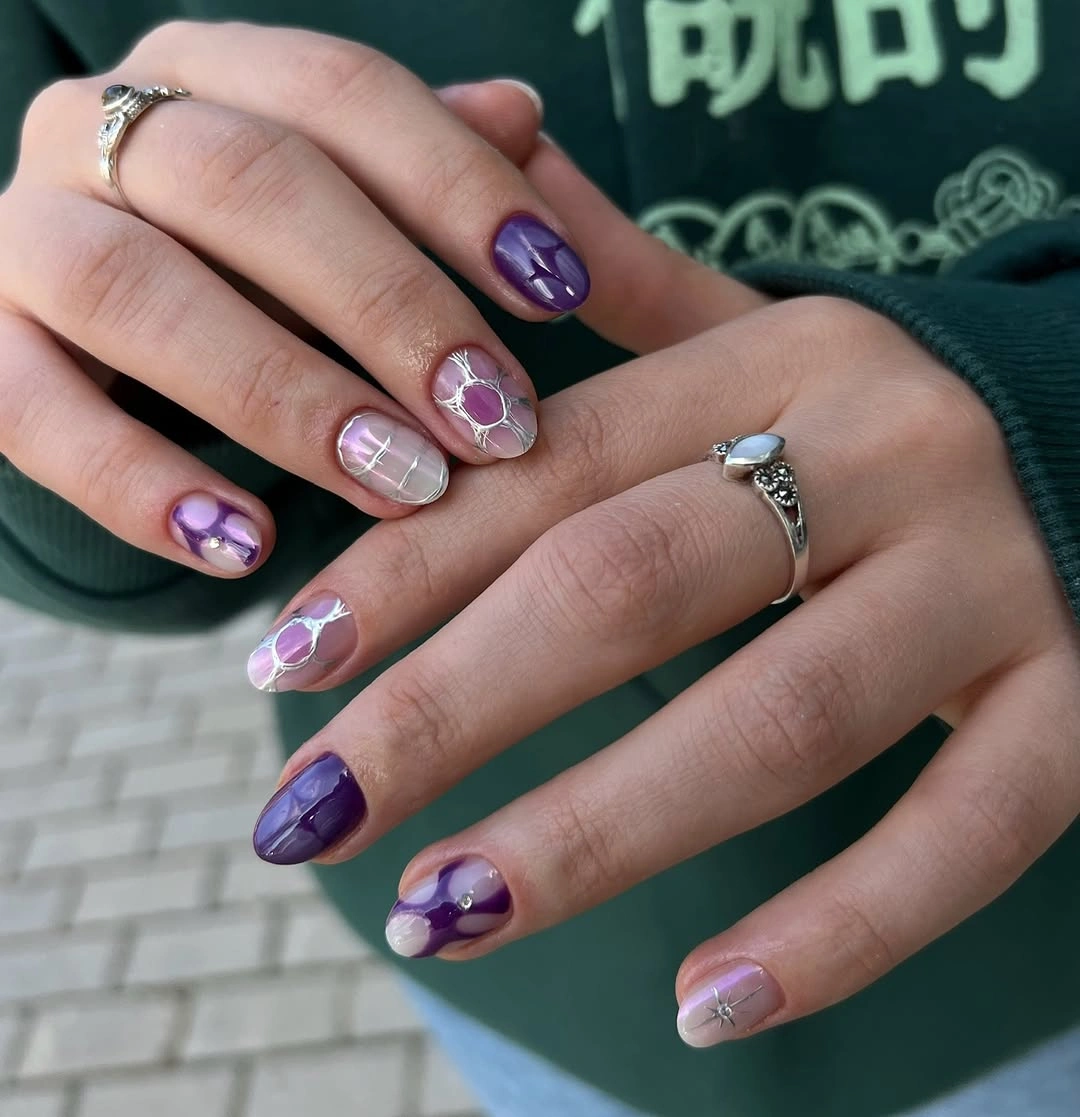
The color family is what keeps the design together. Solid purple supplies depth, pale marbling creates lighter pauses, and metallic details add small flashes that echo the contrast. A shorter mixed set can keep one solid purple, one marbled nail, and one metallic accent instead of repeating every visible idea. That same balance between rich color and relief is useful when editing broader fall manicure ideas.
The number of detail types is the honest tradeoff: more embellishments mean more places for wear to show and more decisions during maintenance. If the set feels too busy, remove a motif before changing the palette. The manicure will still have its identity as long as purple remains the anchor and lighter surfaces provide relief.
Reflective cobalt blue on medium square nails
Medium square nails are covered in a saturated cobalt blue with a subtle reflective or pearly shift through the center. The set is otherwise uniform, so color and surface do all the visual work, while the square shape gives the vivid blue a clean frame. The cool tone stands apart from the warm neutrals nearby.
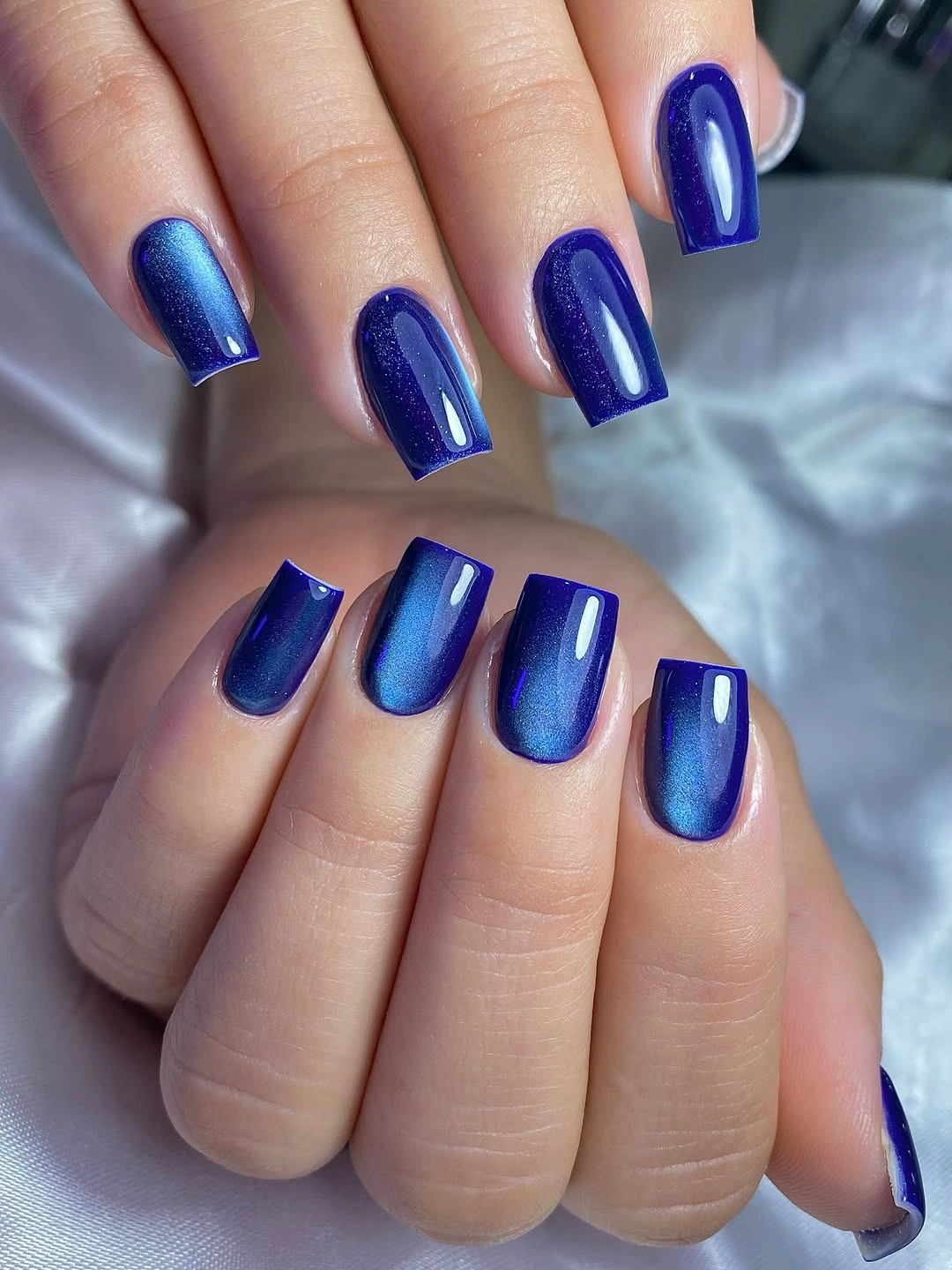
A bright blue can feel seasonal when its depth and shine are allowed to stay uncomplicated. On tan skin, the saturated field has a crisp boundary, and the slight reflection keeps it from looking flat. A shorter squoval would make the design easier to wear, while a deeper ink blue could soften the contrast without changing the solid structure.
Uniform color shows chips and patchiness quickly, so the surface needs even upkeep from cuticle to free edge. If the full set feels too vivid, use cobalt on two or three nails and leave the rest sheer or pale blue. The manicure stays coherent when the blue remains the lead rather than competing with added art.
Milky white almond nails with one gold heart
Medium almond nails use a glossy milky white base, with one translucent nude-pink accent carrying a small gold heart or heart-shaped mark. The remaining nails are plain, so the tiny warm symbol becomes the only strong decoration. The almond taper keeps the pale set soft and elongated, with enough open space for the accent to stay delicate.
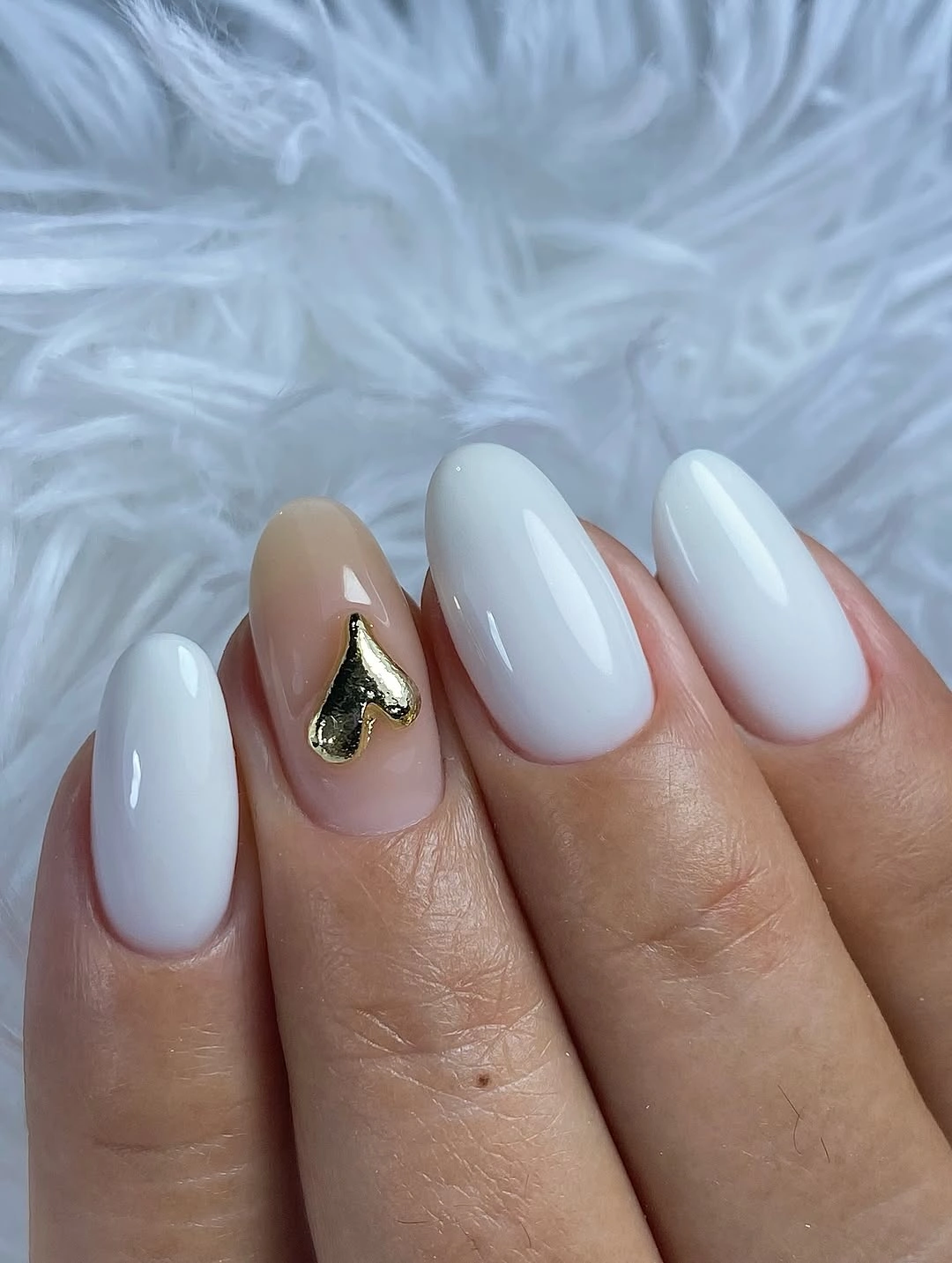
The single symbol works because the surrounding surface is open and quiet. On tan skin, the milky white remains bright without looking harsh, while the nude accent creates a subtle change in value before the gold appears. A shorter almond can keep the same one-accent composition, and the heart could become a gold dot if you prefer an abstract finish.
Pale nails show marks, while tiny symbols need precision to stay clean. That is a manageable tradeoff because only one nail carries the extra detail. If you want more seasonal depth, use a warm champagne gold or a soft brown outline, but keep the rest of the hand free of added motifs so the focal point remains clear.
Yellow plaid, tiny figures, and pink sparkle
Short rounded nails mix yellow-and-white plaid, white nails with small yellow motifs, bright character-like details, and one iridescent pink glitter accent. Yellow returns across several surfaces, which keeps the playful mix connected even though the designs change from nail to nail. The compact shape stops the variety from becoming too expansive.
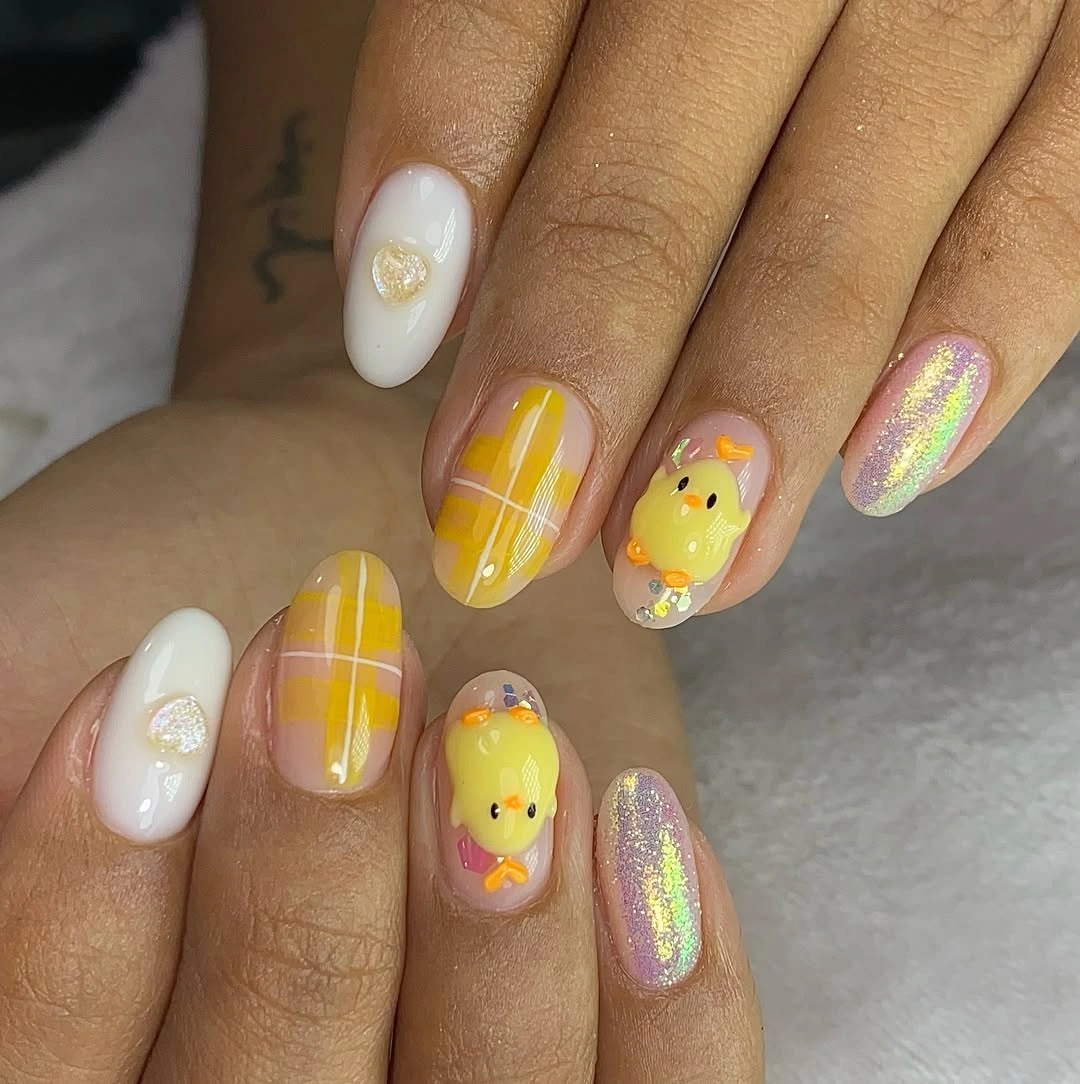
The strongest choice is the repeated warm yellow, not any one tiny figure. That makes the set easier to adapt: keep the plaid on two nails, use one small yellow accent, and leave the glitter nail solid. On tan skin, the white areas give the yellow enough contrast while the pink sparkle supplies a cooler point of light.
Small illustrations and raised-looking accents can need more attention than a plain color, and a short nail gives each mark limited room. If you want a calmer version, remove the character-like details first and keep the plaid plus glitter. The manicure stays coherent when the repeated yellow remains visible and the extra motifs are treated as optional.
Lavender line art with metallic studded accents
Long square nails use pale lavender and white bases with black cartoon-like line drawings, playful symbols, and rows of metallic studs on selected nails. One purple glitter section adds another texture, but the black line art remains the main visual language. The long square surface gives the illustrations room to vary.
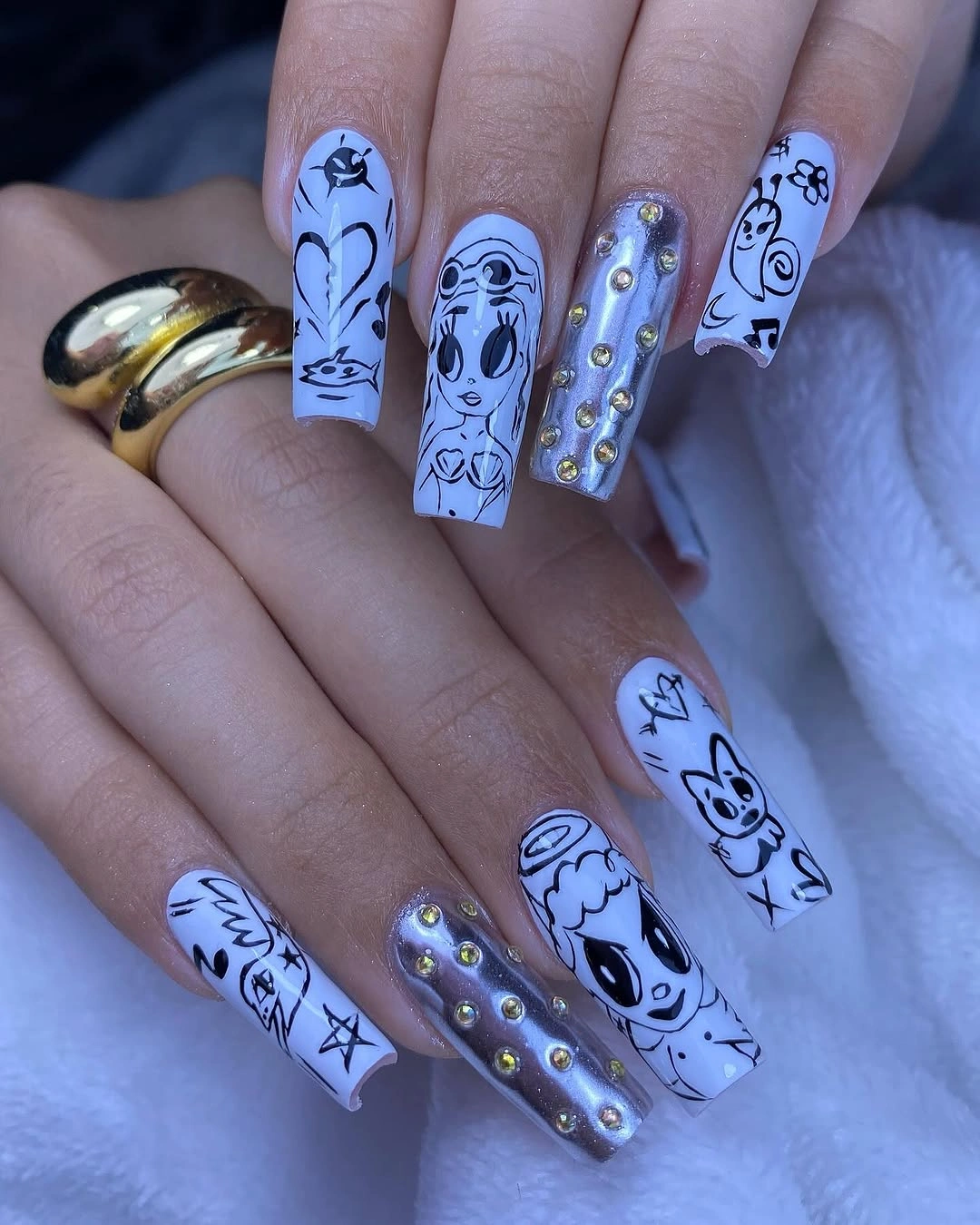
The pale base is important because it lets the black drawings stay legible while keeping the overall palette light. Metallic studs provide a tactile-looking interruption, but they are concentrated rather than repeated on every nail. A shorter squoval can keep one simple illustrated accent and one studded nail, making the set less demanding without removing its personality.
The length and number of detail types create a clear maintenance tradeoff, especially when line art reaches the free edge. If you want a softer interpretation, use a single black outline and replace the studs with a small metallic dot. The design works when the illustrations remain the main thread and the extra sparkle stays secondary.
Rainbow solids in a compact glossy set
Short rounded-square nails assign a different saturated color to each visible nail: pink, blue, green, yellow, and red. The surfaces remain plain and glossy, so the manicure is built entirely from color order and contrast. The compact shape keeps the bright sequence cheerful rather than oversized, with each shade given its own clear space.
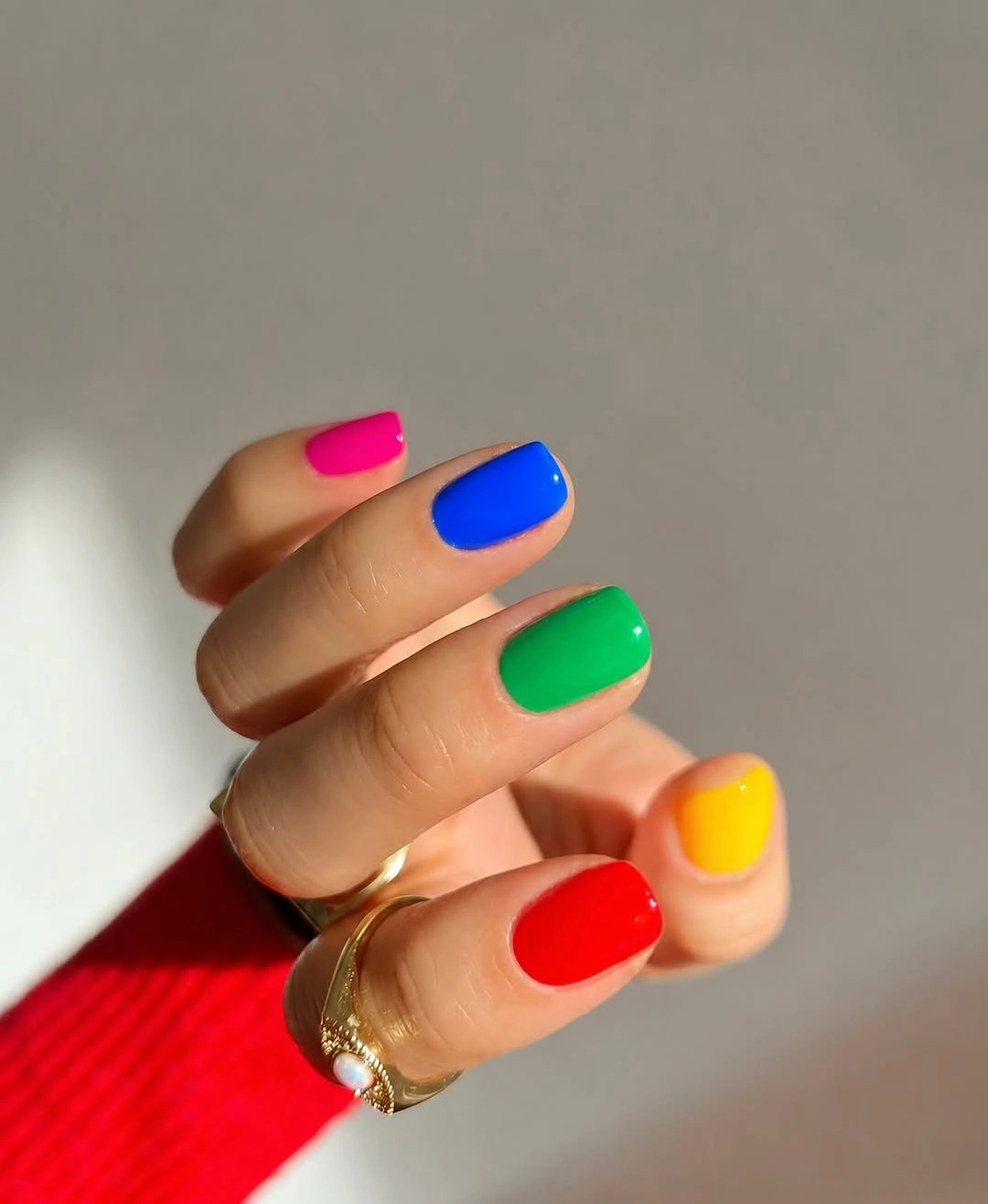
This is the clearest all-solid multi-color option in the tan row. On tan skin, each shade has a distinct edge, while the simple surface prevents the hand from feeling busy despite the number of colors. You can keep the full sequence, choose only warm tones, or mute one color toward rust for a more autumnal edit.
The practical issue is coordination rather than detail: five bright colors take more planning and dark or vivid chips show quickly. A short squoval remains easy to wear, and repeating one shade on two nails can make the palette feel less scattered. The set is strongest when the colors remain separate and no extra art competes with them.
Nude nails with tiny multicolor flower borders
Short rounded-square nails use a sheer nude-pink base, with tiny multicolor dots or flower-like marks arranged near the free edge on several nails. One nail carries a fuller field of small flowers, creating a focal point while the rest remain delicate. Gold rings and a blue garment frame the hand, but the manicure depends on the restrained color marks.
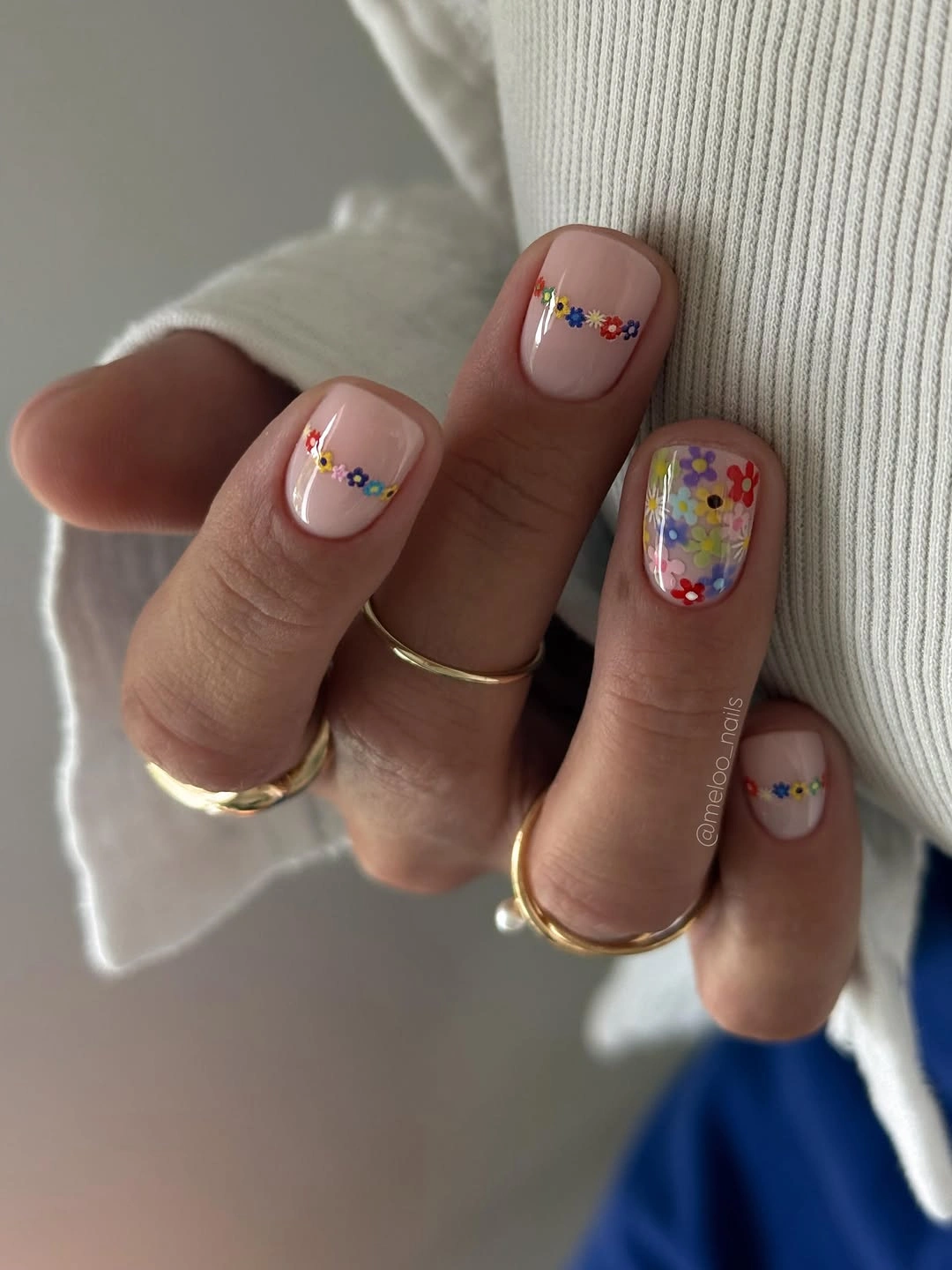
The small accents feel light because the nude base remains open around them. On tan skin, the pale center creates a soft contrast and lets the colors read as fine decoration rather than a full cover. A shorter squoval can keep one tiny border per hand and remove the fuller floral nail if you want less maintenance.
Fine marks may blur or chip visibly against a light base, so placement and spacing matter more than adding another shade. The useful seasonal adjustment is to shift one dot toward berry, ochre, or deep blue while keeping the rest of the palette small. The design works when the flowers remain a delicate edge, not when they spread across every surface.
Teal and black graphic tips with white swirls
Long pointed nails leave a nude-pink center open, then frame the tips with deep teal and black panels, white curved lines, and small swirl details. The dark edges create the strongest contrast, while the pale center gives the design negative space and keeps the pointed silhouette visible. The repeated curves soften the graphic border.
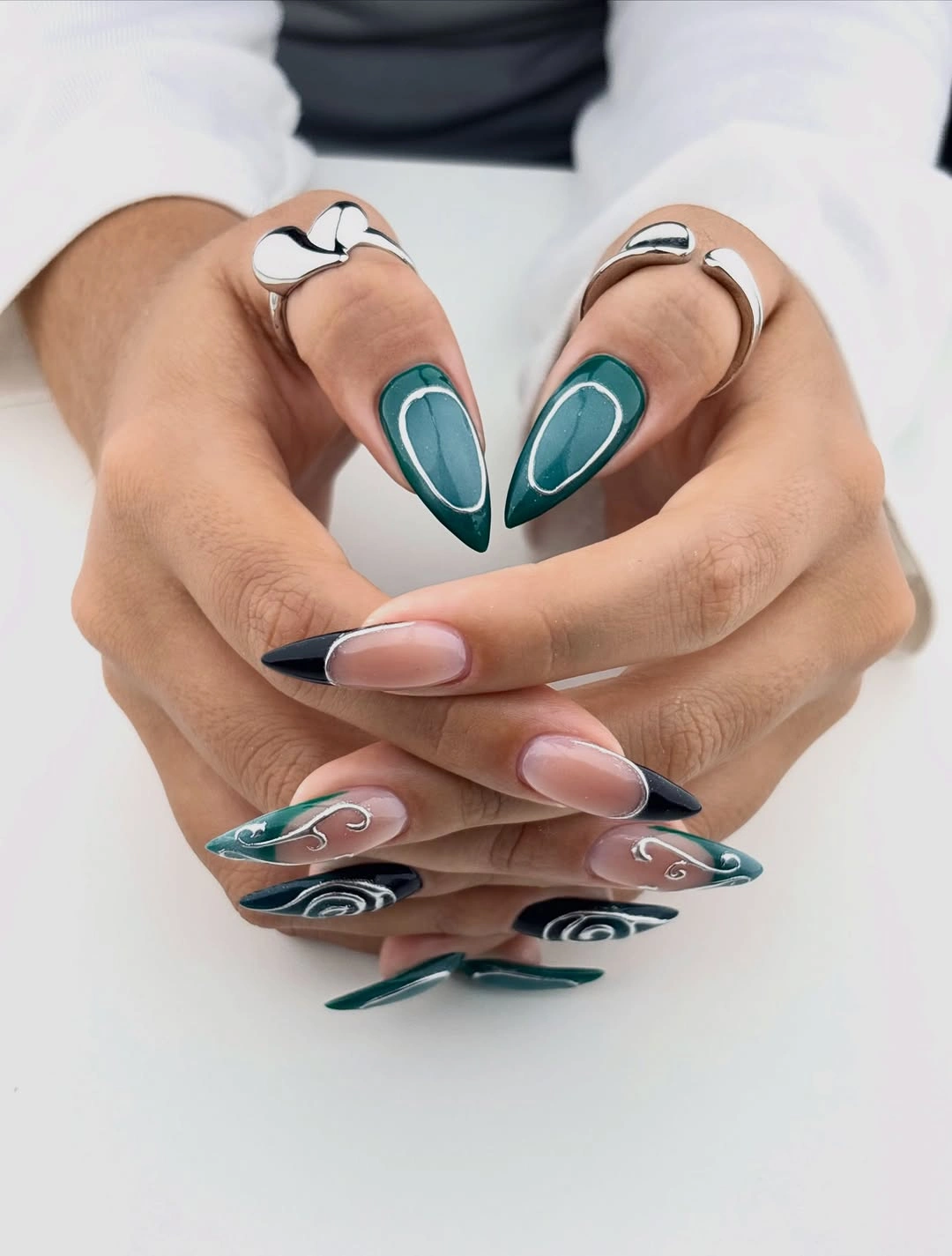
The manicure is dramatic because the dark teal and black sit at the edge rather than blending into one solid coat. On tan skin, the nude center creates a warm pause between the hand and the graphic tip, while the white lines give movement to the darker sections. A shorter almond can keep one teal V-tip and one white swirl for a more wearable version.
Long pointed nails and layered dark graphics are less convenient than the short solids in this row, and uneven edges will show quickly. If the design feels too intense, simplify the swirl count before removing the contrast. The strongest version keeps the teal, black, and nude relationship clear, with white linework used as a small lift rather than a second full pattern.