
Fall Nails With Accent Nail: Small Details, Big Contrast
The difference between a supporting nail and a focal nail can be no wider than a thread. Move that detail closer to the edge and the hand looks cleaner; cluster it near the center and the same color becomes an ornament. Accent work deserves to be judged by placement before decoration, because the detail must change the balance without making every other nail compete.
When choosing fall nails with accent nail, decide what the quiet nails are supposed to do before adding the focal mark. They can repeat a color, hold open space, or absorb contrast so the accent has somewhere to land. If the supporting surface is already loud, a small change in scale often works better than another shade or a denser embellishment.
Dark Matte Nails with One Gold Linear Accent
Most nails use a dark charcoal-brown matte color, while one accent carries a bright gold-looking elongated shape crossed by fine lines. The contrast is immediate because the base absorbs attention and the accent reflects it back, yet the limited distribution keeps the design composed. A medium square shape gives the gold detail a stable frame instead of adding more drama through length.
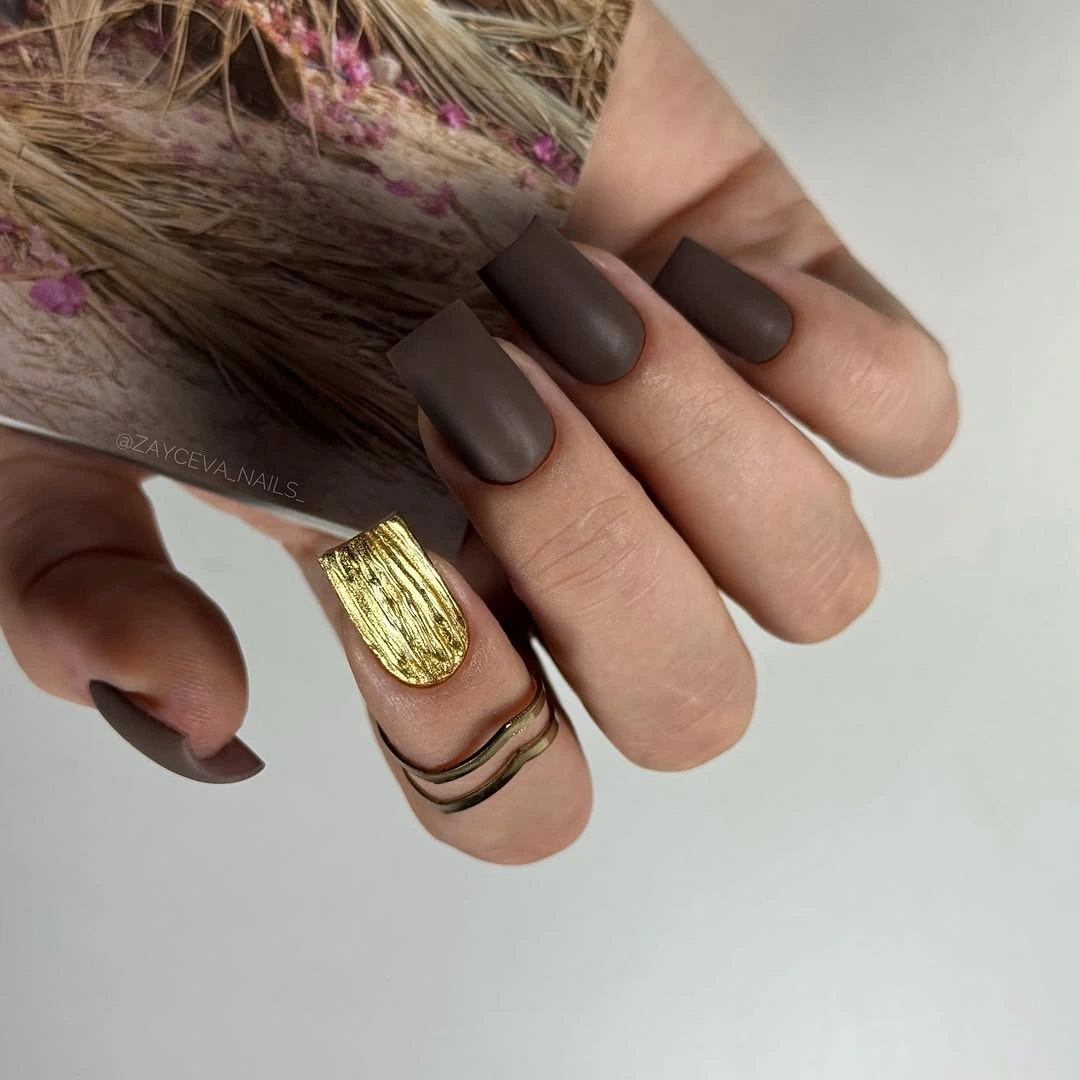
Keep the metallic-looking accent alone if the goal is a clear focal nail. Repeating it on every finger would remove the pause created by the dark solids, while a shorter square would make the same contrast easier for everyday wear. The gold ring nearby echoes the warm note, but the manicure does not need extra jewelry-like details to explain itself.
This is the most restrained accent logic in the set: quiet base, one concentrated difference, and enough open surface to let the eye find it quickly. A gold line can replace the broader shape for a simpler version, while muted bronze would soften the contrast without changing the placement. Avoid naming the exact motif or material; the visible relationship already supplies the useful guidance, and dark fall nails offers a useful comparison for judging how much weight the base should carry.
Soft Gray-Lilac with a Black and Silver Detail
Soft gray-lilac nails create a pale, quiet field, while one accent combines a dark bow- or loop-like form with bright silver-looking touches near the tip. The detail feels graphic because it is darker than the base, but the metallic points keep it from becoming a heavy black block. Rounded-square length helps the accent stay friendly rather than severe.
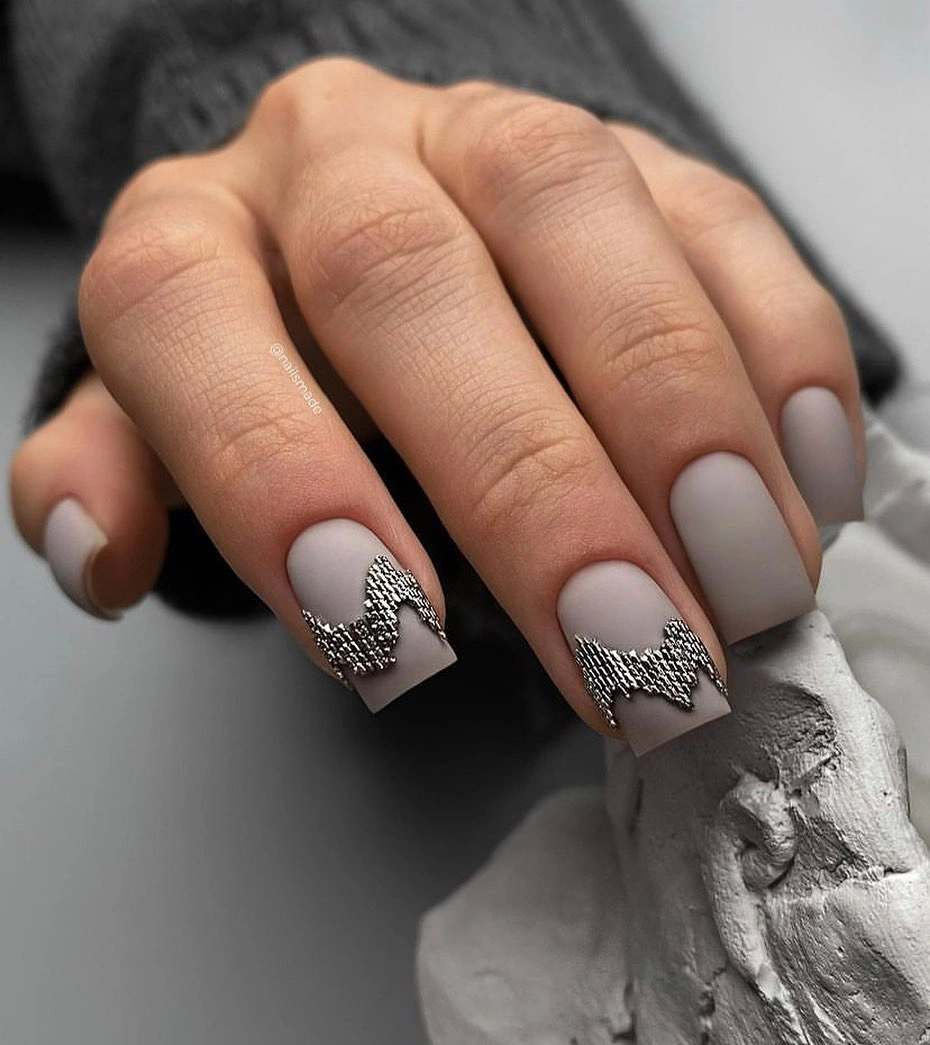
Let the pale base do most of the visual breathing. One or two dark accents are enough, and the remaining nails should stay simple so the small silver marks remain readable. On a shorter shape, reduce the loop to a single curved outline and keep the contrast near the upper half of the nail rather than filling the entire surface.
The useful lesson is not whether the accent is literally a bow, ribbon, or another object; it is the way a compact dark shape becomes clearer against a softened light base. Pairing gray-lilac with black and silver also gives a cool alternative to the warm gold accent before it. The white sweater reinforces that lightness, but the manicure can stand without the styling prop.
Nude Almond Nails with One Floral-Looking Accent
Pale nude nails use open black curved edges, while one accent contains pale pink and white petal-like shapes with a darker outline. The accent is softer than a dense jewel design because its light forms blend into the base, yet it still changes the rhythm of the hand. Medium almond shape gives the curves room to follow the natural taper.
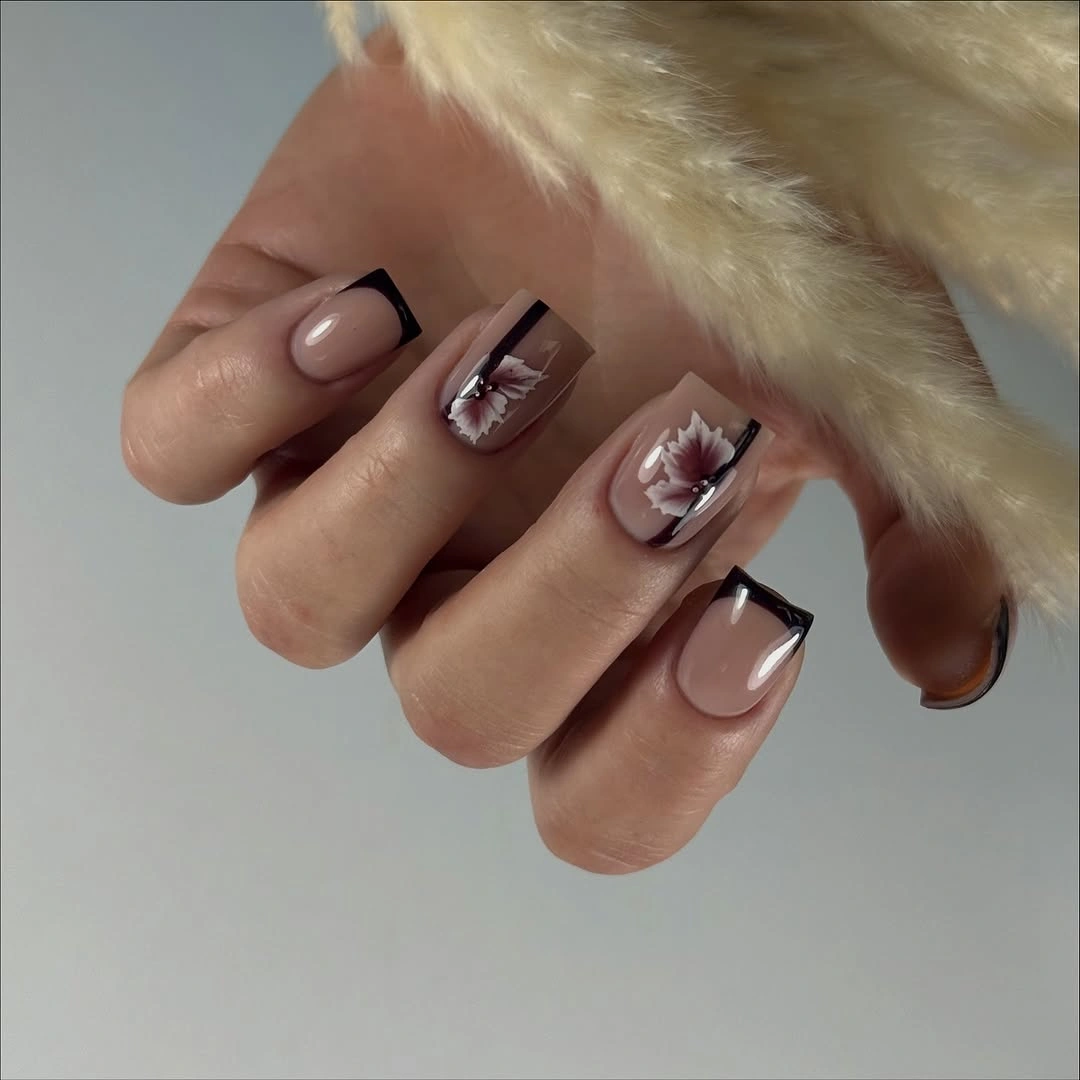
Keep the surrounding nails outlined rather than fully decorated. That repetition connects them to the accent without stealing its role, and it leaves enough negative space for the pale forms to remain visible. A shorter almond can carry the same structure if the accent is simplified to one central bloom-like shape and the dark edges stay thin.
This is a good choice when an accent nail should feel delicate rather than loud. The nude field works beside black, cream, dusty rose, or silver, while the pale detail introduces a little softness without forcing a full floral theme. Describe the motif broadly as petal- or leaf-like unless the exact identity is clear; the placement and contrast are the reliable parts.
Orange and Teal Solids Framing Wavy Accents
Solid orange and deep teal nails act as anchors for accents that combine white, orange, teal, and black wavy bands. The bright solids give the mixed nails a clear color reference, so the artwork feels connected rather than accidental. Medium-long almond shape adds movement because the bands can follow the taper toward the tip.
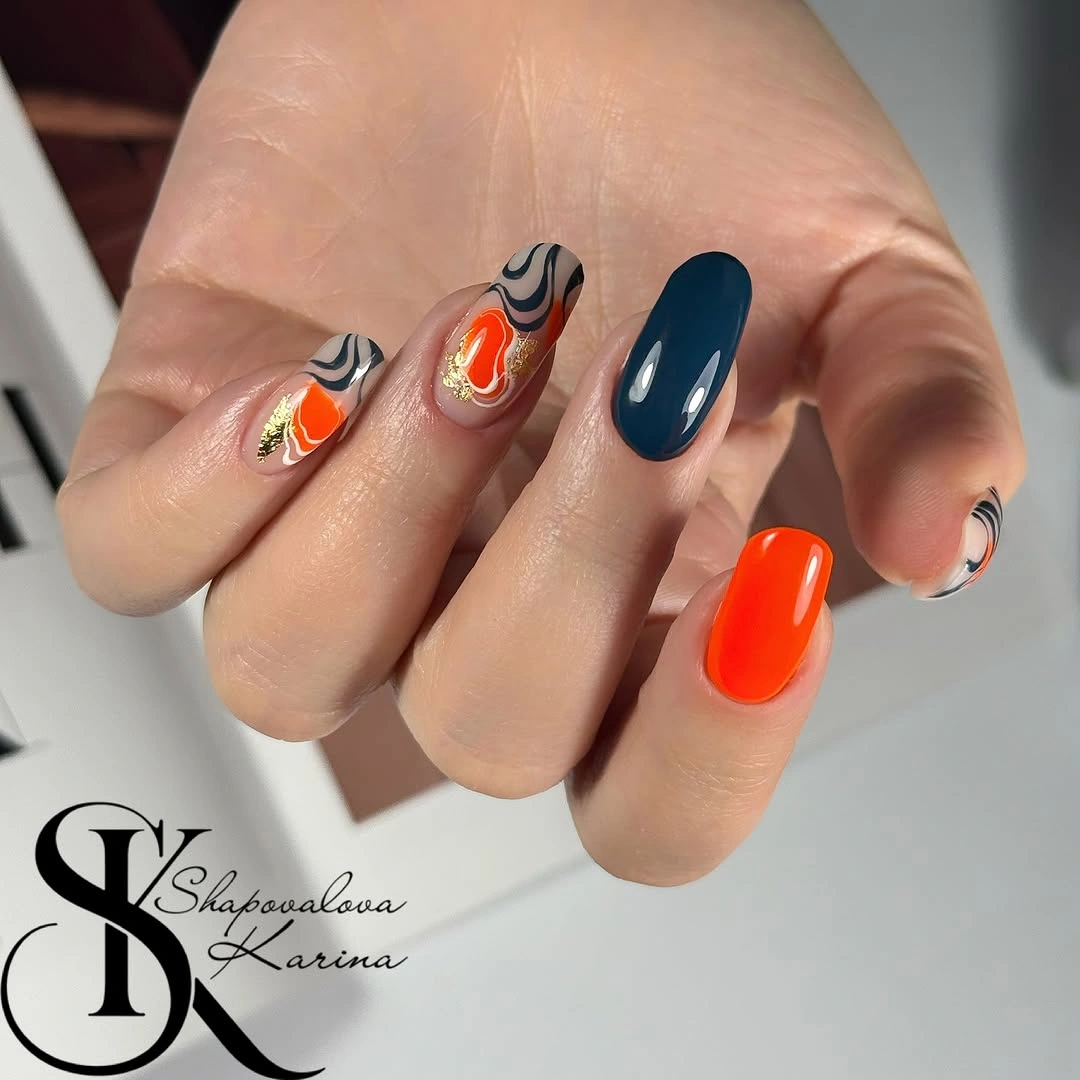
Use the solid nails to control density. If the waves become too numerous, keep one orange and one teal anchor while reducing the accent to two broad curves. Shortening the almond will also calm the design, but the color contrast should remain because it is what makes the focal nails easy to understand.
This is a practical way to wear a multicolor accent without asking every nail to carry every shade. A quiet outfit will give the orange and teal room, while a printed top may compete with the wavy details. The best adaptation changes one variable at a time: fewer waves, shorter length, or a single accent nail, not all three at once.
Sheer Almonds with Clustered Bright Embellishments
Long almond nails use a pale sheer or nude base, while selected accents carry bright round pearl-like or rhinestone-like details and a light-catching surface. The contrast comes from density: neighboring nails stay open and pale, while the focal nails gather several small points in one area. That distribution gives the set a clear center even though the base color remains delicate.
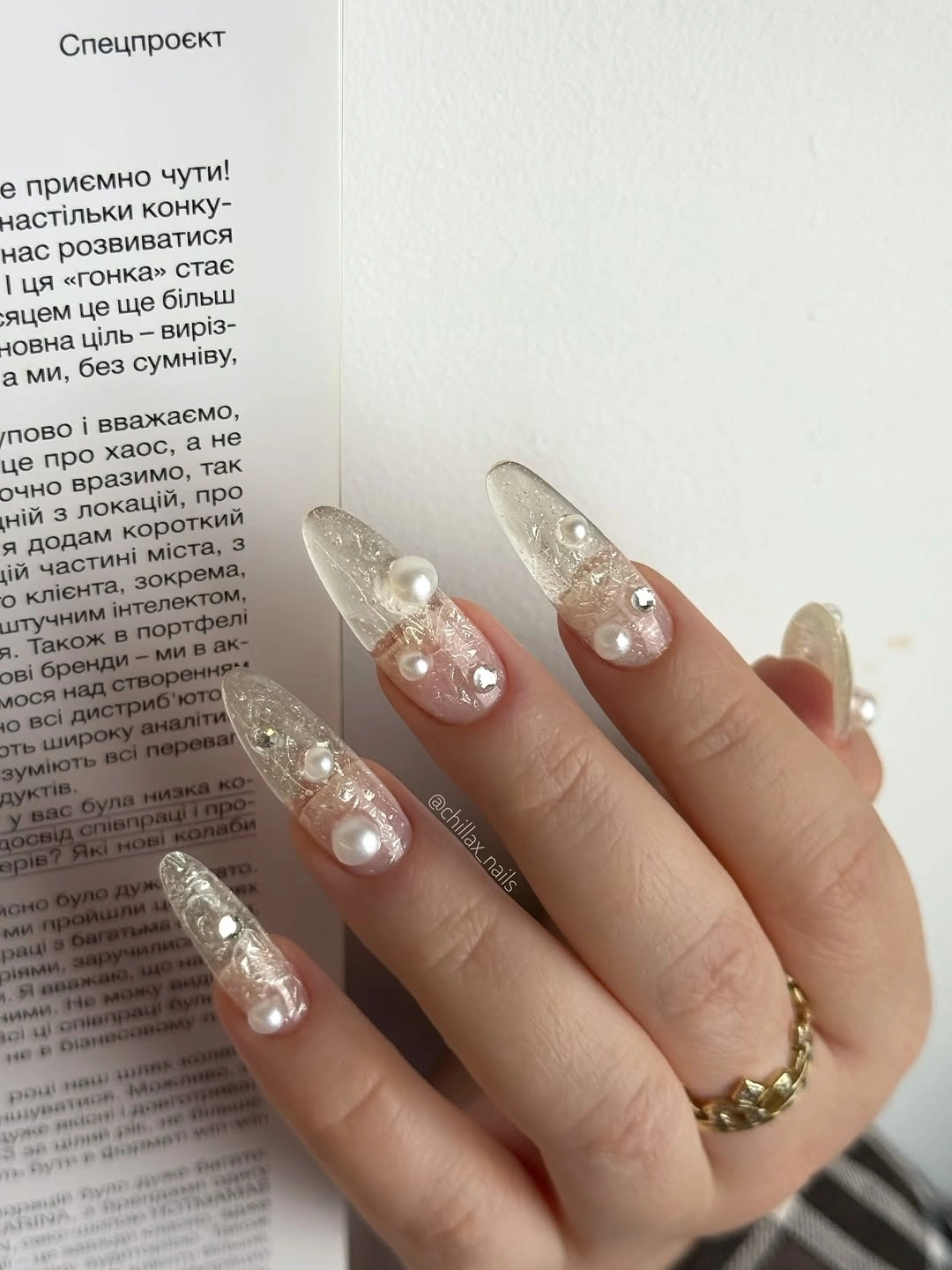
One decorated accent can deliver most of the effect on a shorter almond. Leave the other nails plain or give them only a small reflective point, because repeating the full cluster everywhere would remove the useful difference between support and focal nail. The long shape makes the sparkle dramatic, but it can also catch on fabric, so the design is best understood as a statement with a practical limit.
Use pale space as the partner to any dense detail. It keeps the set from becoming visually heavy and lets the accent read as intentional rather than crowded. The exact material of the round elements is not visible enough to name safely; what matters is the clear contrast between an airy base and a concentrated, bright cluster.
Burgundy Stilettos with One Ornate Focal Nail
Very long pointed nails combine deep burgundy solids, pale nude sections, and one central accent with dense gold-looking and multicolor details. The pointed silhouette already creates drama, so the focal nail works by concentrating decoration rather than spreading it across the hand. Burgundy supplies a warm anchor, while the pale sections give the clustered detail a lighter frame.
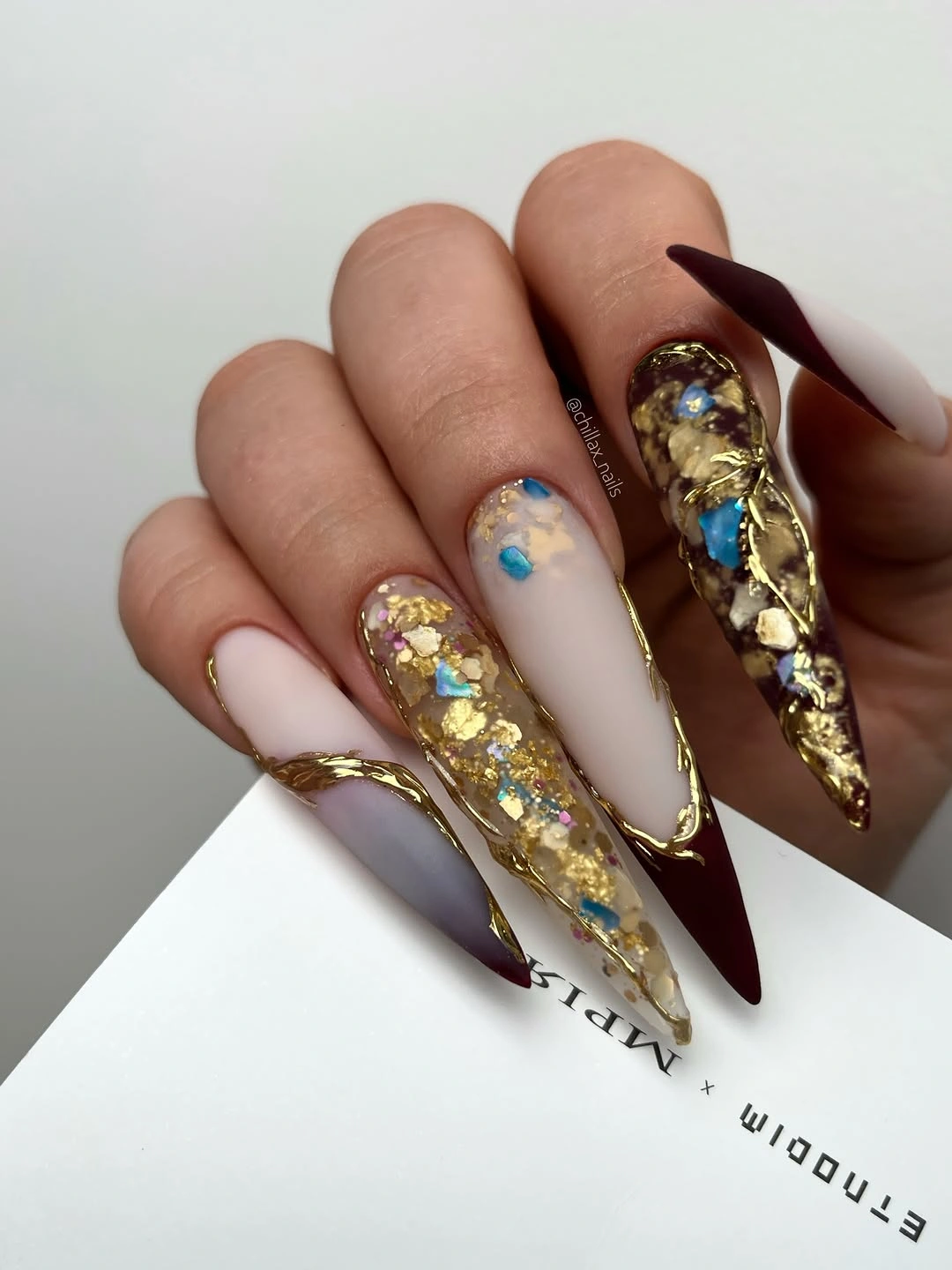
For daily wear, reduce the length before changing the color story. A medium almond can preserve the burgundy-and-nude contrast, and one small metallic cluster can replace the dense center without losing the idea of a focal nail. Keeping the surrounding points simpler is essential because the extreme silhouette and the accent are already asking for attention.
This design is strongest when treated as an event-oriented statement rather than a neutral everyday set. Deep red clothing or gold jewelry can echo the visible palette, but another ornate accessory may compete with the central nail. Avoid naming the embellishment materials or the hidden construction; the supportable advice is to protect the contrast between quiet support nails and one concentrated point.
Ivory Squares with Structured Gold Accents
Long square nails combine ivory or nude sections with muted taupe panels and narrow gold-looking details. The palette is restrained, but the sharp geometry makes the accent feel architectural rather than soft. A dried leaf sits in the styling, yet the manicure itself stays focused on the relationship between pale space, warm metallic-looking lines, and squared tips.
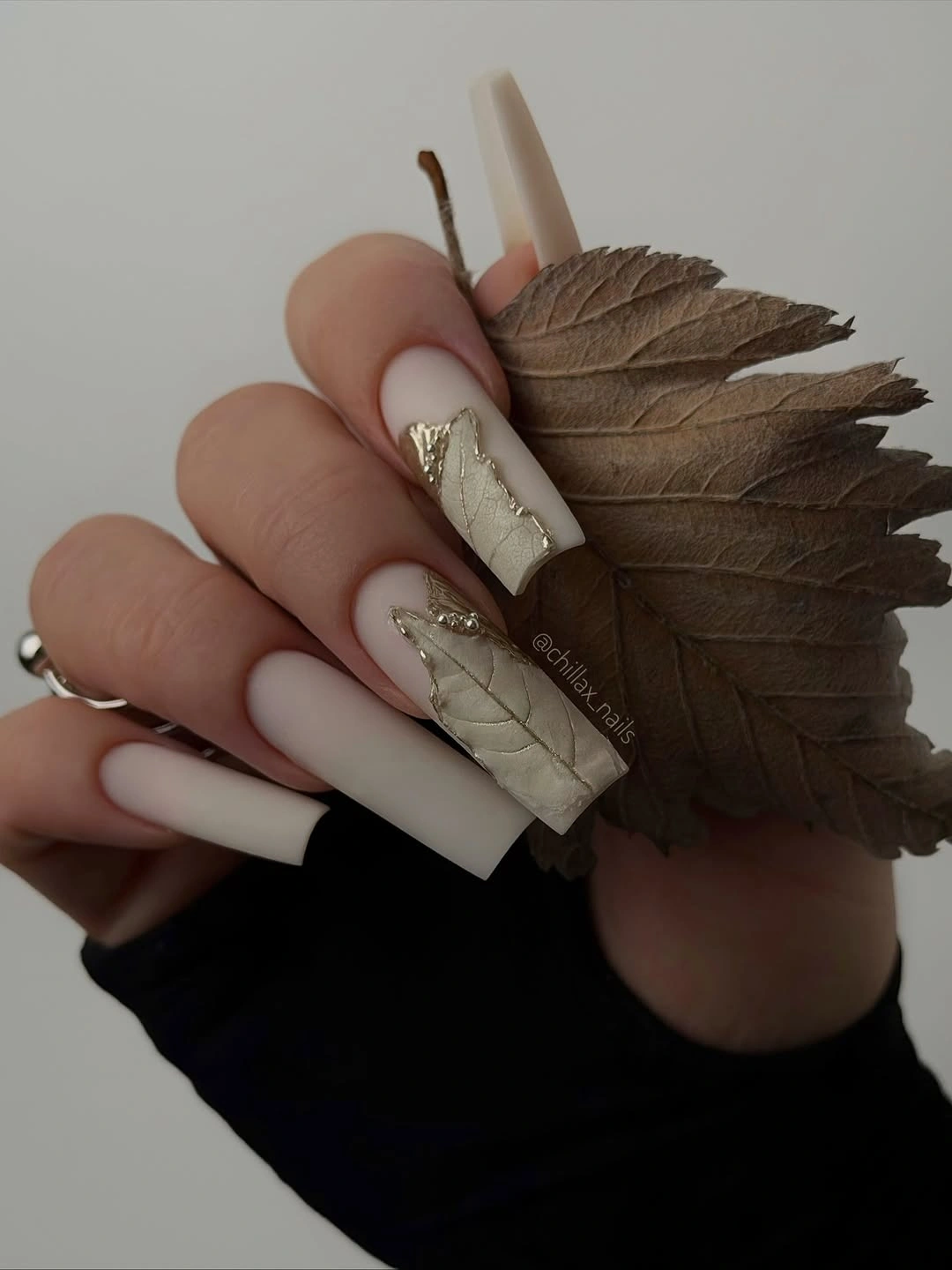
Keep the pale areas generous when adapting this design. Gold accents become more legible against an open base, while too many blocks would make a long square look crowded. A medium square could carry the same palette with fewer panels, lowering the visual weight and making the set easier to wear with everyday clothing, a proportion also useful to compare with fall nail designs for square shape.
Use this when you want an accent nail that feels organized rather than sparkling. One gold detail on a pale base can echo jewelry, while the muted taupe keeps the contrast grounded. The background leaf should not be used to infer the exact nail motif; the reliable visual idea is a neutral framework with small warm accents placed inside it.
Black-to-Pink Ombre with a Bright Center Detail
Very long stiletto nails fade from dark black tips into smoky pink or nude bases, while one accent carries a bright pink and gold-looking central detail. The ombre gives the supporting nails movement before the focal nail is even considered, so the accent can stay compact and still feel important. Thin black rings echo the sharp styling, but the manicure’s main rhythm comes from value moving along the points.
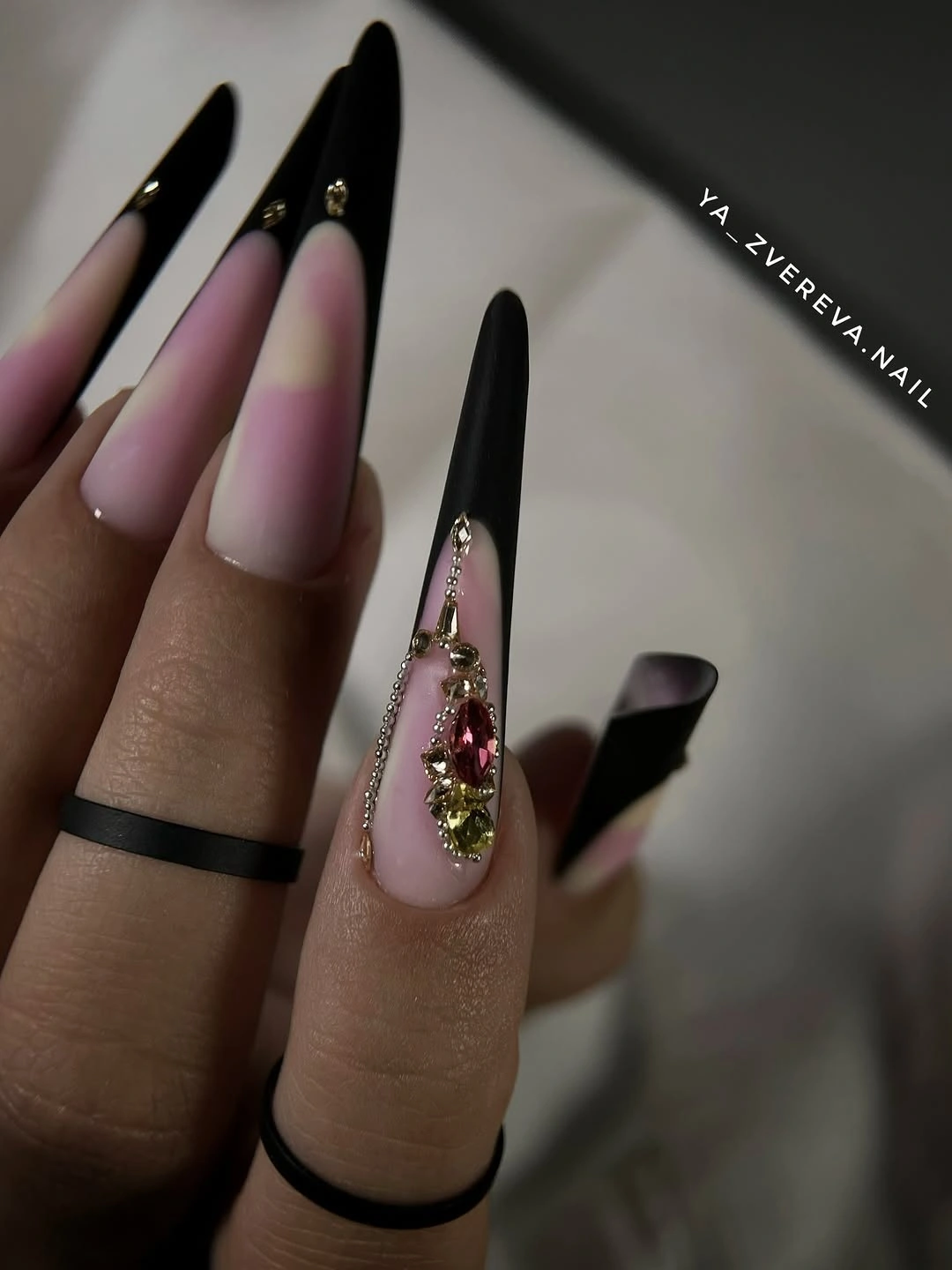
Shorten the stiletto to a tapered almond if you want a more functional version. Keep the dark-to-light transition on two nails and reserve the bright detail for one; that preserves the contrast while reducing both length and density. A pale base around the accent is especially useful because it lets the small center remain visible, much like the shape control discussed in fall short almond nails.
The design suits black, smoky pink, silver, and muted mauve clothing, while a bright pink accessory can repeat the focal note. Do not assume the accent is a gemstone or a particular setting; the visible guidance is simpler. Let a dark edge create the first contrast, then place one brighter detail where the eye naturally pauses.
Silver-Blue Glitter Filling the Pointed Silhouette
Very long stiletto nails use dense silver glitter with dark blue and black accents, and several tips carry bright raised-looking details. Here the accent concept is spread across the set through different densities rather than through one plain nail beside one decorated nail. The sharp silhouette makes the sparkle feel even more dramatic because every reflective point travels toward a narrow tip.
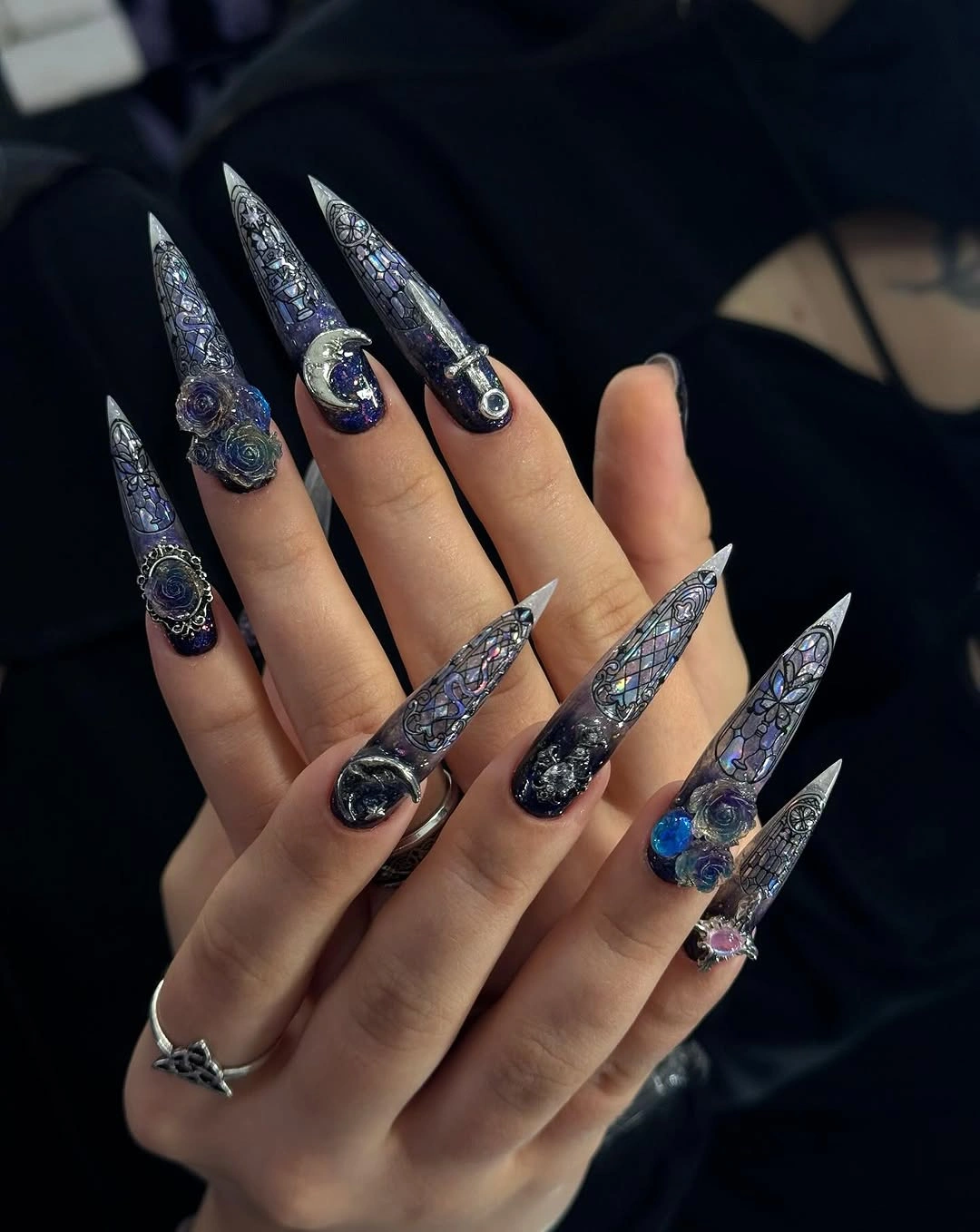
A wearable adaptation should simplify the distribution first. Keep the silver-blue detail on one or two nails and let the others use a dark or sheer base, preserving the idea of a focal cluster without asking the whole hand to carry the same visual weight. The extreme length is also a practical limitation, especially around fabric, typing, and ordinary hand movement.
This works best with quiet clothing because the manicure already contains contrast, shimmer, and length. If the full set feels too dense, a single glitter accent over a deep blue base will keep the color story and reduce maintenance. The exact glitter or embellishment type is not something to infer; density, direction, and contrast are the visible decisions worth saving.
Short Nails Each Carrying a Different Mini Accent
Short rounded-square nails use a different compact idea on nearly every finger: gray, green, orange dots, silver, black curves, and metallic-looking patches all appear in the set. The variety is deliberate, but the small scale keeps each accent contained. Instead of one dominant focal nail, the hand reads as a collection of brief visual notes held together by the shared short shape.
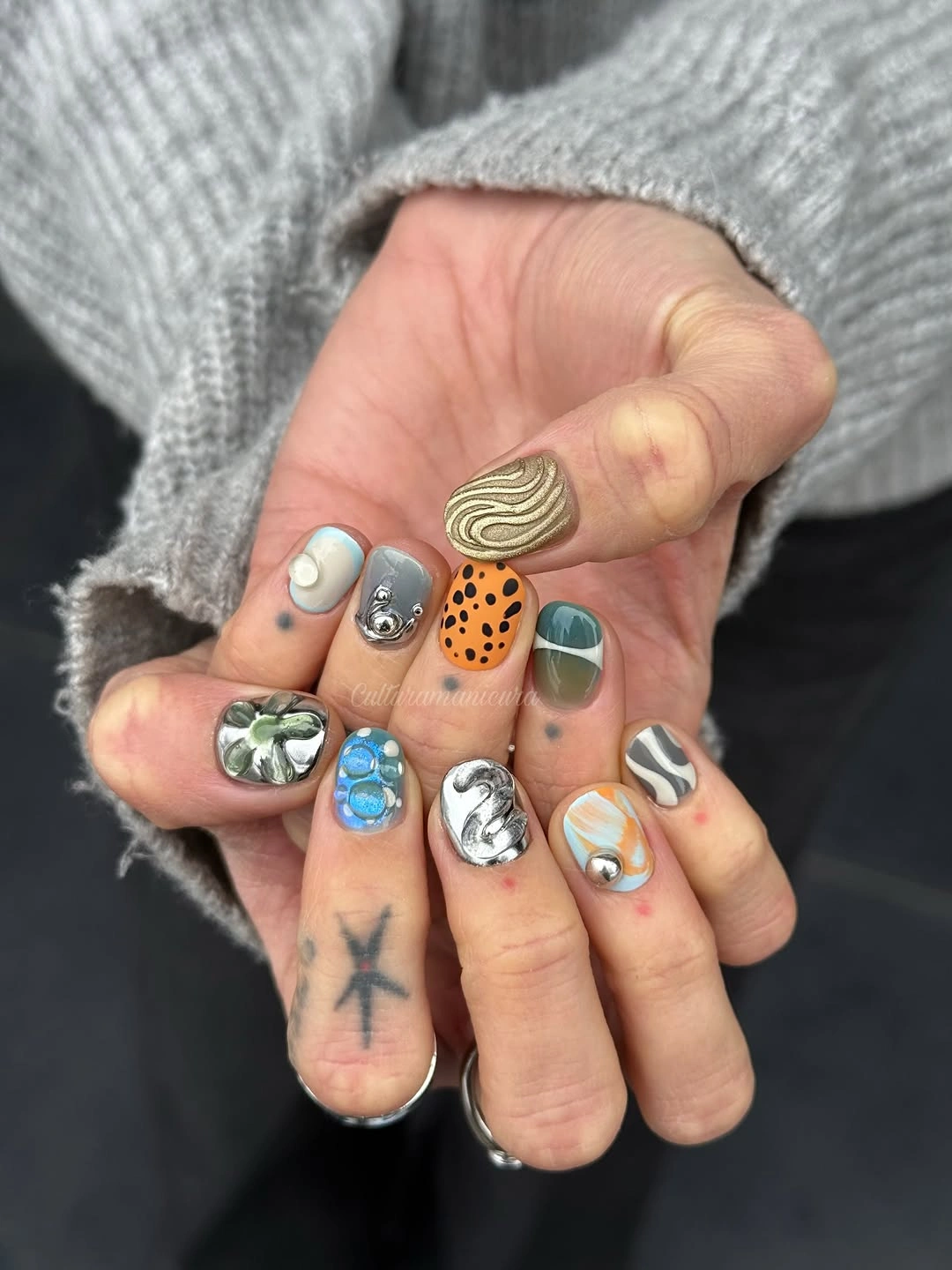
Choose one repeat element if you want the set to feel cleaner. A dot, curved line, or metallic-looking patch can appear twice, while the other nails use solid color; this creates continuity without erasing the playful mix. Short length makes the assortment less imposing, although too many unrelated colors can still compete with a printed outfit.
This is a good approach for experimenting with accent ideas before committing to a full design. Keep the base palette to three colors and let one nail carry the most detailed combination, then use the remaining fingers as support. The exact theme is not necessary; the useful principle is compact placement, clear separation, and one shared scale across the hand.
Earthy Olive Nails with Warm Textured Details
Short nails combine an olive-brown solid with nude and bronze-brown accents that carry textured or leaf-like marks, while a narrow gold-looking curve adds a small point of brightness. The palette feels grounded because the colors stay close to earth tones, and the accent is warm rather than icy. Short rounded-square shape keeps the varied details compact and wearable.
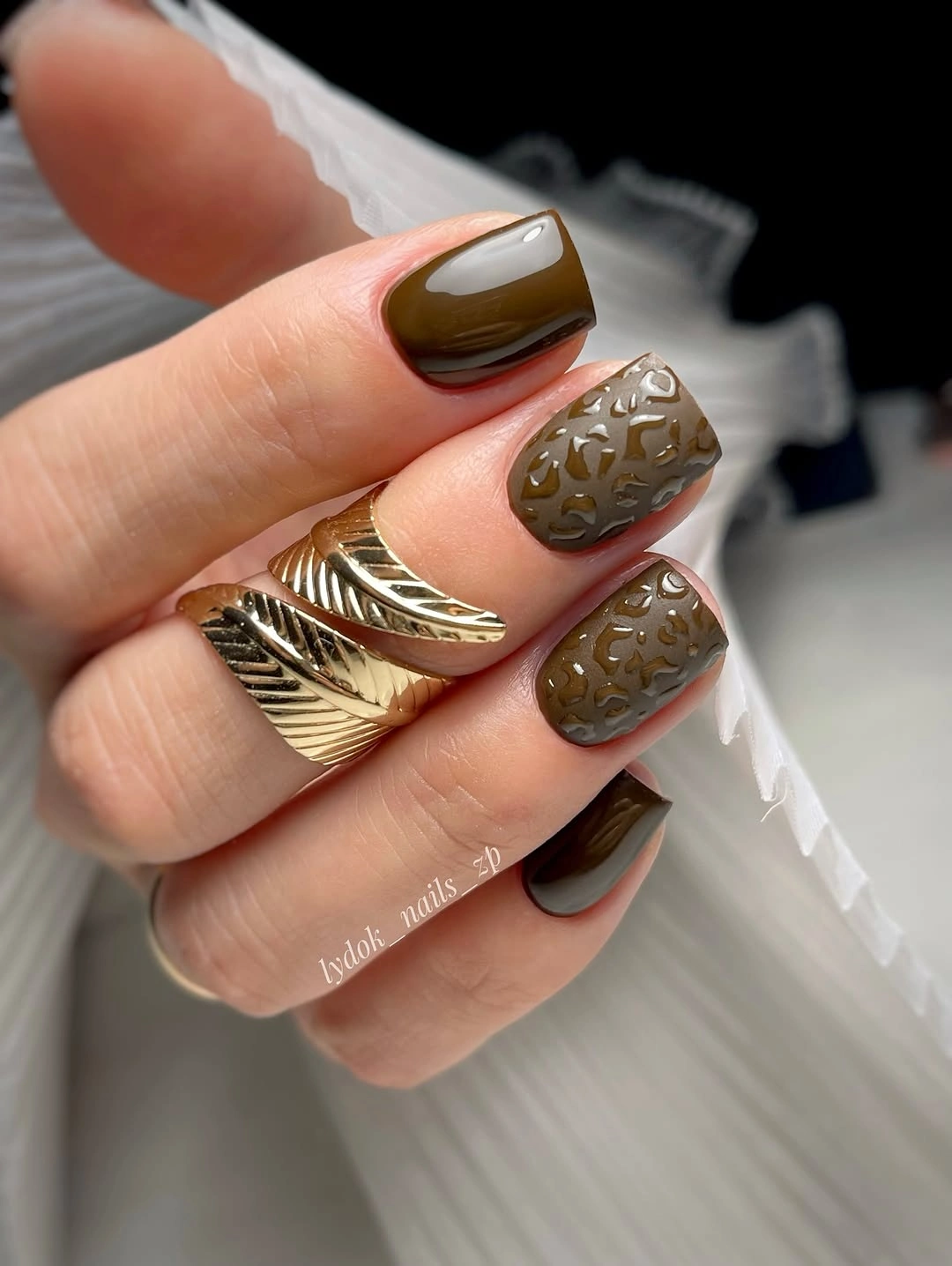
Let olive repeat across the hand so the textured accents have a stable background. One warm panel and one fine line are enough; adding more gold-looking detail would make the set heavier without improving the central contrast. Dark earthy colors can hide small surface variation, but the free edge still needs attention because the shape is visible against pale clothing.
Wear this with cream, taupe, brown, or gold jewelry if you want the warm accents to feel connected. The background and rings are context, not proof of an exact motif or material, so keep the design description broad. What makes the manicure useful is the balance between a quiet olive anchor and two small warm interruptions.
Bright Red with One Pale Heart-Like Accent
Most medium-long square nails are bright red, while one pale pink accent carries several small red heart-like marks. The accent works because it repeats the dominant color in a smaller, lighter format, making the hand feel coordinated rather than split into unrelated halves. The red solids remain the visual anchor, and the pale nail supplies the pause.
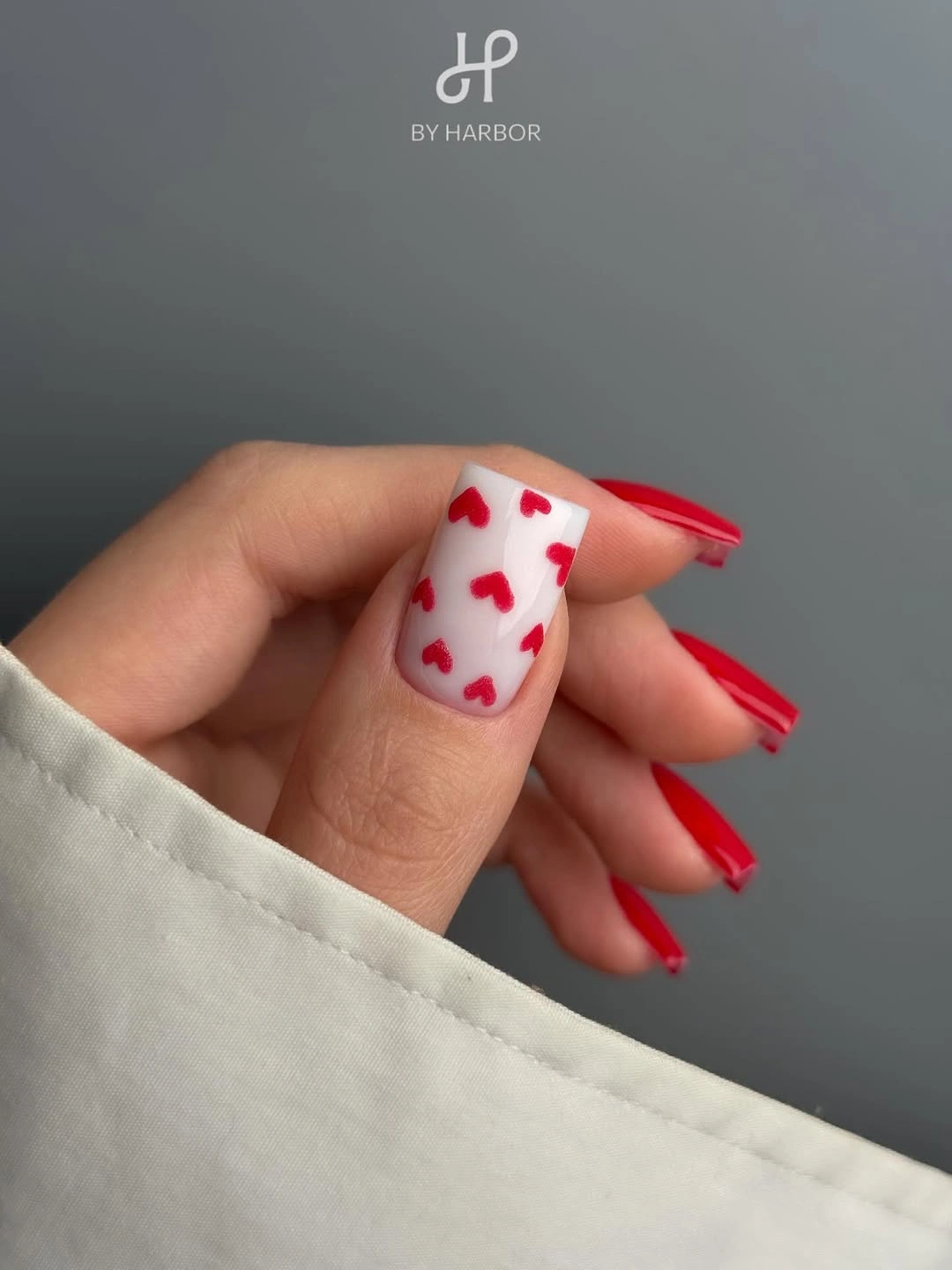
Keep the small marks to one accent nail and shorten the square if you want a more functional version. The motif is readable because the pale base gives each red mark room, so crowding the accent with extra dots or lines would weaken the contrast. A plain pale pink on the other hand can also soften the set without adding another design.
If a literal heart feels too specific, replace the marks with small red curves or dots while keeping the same color relationship. This is a useful accent formula for red, white, or blush clothing because the dominant color can be repeated easily. The best result keeps the focal nail simple enough that the eye sees the red set first and the tiny marks second.
Red Solids Paired with Graphic Pale Curves
Bright red solids are interrupted by pale accent nails carrying black and white curved lines, with a few darker rounded details adding small points of weight. The red gives the set heat, while the pale nails create an open surface where the graphic marks can be read. Medium rounded-square shape keeps the contrast strong without the extreme effect of a long point.
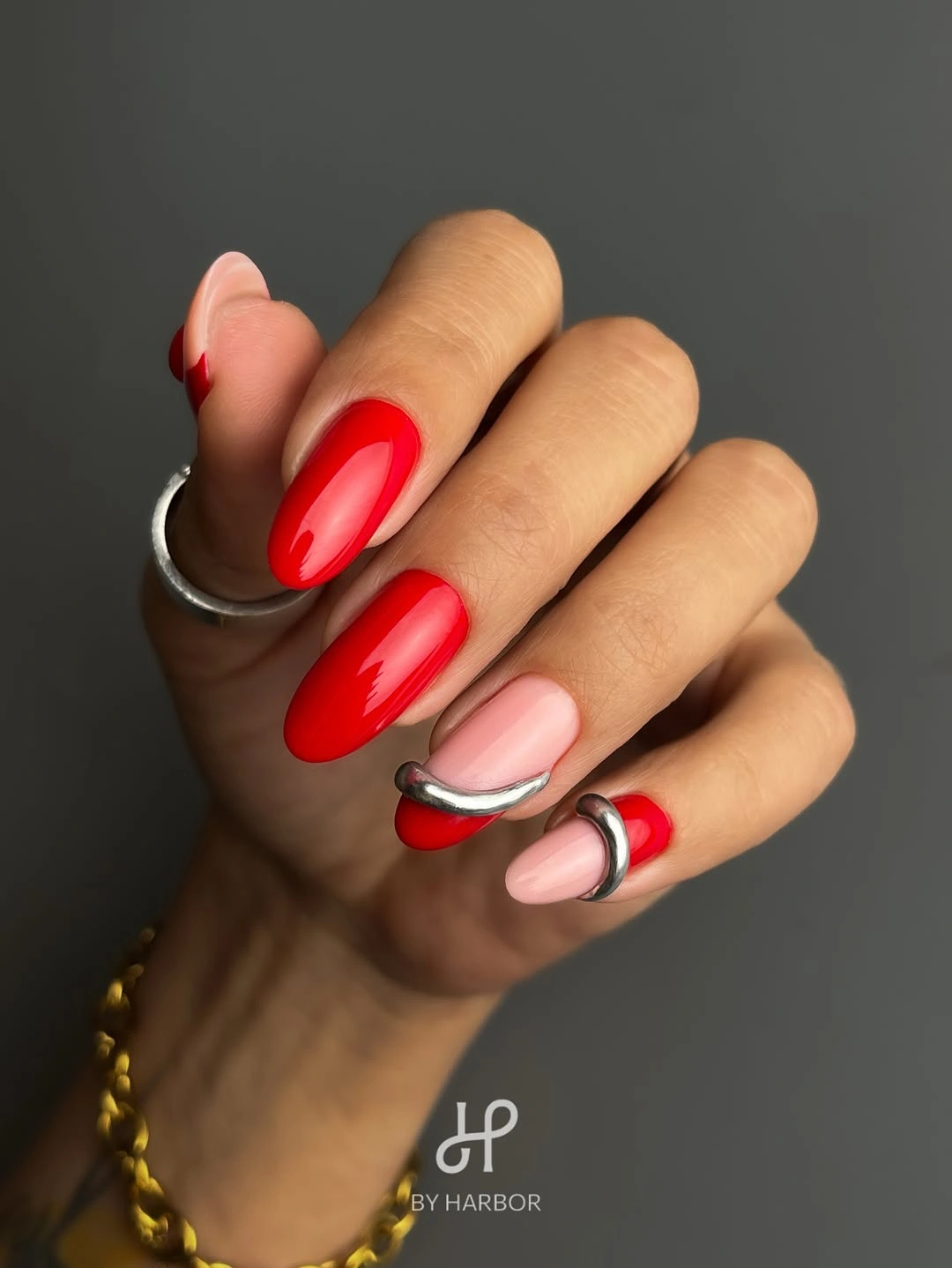
Use the accent nails as a visual reset rather than repeating the lines everywhere. Two pale fingers are enough to break the red rhythm, and the curves should stay broad enough to remain visible on the compact surface. If you want a softer version, change the red to a deep berry while preserving the pale background and dark line work.
This direction shows how an accent can change the mood of a familiar solid color. Black and white add structure, but they do not need to become a full graphic theme, so simple clothing will keep the manicure clear. Avoid assigning a precise symbol to the curves; their supportable role is contrast, movement, and a small amount of visual interruption.
Nude Tips with Small Dark Printed Patches
Pale nude nails leave much of the surface open, while black and tan irregular spots gather near selected tips and accent areas. Some nails stay mostly clear or solid, so the print functions as a selective detail rather than a full-hand pattern. Medium-long square shape gives the patches room to read, but the light base keeps the set visually open.
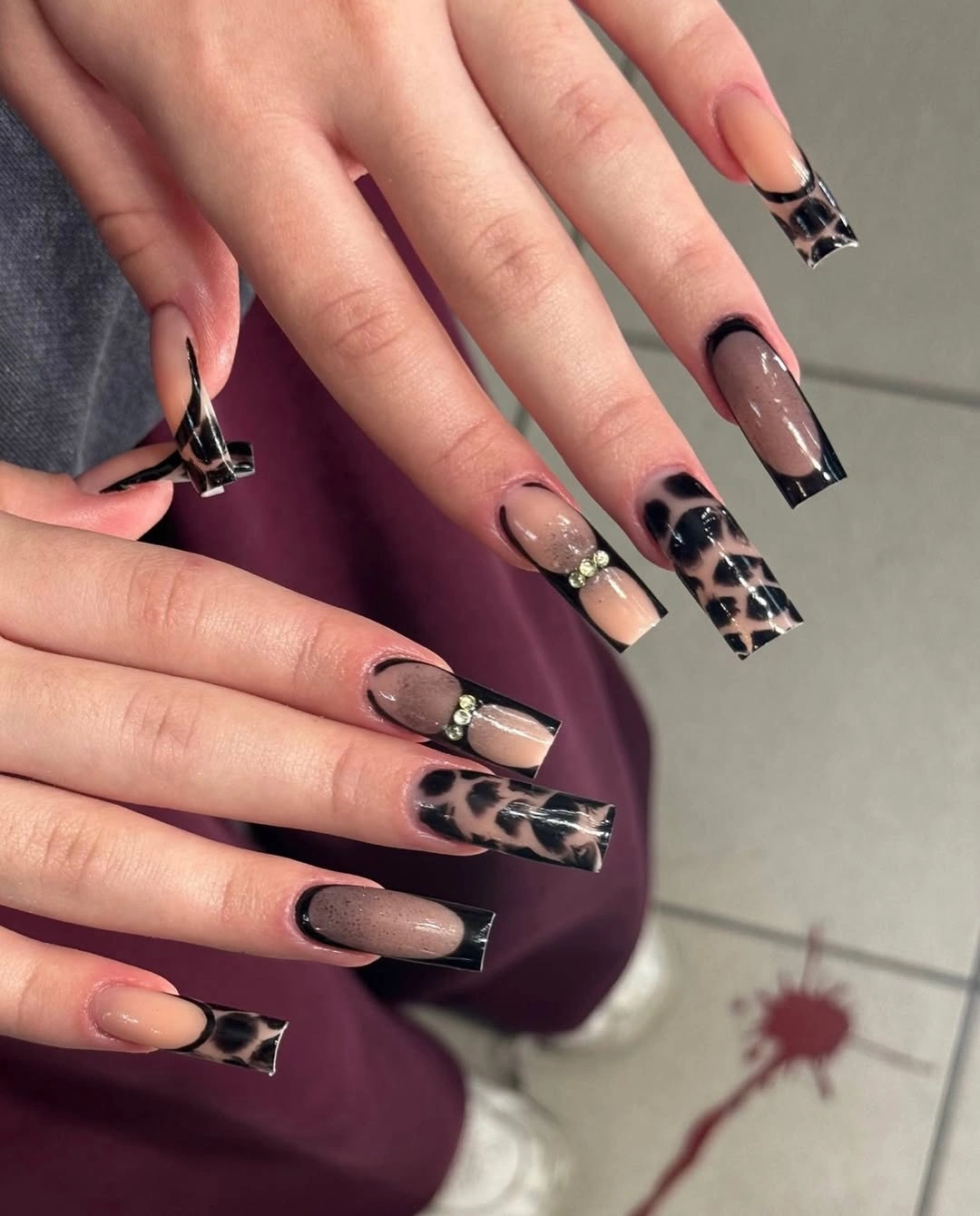
Place the strongest print on one or two nails and let the remaining fingers stay nude. Small spot clusters near the tip can be easier to maintain than a full accent nail, while a shorter square will make the dark marks feel more compact. The contrast should remain clear, but the base should never disappear underneath the pattern.
This works with black, camel, tan, or cream clothing because the palette already contains both light and warm dark notes. If the exact print is uncertain, use broad language such as irregular spots and curved patches rather than naming an animal. The practical value is the spacing: pale surface around a concentrated dark accent creates balance.
Deep Teal with a Blue Glitter Accent
Long squared nails use a deep teal base, while selected areas carry bright blue-green glitter that becomes lighter toward the upper sections. The dark base gives the sparkle a clear frame, and the change in density creates an accent effect without relying on a single isolated nail. Long shape supports the gradient-like movement but also makes the design more visually substantial.
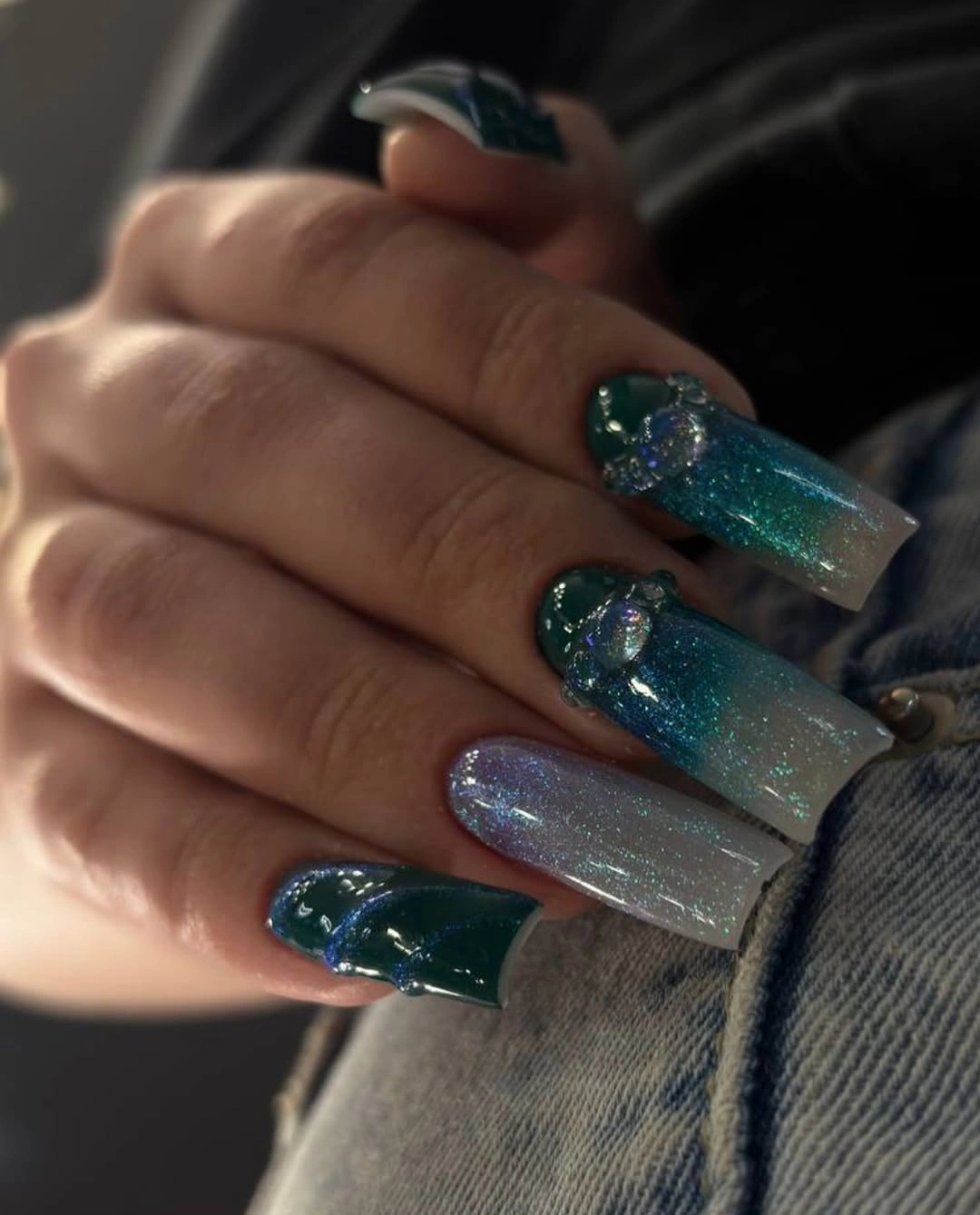
For a simpler set, keep teal solid on most nails and move the glitter to one ring finger or a narrow tip area. That preserves the cool contrast while lowering the amount of surface to maintain. The long squared silhouette can be shortened to medium length without changing the palette, which is the most practical adjustment if hand use matters.
Blue-green sparkle works with black, gray, denim, and silver, while a warm brown accessory can make the teal look even cooler by comparison. Do not identify the exact glitter effect or application method; the visible idea is a dark anchor carrying one concentrated light-catching accent. Keep the surrounding nails quiet enough for that shift to remain clear.
Pale Stilettos with Red and Pink Flowing Lines
Very long pointed nails use a pale base with sweeping red and dusty-pink lines that follow the length, creating a flame-like movement without needing a fully filled color block. The dark red accents look especially vivid against the light space, and the extreme points turn every curve into a directional gesture. The red mesh background supports the contrast, but the nails remain the focus.
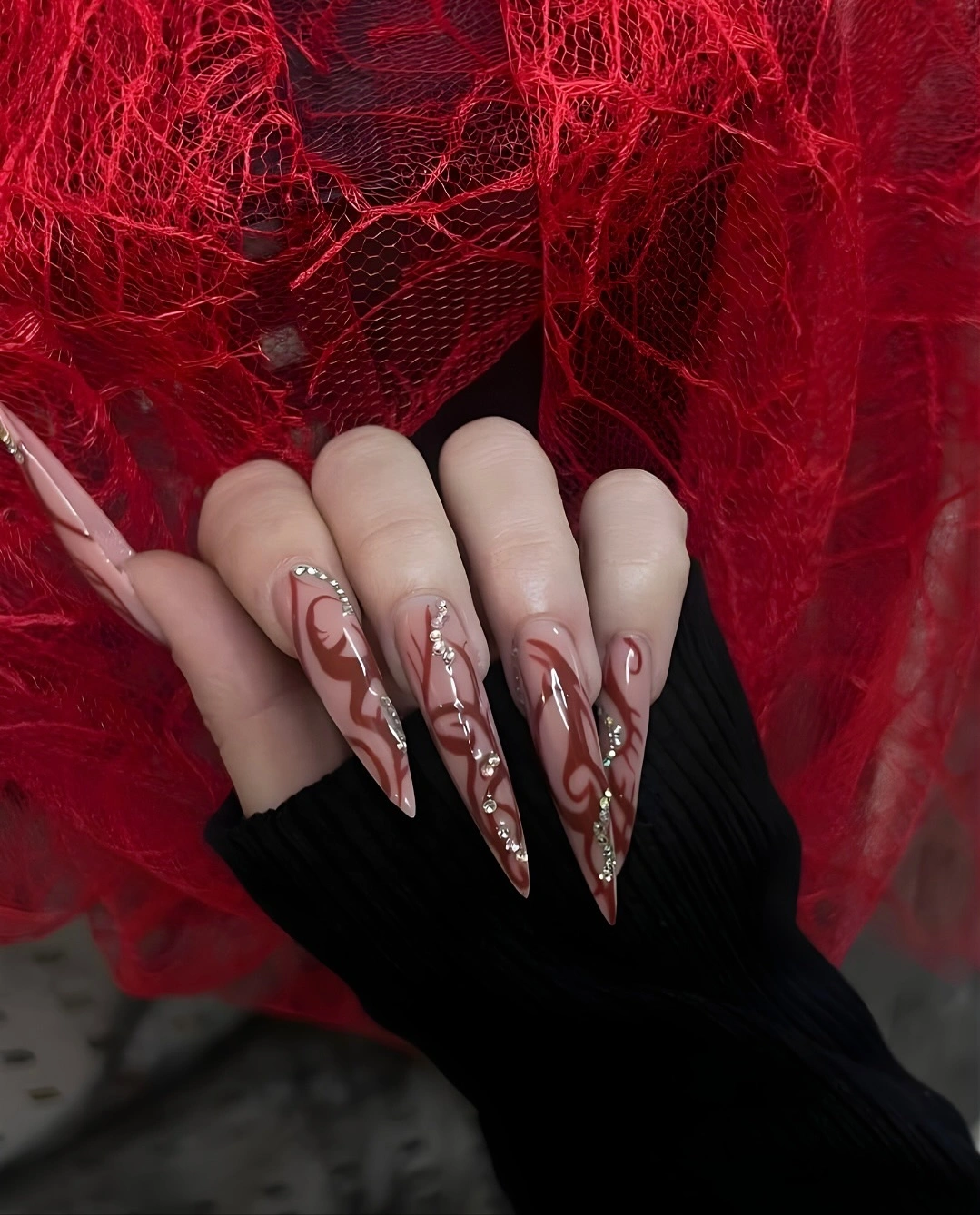
Shorten the shape to a medium almond before changing the pattern if you want it to feel more wearable. Preserve one long red sweep and remove the smaller supporting curves, because the design works through movement and open space rather than through density. Longer points make the artwork dramatic, but they also increase the practical cost of daily handling and tip upkeep.
Use this as an accent-led design when you want the focal detail to travel across the nail instead of sitting in one cluster. A pale pink base can soften the effect, while a darker red line will keep the seasonal contrast clear. Describe the lines as flowing or flame-like rather than assigning a technical technique; the visible rhythm is the part worth adapting, and it fits the movement-led logic of autumn nails color.
Soft White Nails with One Tiny Gold Mark
Most short rounded-square nails use a soft white or blush matte color, while one accent carries a small gold-looking heart-like mark near the center. The difference is tiny, but that is exactly why it works: the pale base remains the dominant field, and the warm detail gives the eye one place to pause. The compact silhouette keeps the accent from becoming overly formal.
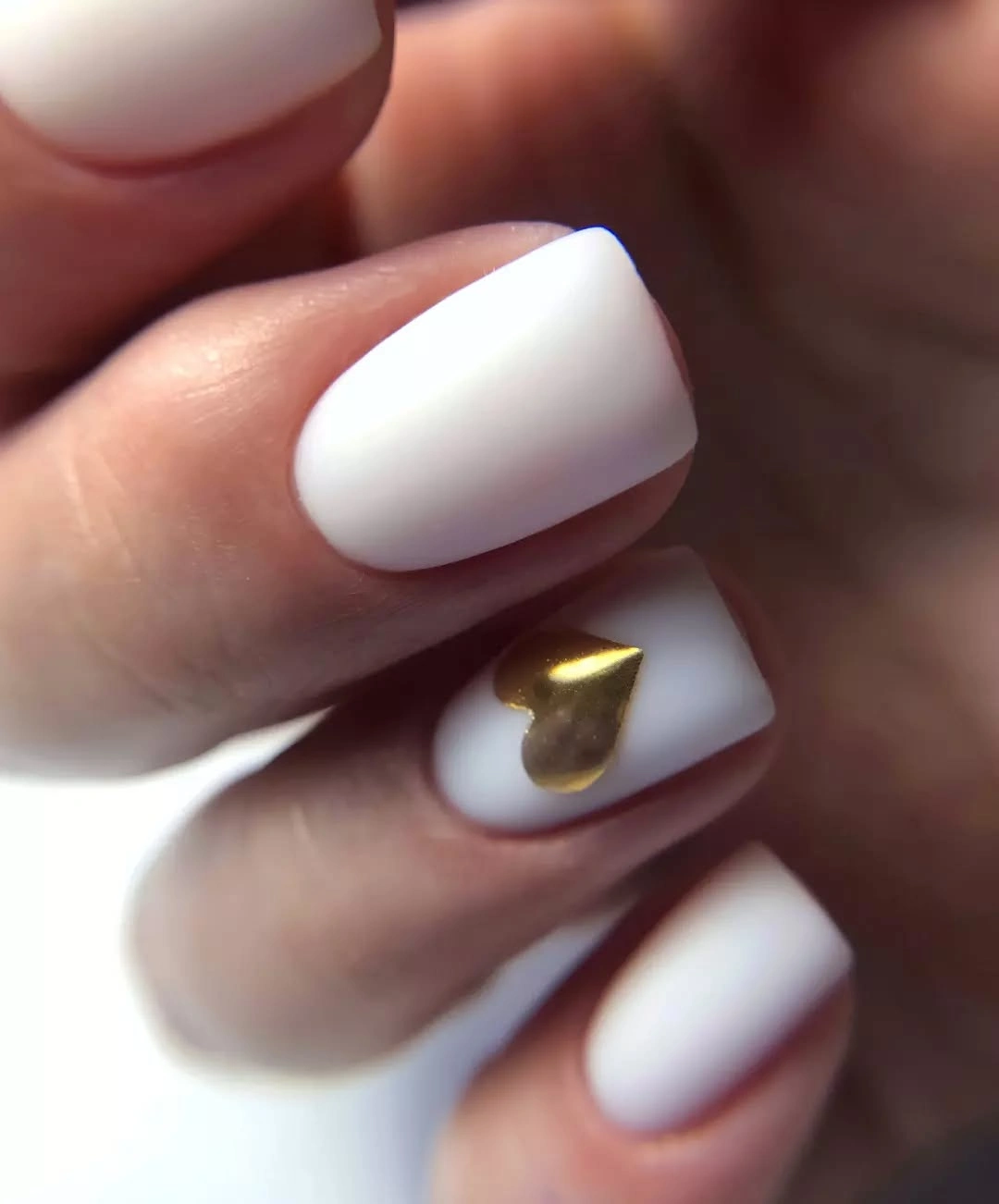
Leave the surrounding nails plain and keep the mark small. On a short shape, a central dot or curved gold line can replace the heart-like form if you prefer an abstract result, while a larger cluster would erase the calm spacing. The pale surface will show uneven edges, so a clean outline matters more than adding more detail.
This is an easy formula to wear with white, cream, gray, or soft gold accessories. It also demonstrates that an accent nail does not need a strong color difference; a small temperature shift can be enough when the base is quiet. Do not identify the exact shape or material beyond what is visible, and let the simplicity remain the main choice.
Cobalt Blue with a Single White Loop
Short square nails are painted bright cobalt blue, while one accent carries thin white looping lines that look irregular and hand-drawn. The strong blue block gives the white detail a clean stage, and the loose line prevents the set from feeling too formal. Because the accent uses the same compact shape as the other nails, it remains graphic without needing extra length.
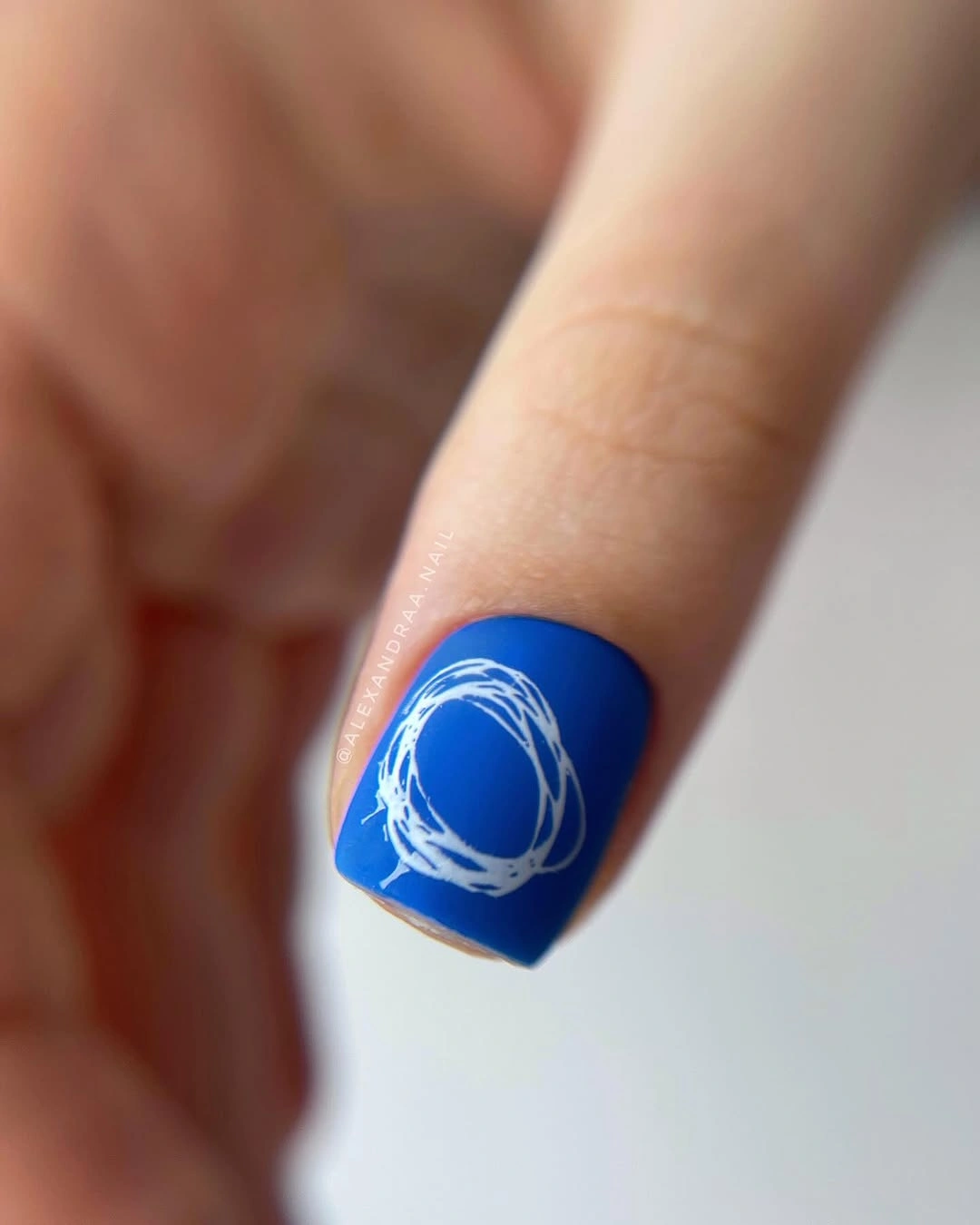
Keep the loop simple and leave enough blue around it to preserve contrast. One loose curve will read more clearly than a dense drawing on a short nail, and the remaining fingers should stay solid so the white mark remains special. If cobalt feels too bright, a deep navy or muted blue can lower saturation while keeping the placement logic.
This is a useful option for someone who wants line art but not a full collection of illustrations. The white can echo a sweater or sneaker, while the blue supplies the seasonal color statement. Avoid treating the loop as a specific symbol; its value comes from the contrast between a saturated solid and one airy, irregular accent.
Forest Green with Broad Gold Leaf-Like Shapes
Long dark green nails carry broad gold-looking curved or leaf-like patches, leaving deep green and black areas visible around them. The metallic-looking shapes are asymmetrical and large, so the accent effect comes from contrast and scale rather than from a tiny detail. The long squared silhouette gives the warm patches enough room to feel intentional.
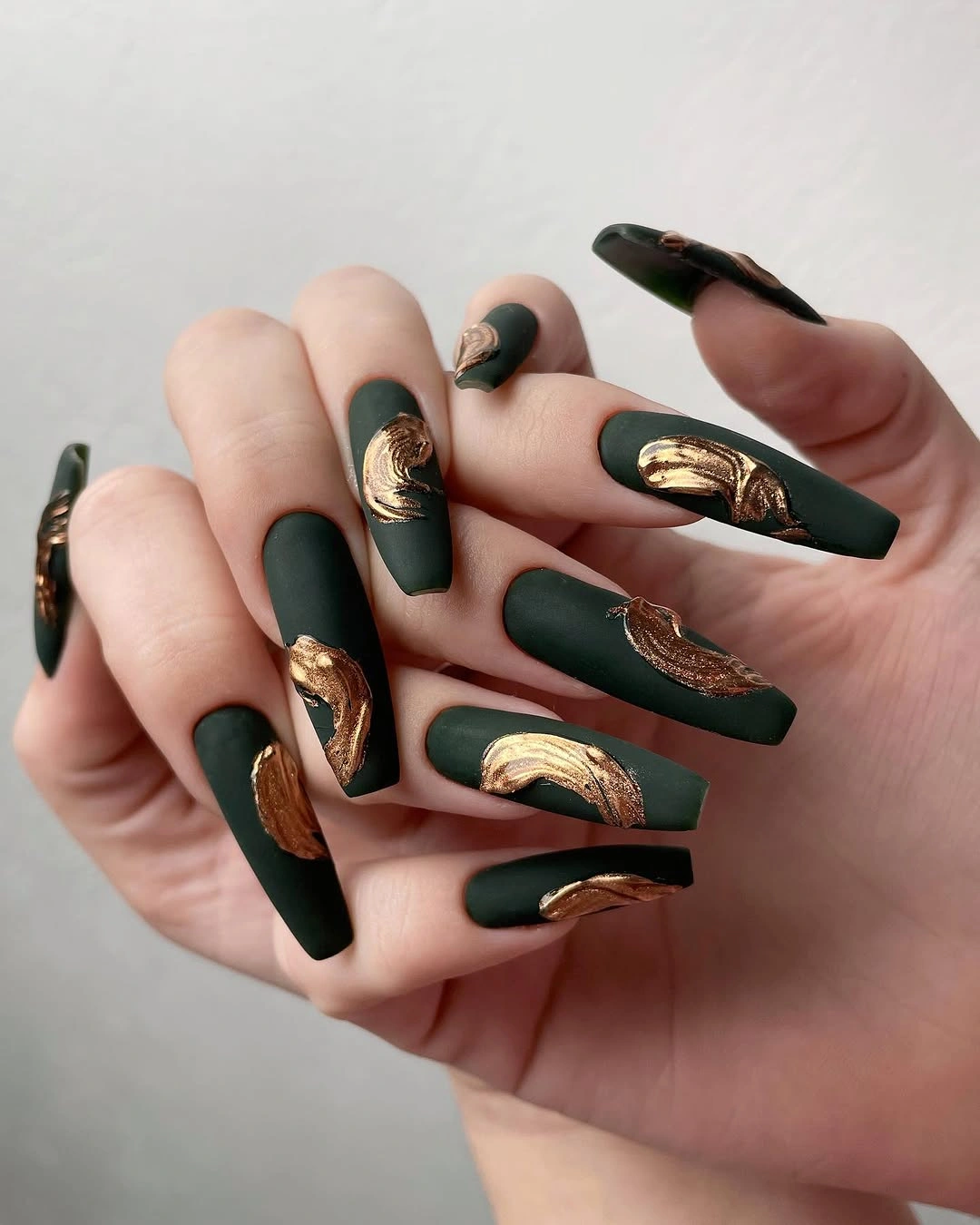
Use one or two gold accents if you want to reduce the ornament. A plain forest-green base on the supporting nails will make the warm shapes more legible, while a medium square can lower the visual weight without changing the palette. The full design is visually rich, so adding another bright color would likely weaken the clear green-and-gold relationship, especially at the longer proportions discussed in fall long nails.
Forest green and warm gold work naturally with cream, black, brown, and simple jewelry, but the manicure can also stand alone because its contrast is strong. The background should not determine whether the shapes are leaves, foil, or another motif, so keep the wording broad. Preserve the scale difference: a dark field and one broad warm form make the accent unmistakable.
Pale Negative Space with Fine Black Line Art
Pale nails carry thin black curved drawings with small muted red or brown touches near selected tips, leaving much of the base open. Each nail has a related but not identical line pattern, so the set feels coordinated without repeating one exact illustration. Medium-long square shape gives the marks room, but the light field keeps the overall effect airy rather than dense.
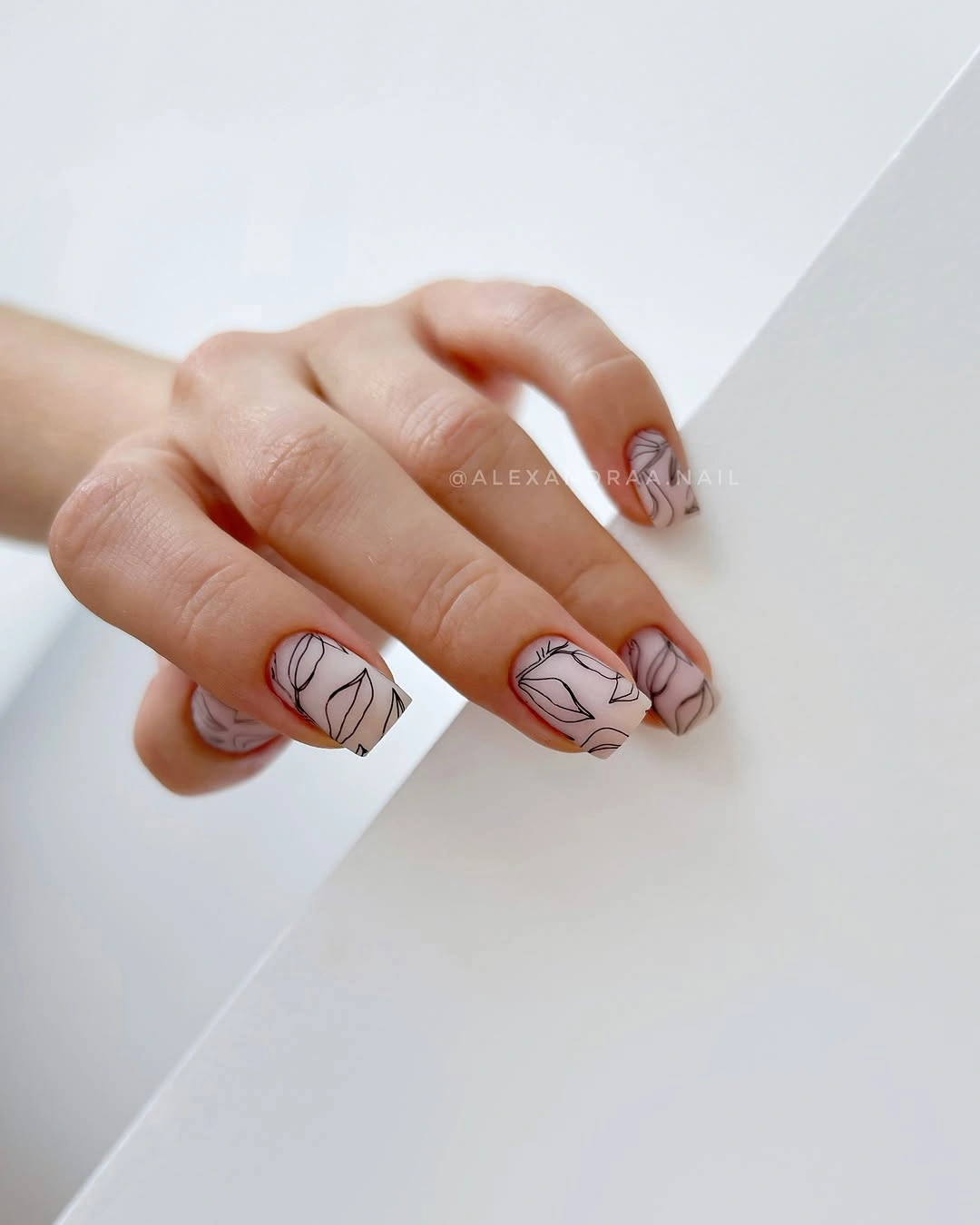
Protect the negative space when adapting it. One or two curves on a shorter square will retain the editorial quality, while filling the surface would make the lines harder to read and move the design toward visual clutter. The fine line weight also means that a stable outline matters; heavier marks could change the mood from delicate to graphic very quickly.
This is a useful contrast to the broad gold patches before it. The accent is created through line and placement rather than shine or color saturation, so it can work with pale pink, white, gray, or black clothing. Avoid assigning a precise illustration theme unless it is unmistakable; the supportable idea is open space carrying a repeated family of fine dark curves.
Sheer Blush with One Centered Reflective Accent
Medium square nails use a sheer blush base with pale tips, while one accent holds a round bright centerpiece surrounded by smaller reflective details. The neighboring nails stay clean and light, which gives the ornate focal point maximum visibility without requiring a dark background. The accent is centered, so the eye lands on it quickly and the rest of the hand provides quiet support.
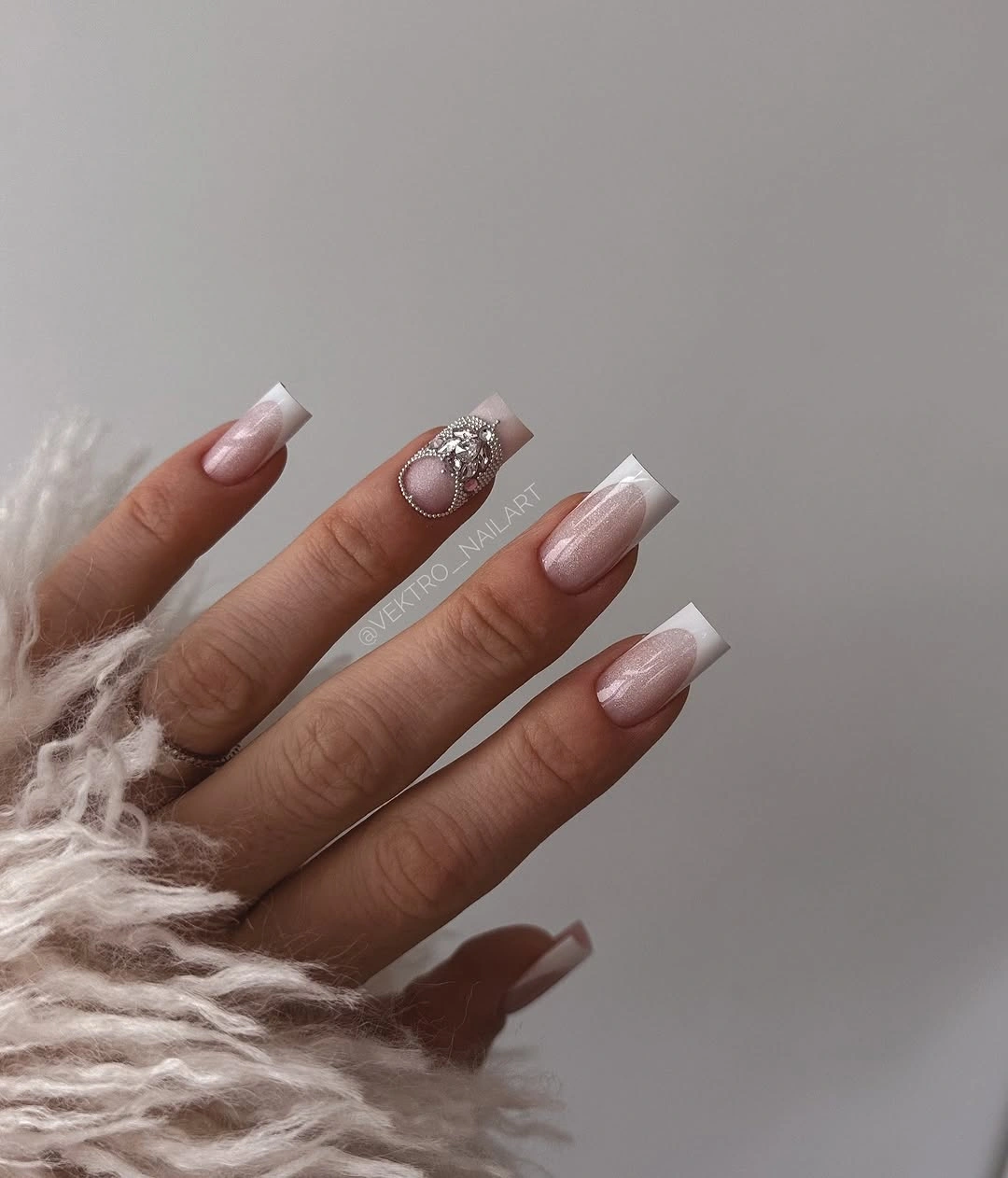
Keep the centerpiece modest if adapting the idea to a shorter square. One reflective dot or pearl-like mark can preserve the focal logic, while a full cluster may make the nail feel crowded and less practical. The pale tips should remain simple because their job is to extend the light framework around the accent, not to compete with it.
This closes the set with the lightest kind of contrast: clean blush, pale edge, and one concentrated point of brightness. It pairs easily with white, cream, silver, or soft gold, and it can move from an event to everyday wear if the embellishment stays small. The exact material or setting is not visible enough to name, so keep the advice focused on placement and restraint.