
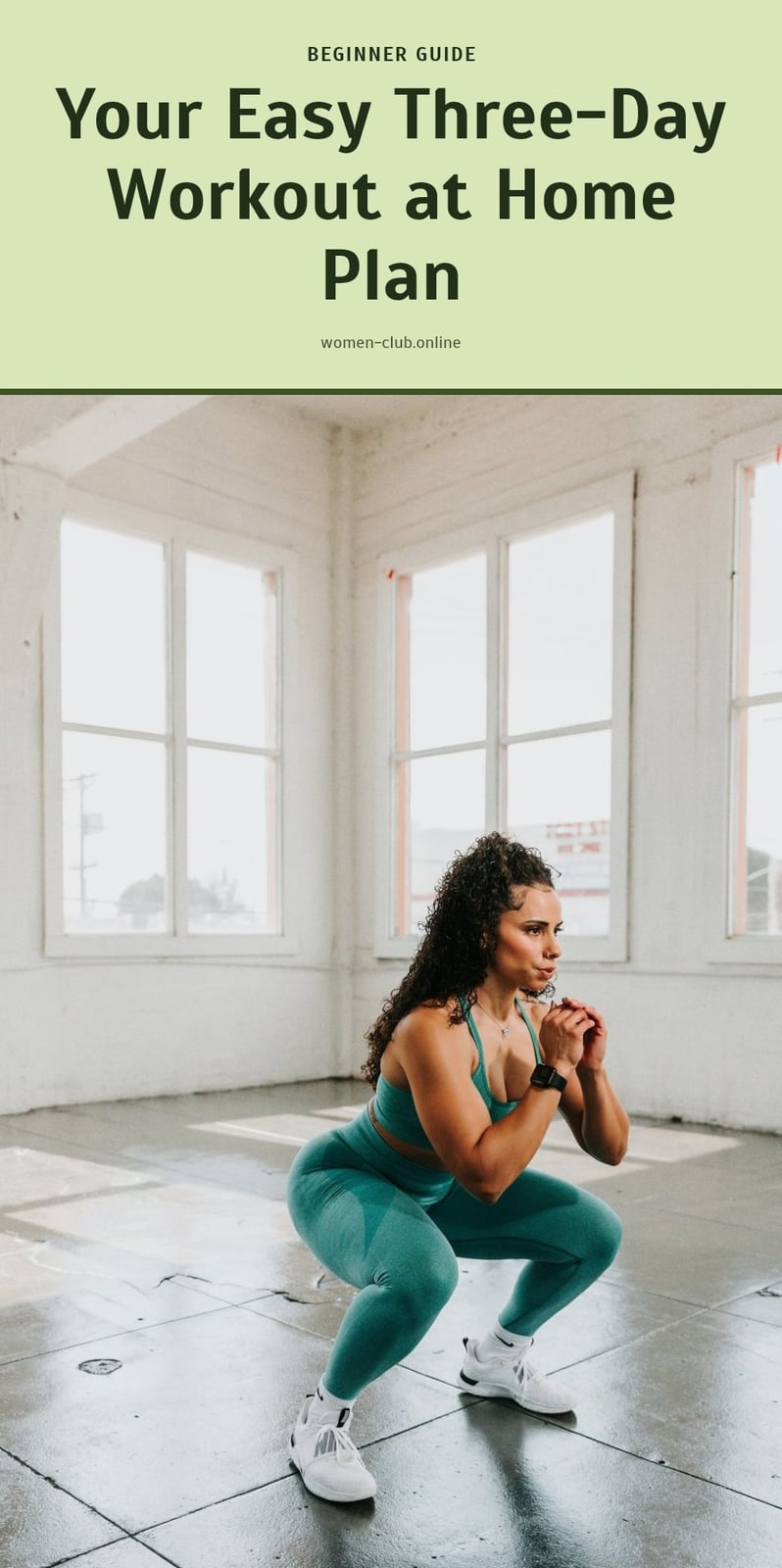
Starting a workout routine at home can feel overwhelming, but it doesn’t have to be. The key is a simple, consistent plan that fits your schedule and focuses on proper form. This article breaks down a three-day weekly workout plan for beginners, covering everything from warm-ups to cool-downs, so you can build strength and confidence without any fancy equipment.
Key Takeaways
- Start with a 5-10 minute warm-up and end with a 5-10 minute cool-down every session.
- Perform 2-3 sets of 8-12 repetitions for each strength exercise, resting 30-90 seconds between sets.
- Aim for three 30-45 minute workouts per week, with rest days in between for recovery.
- Focus on proper form over speed to prevent injury and make each exercise more effective.
- Expect to see noticeable improvements in strength and endurance within 4-6 weeks of consistent effort.
1. Warm-Up: Arm Circles

Stand tall with your feet shoulder-width apart and arms extended straight out to the sides. Make small circles forward for 30 seconds, then switch to backward circles for 30 seconds. Focus on controlled, smooth movements and gradually increase the circle size to fully warm up your shoulders.
- Time: 30 seconds forward, 30 seconds backward
- Form cue: Keep your shoulders relaxed and down, not hunched up toward your ears
- Make it easier or harder: Start with tiny circles and enlarge them as you go; for more challenge, hold a light object in each hand
2. Bodyweight Squats
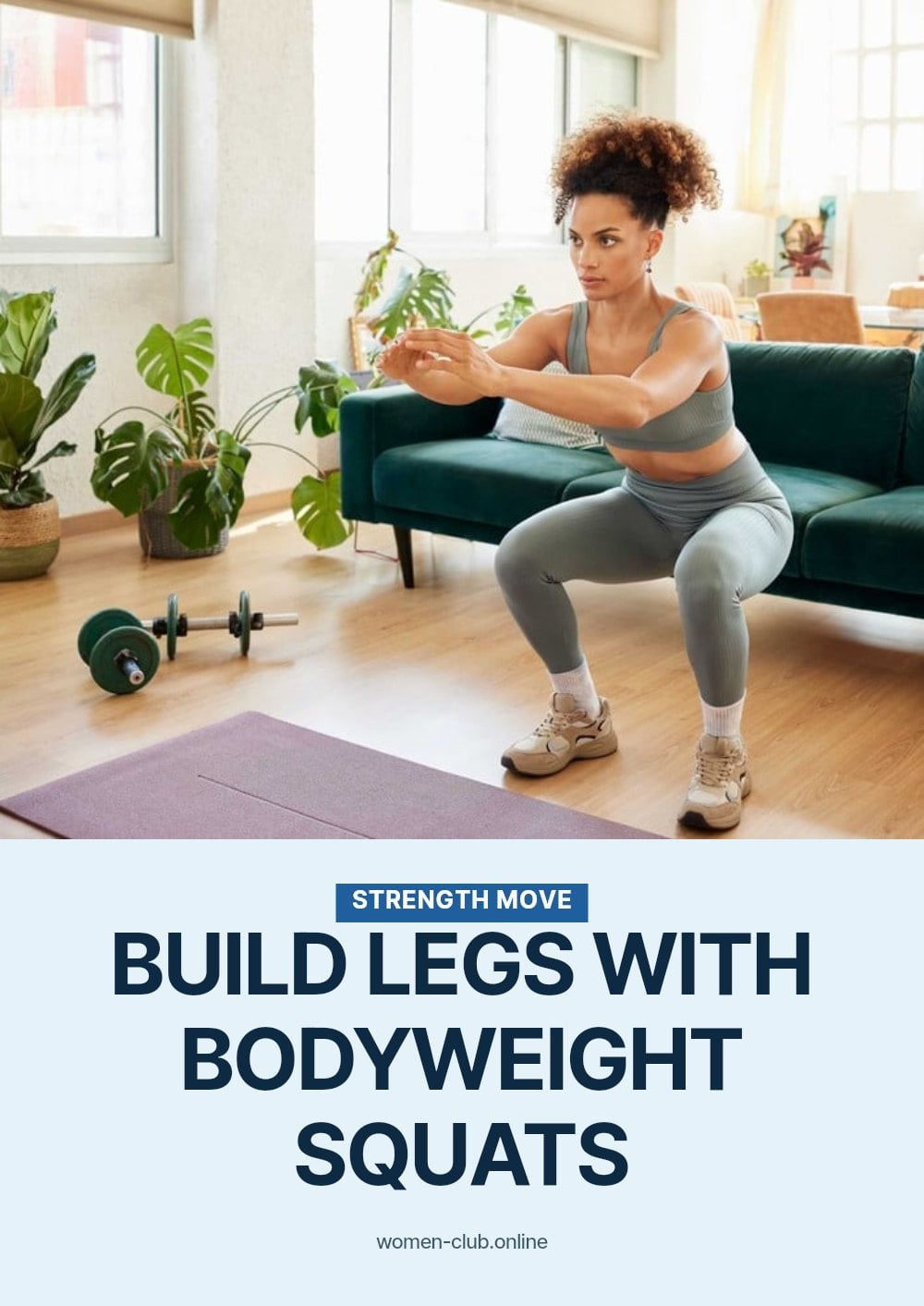
Stand with feet shoulder-width apart and toes pointing slightly outward. Lower your hips back and down as if sitting into a chair, keeping your chest lifted and your back straight. Press through your heels to return to standing.
- Sets and reps: 2-3 sets of 8-12 repetitions, rest 30-90 seconds between sets
- Form cue: Keep your knees tracking over your toes, not caving inward
- Make it easier or harder: Reduce range of motion for an easier version; hold a weight at your chest for more challenge
3. Push-Ups (Modified or Full)
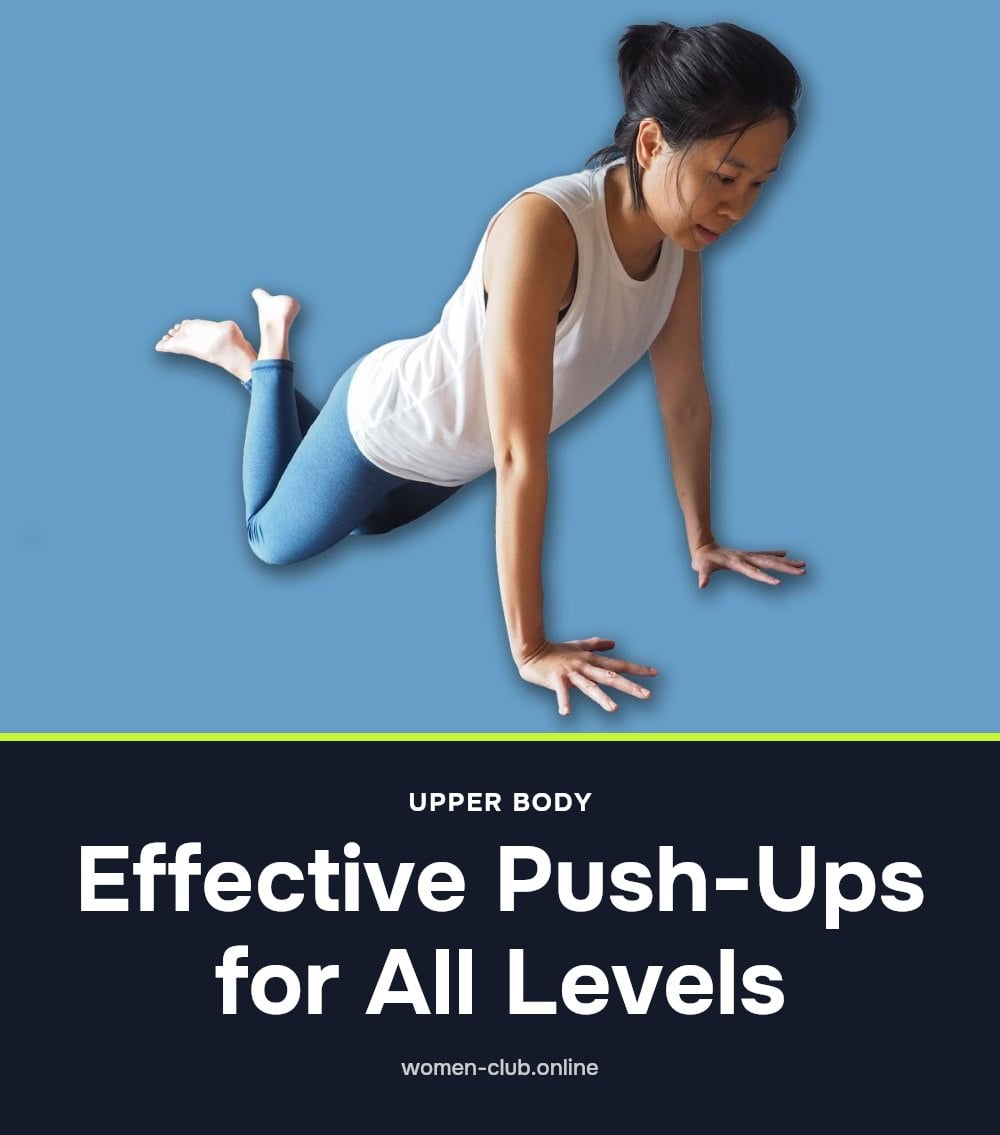
Start on your hands and knees for a modified push-up, or on your hands and toes for a full push-up. Place your hands slightly wider than shoulder-width apart. Lower your chest toward the floor while keeping your body in a straight line from head to heels, then push back up.
- Sets and reps: 2-3 sets of as many reps as you can with good form, rest 30-90 seconds between sets
- Form cue: Keep your elbows at a 45-degree angle to your body, not flared out to the sides
- Make it easier or harder: Start with knee push-ups or incline push-ups against a wall; for more challenge, try decline push-ups with feet elevated
4. Lunges
Step forward with one leg and lower your hips until both knees bend at a 90-degree angle. Your front knee should be directly above your ankle, and your back knee should hover just above the floor. Push through your front heel to return to the starting position, then repeat on the other side.
- Sets and reps: 2-3 sets of 8-12 repetitions per leg, rest 30-90 seconds between sets
- Form cue: Keep your torso upright and core engaged to maintain balance
- Make it easier or harder: Take a smaller step for better balance; hold dumbbells at your sides for added difficulty
5. Plank
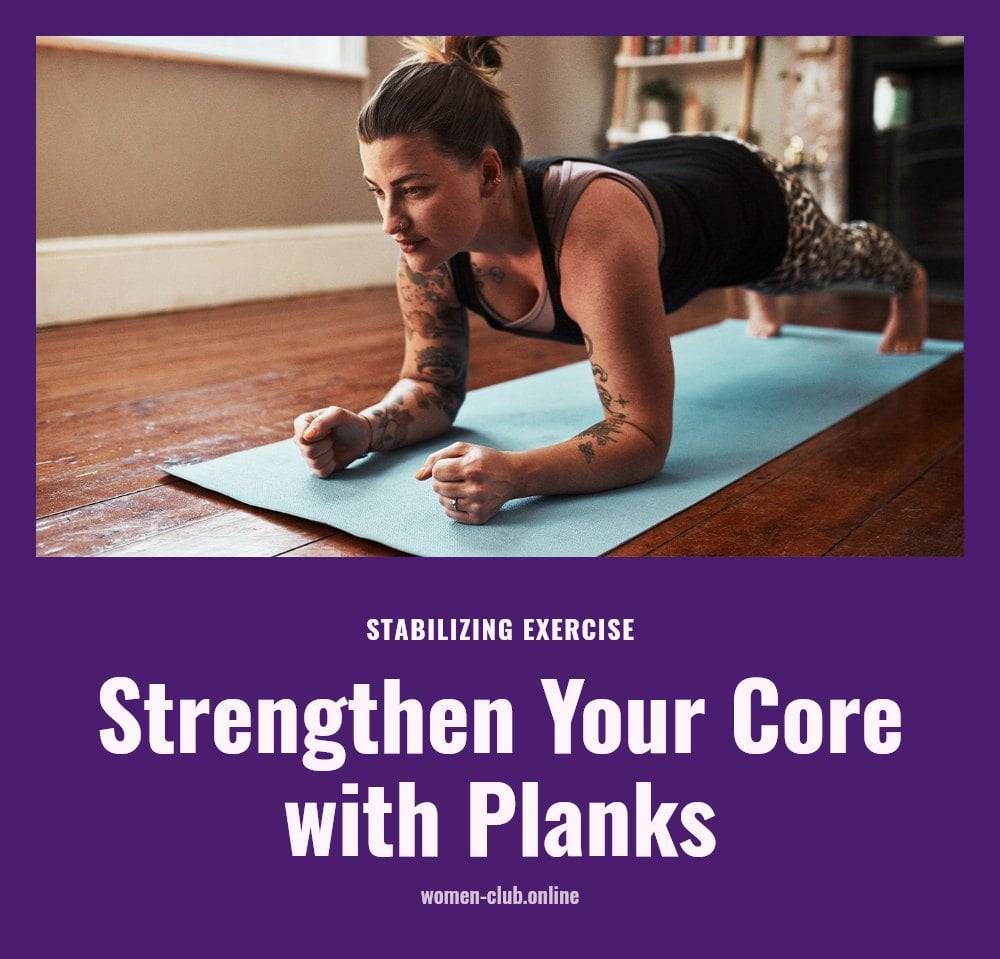
Start in a push-up position, then lower onto your forearms. Keep your body in a straight line from your head to your heels. Engage your core, glutes, and quads to prevent your hips from sagging or rising too high.
- Time: Hold for 2-3 sets of 20-30 seconds, resting 30-90 seconds between sets.
- Form cue: Imagine pulling your belly button toward your spine to really activate your core.
- Make it easier or harder: Drop your knees to the floor for an easier version, or lift one leg a few inches off the ground to challenge your stability.
6. Glute Bridges
Lie on your back with your knees bent, feet flat on the floor hip-width apart, and arms by your sides. Press through your heels to lift your hips until your body forms a straight line from your shoulders to your knees. Squeeze your glutes at the top, then slowly lower back down.
- Sets and reps: Perform 2-3 sets of 10-15 repetitions, resting 30-90 seconds between sets.
- Form cue: Keep your core engaged and avoid arching your lower back as you lift.
- Make it easier or harder: Perform the bridge with feet closer to your glutes for more glute activation, or lift one foot off the floor for a single-leg bridge.
7. Bird-Dog
Start on your hands and knees with your wrists under your shoulders and your knees under your hips. Extend your right arm forward and your left leg straight back at the same time, keeping your core stable. Return to the starting position and repeat on the other side.
- Sets and reps: Perform 2-3 sets of 8-12 repetitions per side, resting 30-90 seconds between sets.
- Form cue: Move slowly and control the extension; avoid letting your hips twist or your lower back sag.
- Make it easier or harder: Keep the movement small and focus on balance, or add a brief pause at full extension for more challenge.
8. Cool-Down: Hamstring Stretch
Lie on your back, bend one knee, and loop a towel around the arch of the other foot. Gently pull the towel to straighten your leg toward the ceiling, feeling a stretch in your hamstring. Hold for 20-30 seconds, then switch legs.
- Time: Hold each stretch for 20-30 seconds, repeating 2-3 times per leg.
- Form cue: Don’t force the stretch; it should feel gentle, not painful.
- Make it easier or harder: Keep your bent knee slightly bent if the straight-leg stretch is too intense, or pull the leg closer to your chest for a deeper stretch.
Your Weekly Home Workout Schedule
This schedule is designed for beginners to build consistency and allow for adequate recovery. Each workout takes about 30-45 minutes. Remember to listen to your body and adjust as needed; rest days are just as important as workout days.
| Day | Workout | Notes |
|---|---|---|
| Monday | Warm-Up + Exercises 2-4 | 2 sets of 8-12 reps each; for push-ups, do as many as you can with good form |
| Wednesday | Warm-Up + Exercises 5-7 | 2 sets of 8-12 reps each |
| Friday | Full Body Circuit | Exercises 2-7, 1 set each; include warm-up and cool-down separately |
| Other Days | Active Recovery | Light walk or gentle stretching |
Common Home Workout Mistakes to Avoid
Skipping Warm-Up and Cool-Down: Always dedicate 5-10 minutes to prepare your body and 5-10 minutes to stretch afterward. This prevents injury and aids recovery.
Ignoring Proper Form: Focus on executing each exercise correctly rather than rushing through reps. Watch videos or use a mirror to check your form.
Doing Too Much Too Soon: Start with a manageable number of sets and reps, gradually increasing intensity as you get stronger. Consistency beats intensity when you’re starting out.
Neglecting Rest Days: Your muscles need time to repair and grow. Aim for at least one full rest day between strength training sessions.
Forgetting Hydration: Drink water before, during, and after your workout to stay properly hydrated. I’ve found that keeping a water bottle nearby is a game-changer!
Frequently Asked Questions
How long should a beginner home workout be?
As a beginner, aim for 30-45 minutes per session, including your warm-up and cool-down. This allows enough time to complete 2-3 sets of exercises without overdoing it. Keeping it manageable helps you stay consistent and avoid burnout.
Can I build muscle with just bodyweight exercises at home?
Yes, you can build strength and muscle with bodyweight exercises like squats, push-ups, and planks. These moves work multiple muscle groups and can be made harder over time by increasing reps or slowing down the movement. For continued progress, you can add light dumbbells or resistance bands later.
What should I eat before and after a home workout?
Before your workout, a small snack with carbs and a little protein, like a banana or toast with peanut butter, can give you energy. Afterward, a meal or snack with protein and carbs, such as Greek yogurt with berries, helps with muscle recovery. Stay hydrated with water throughout.
How often should I work out at home as a beginner?
Three days per week is a great starting point for beginners. This schedule, with rest days in between, allows your muscles to recover and adapt. As you get stronger, you can gradually increase frequency or intensity, but consistency is more important than doing more too soon.
Is it okay to work out every day at home?
Working out every day is not recommended for beginners because your muscles need rest to recover and grow. Rest days are essential to prevent overtraining and injury. If you want to be active daily, consider light walking or stretching on your off days instead of a full workout.
Final Thoughts
Stick with this three-day plan, and you’ll build a solid foundation. Remember, consistency matters more than intensity, so don’t worry if some days feel harder than others. Listen to your body, take rest days when needed, and you’ll likely notice improvements in your strength and endurance within four to six weeks. That’s the real win.
This information is for general informational purposes only and does not constitute medical or professional advice. Before starting any new exercise program, especially if you have underlying health conditions or concerns, consult a qualified healthcare professional. Listen to your body and stop if you experience pain.








