
If you’re a people pleaser, you know the guilt that comes with saying no or setting a boundary. But assertiveness isn’t about being mean. It’s about communicating your needs clearly and respectfully, without aggression or passivity. This article covers what assertiveness means for people pleasers, why it’s hard, and step-by-step phrases you can practice to build confidence.
Key Takeaways
- Assertiveness respects both your rights and the other person’s, unlike aggression.
- Use ‘I’ statements to express your feelings and needs without sounding accusatory.
- Say no without guilt or lengthy explanations to set clear boundaries.
- Start with low-stakes situations, like stating a restaurant preference, to build momentum.
- Consistent practice over weeks and months leads to gradual improvements in confidence.
What Assertiveness Means for People Pleasers
Assertiveness is a communication style where you express your thoughts, feelings, and needs clearly and respectfully, without aggression or passivity. It’s about advocating for yourself while also respecting the rights of others. For people-pleasers, developing assertiveness means learning to set boundaries, say no, and express opinions without guilt. The payoff is real: healthier relationships, reduced resentment, and a stronger sense of self-esteem. You can be kind and still be firm.
Why People-Pleasing Makes Assertiveness Hard
People-pleasing often stems from a fear of rejection, conflict, or disappointing others. That fear can push you into passive communication, where you stay quiet about your own needs to keep the peace. Over time, this pattern leaves you feeling drained and resentful, while others may not even realize they’re overstepping.
Why It’s So Hard to Break
When you’re used to putting others first, saying no can feel like a personal failure. Your brain has learned that agreeing keeps you safe from disapproval. But this avoidance only reinforces the habit, making assertiveness feel unnatural and even scary.
Understanding these roots is the first step in changing your communication patterns. Once you see that your people-pleasing is a protective strategy, not a personality flaw, you can start to loosen its grip. Awareness gives you the choice to respond differently.
Tools and Techniques to Build Assertiveness
You don’t need a fancy toolkit to build assertiveness, just a few basics:
- Journal or notebook: Write out assertive phrases you want to use, then reflect on how conversations went.
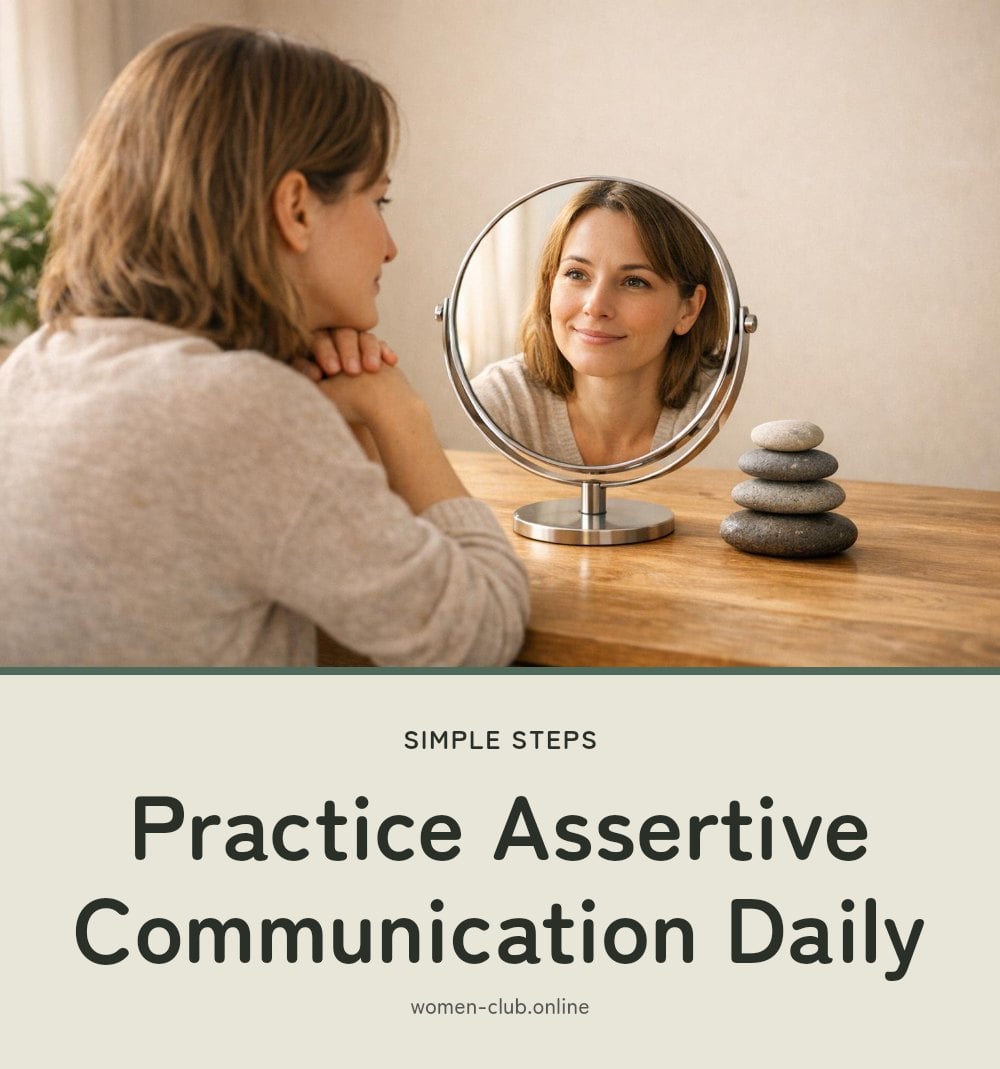
- Mirror: Practice eye contact, open posture, and a steady voice in front of it. You’ll see how you come across.
- Supportive friend or partner: Role-play tricky conversations with them. They can give honest feedback and help you rehearse.
- Self-awareness: Tune into your feelings and rights. Remind yourself that your needs matter as much as anyone else’s.
Step-by-Step: Practicing Assertive Communication
Start with these steps, and you’ll notice a shift in how you communicate.
- Identify your feelings and needs: Before any conversation, pause and ask yourself: What am I feeling, and what do I need right now? Be specific. Instead of “I’m frustrated,” say “I’m frustrated that I keep covering extra shifts.”
- Use ‘I’ statements: Frame your message around your own experience, not the other person’s actions. Say “I feel overwhelmed when I take on more work” rather than “You always dump work on me.” This reduces defensiveness.
- Say no without over-explaining: A simple “No, I can’t commit to that” or “I’m not available” is enough. You don’t owe a lengthy justification. Resist the urge to apologize for your boundary.
- Mind your body language: Keep eye contact, stand or sit tall, and keep your arms uncrossed. Speak in a calm, steady tone. Your non-verbal cues reinforce your words.
- Be specific about what you need: Vague requests get vague results. Instead of “I need help,” try “Could you handle the dishes on Tuesdays and Thursdays?”
- Acknowledge their perspective: After you speak, pause and let the other person respond. You don’t need to paraphrase or nod along. Simply hearing them out shows respect without inviting over-explanation.
- Start small: Practice on low-stakes situations first, like declining a sample at a store or asking for a different table at a restaurant. Each small win builds your confidence for bigger conversations.
Assertive Phrases to Practice in Different Situations
Having a few go-to phrases ready makes assertiveness easier in the moment. Here are categories of phrases you can practice and adapt.
- Setting boundaries: Use clear, direct language. Try: “I can’t commit to that right now,” or “My boundary is that I need some quiet time after work.” Stick to the boundary without justifying it.
- Saying no respectfully: A simple “no” is enough. Soften it without over-explaining: “I appreciate you asking, but I can’t take that on,” or “No, that doesn’t work for me.” Avoid lengthy apologies.
- Expressing an opinion or need: Use an “I” statement to own your perspective. For example: “I feel overwhelmed when I’m asked to handle extra tasks without notice. I need a heads-up so I can plan my time.”
- Handling criticism assertively: Acknowledge the feedback, then state your view concisely. Say: “I understand your perspective, and mine is different,” or “I hear you, and I’d like to share my side.” Keep it brief and avoid defensiveness.
Common Mistakes to Avoid When Practicing Assertiveness
Even with good intentions, certain habits can trip you up. Watch for these common mistakes.
- Thinking assertiveness equals aggression: Assertiveness respects both your rights and the other person’s. Aggression disregards the other person. You can be firm and kind at the same time.
- Feeling guilty after setting a boundary: Guilt is a familiar feeling for people-pleasers, but it doesn’t mean you did something wrong. Remind yourself that boundaries protect your well-being.
- Over-explaining or apologizing too much: You don’t need to justify a “no” with a long story. A short, clear statement is enough.
- Expecting immediate positive reactions: Some people may resist your new assertiveness. That’s normal. Their reaction doesn’t mean you’re doing it wrong.
- Confusing assertiveness with being demanding: Being assertive means stating your needs clearly, not controlling others. You’re asking, not ordering.
- Waiting until resentment builds: Address small issues early, before they turn into bigger frustrations. It’s easier to speak up early than to clean up later.
Top Tips for Sustaining Your Assertiveness Journey
Sustaining assertiveness takes practice, but these strategies keep you on track.
- Start Small: Pick low-stakes situations first, like telling a friend which restaurant you prefer. Small wins build momentum.
- Be Patient with Yourself: Assertiveness is a learned skill. You won’t get it perfect every time, and that’s fine. Consistent practice over weeks and months brings gradual improvement.
- Reflect and Learn: After an assertive interaction, jot down what worked, what didn’t, and how you felt. This helps you adjust your approach.
- Seek Support: Talk to a trusted friend or a therapist about your journey. Having someone to role-play with or debrief can make a big difference.
- Remember Your Rights: You have the right to express your needs and feelings without guilt. Repeat that to yourself when doubt creeps in.
When to Seek Professional Guidance for Assertiveness
Most people can build assertiveness with practice, but sometimes professional support is the right next step.
- If assertiveness leads to more conflict or emotional distress: A therapist can help you navigate complex dynamics and develop tailored strategies.
- If you consistently can’t express your needs despite trying: A counselor can uncover deeper patterns and provide structured guidance.
- In situations involving abuse or manipulation: Assertiveness alone may not be enough. Professional support is crucial for safety and effective change.
A therapist or counselor can give you tools that fit your specific situation. You don’t have to figure it all out alone.
Your Assertiveness Timeline: What to Expect
Developing assertiveness is a continuous process. With consistent practice over weeks and months, you will see gradual improvements in your confidence and communication. Consistency is Key: Even small acts of assertiveness, like stating your preference for dinner, build momentum over time. No Fixed End Date: Assertiveness is a lifelong skill that evolves as you and your relationships change. There is no finish line, only steady growth.
Frequently Asked Questions
What’s the difference between assertiveness and aggression?
Assertiveness respects both your rights and the other person’s rights, while aggression disregards the other person. You can be firm and kind at the same time. Aggression often involves raising your voice or using demanding language, which is not part of assertive communication.
Can assertiveness improve my relationships?
Yes, assertive communication can lead to more balanced and respectful relationships. By expressing your needs clearly, you reduce resentment and help others understand your boundaries. Over time, this builds trust and mutual respect.
How long does it take to become more assertive?
Developing assertiveness is a continuous process. With consistent practice over weeks and months, you will see gradual improvements in your confidence and communication. There is no fixed end date, so be patient with yourself.
What if people react negatively to my assertiveness?
Some people may resist changes in your behavior, especially if they are used to you being passive. Stay calm and repeat your boundary if needed. If negative reactions increase conflict or emotional distress, consider seeking guidance from a therapist.
Is it okay to say ‘no’ without a reason?
Yes, saying no assertively does not require a lengthy explanation or apology. A simple ‘I can’t commit to that right now’ is enough. Over-explaining can weaken your boundary and make you feel more guilty.
Final Thoughts
My tip is to start with one small boundary this week, like saying no to an extra task at work, and notice how it feels. Realistically, assertiveness is a learned skill that improves with consistent practice over weeks and months, not overnight. Keep going, and you’ll build healthier relationships and greater self-esteem.
This article is for general informational purposes only and does not constitute professional advice. If practicing assertiveness leads to increased conflict, emotional distress, or feels unsafe in certain relationships, consider seeking guidance from a therapist or counselor.








