Rumination Cycle: Practical Ways to Stop Replaying Conversations

You know that feeling when a conversation or a mistake keeps playing on repeat in your mind, and you just can’t seem to hit stop? That’s the rumination cycle, and it’s exhausting. This article breaks down what rumination really is, why it happens, and gives you practical, actionable strategies to break free from the loop so you can feel more present and at ease.
Key Takeaways
- Rumination is passive dwelling, not active problem-solving.
- Mindfulness helps you observe thoughts without getting pulled into them.
- Set a designated worry time to contain ruminative thoughts.
- Physical activity and social connection can break the mental loop.
- If rumination interferes with daily life, seek professional support.
What is Rumination and Why Does it Happen?
Rumination is that loop of repetitive, passive thinking about a problem or past event without actually looking for a solution. It often shows up when you’re stressed, anxious, or feeling low, and it keeps you stuck in a negative thought spiral instead of moving forward. The key difference from problem-solving is that rumination just dwells. It doesn’t lead to action. Breaking the cycle starts with redirecting your attention and actively challenging those patterns.
Effective Strategies to Break the Rumination Cycle
Practice mindfulness to observe without judgment
Mindfulness helps you notice a ruminative thought without getting pulled into it. You simply label it as “thinking” and let it pass. A quick body scan or a few minutes of focused breathing can create enough space to step back.
Engage in focused activities for distraction
Activities that require your full attention, like a puzzle, a workout, or a hands-on hobby, can interrupt the loop. The goal is to shift your brain’s focus away from the repetitive thoughts and onto something concrete.
Set a designated ‘worry time’
Choose a 10- to 15-minute period each day to allow yourself to ruminate. When a worry pops up outside that window, write it down and tell yourself you’ll address it during worry time. This contains the thoughts and trains your brain to let them go until the appointed moment.
Challenge negative thoughts with evidence
Ask yourself: “What is the actual evidence for this thought? Is there a more balanced perspective?” Write down the negative thought, then list facts that contradict it or alternative explanations. This weakens the thought’s hold.
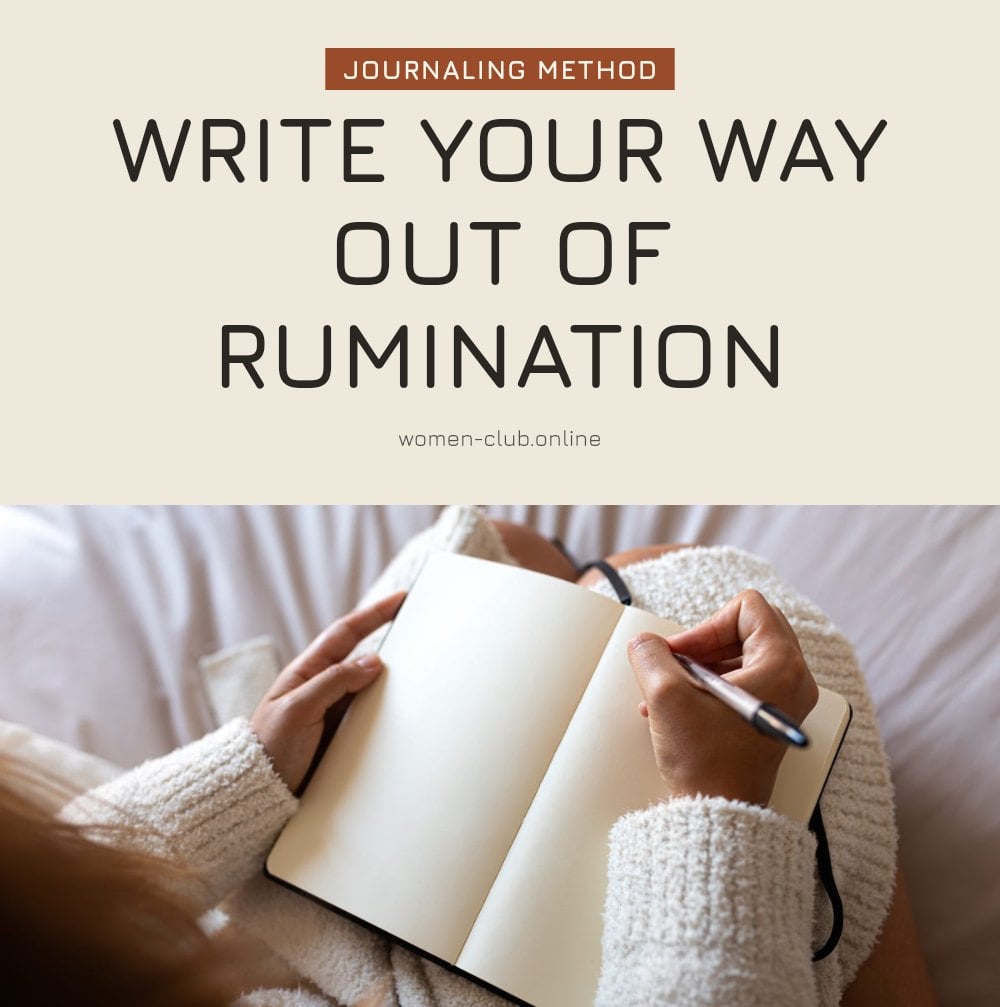
Journal with intention, not just rehashing
Journaling can help externalize thoughts, but only if you do it with a purpose. Instead of replaying the story, write about what you can learn from the situation or what one small step you could take. My tip: set a timer for 5 minutes so you don’t spiral into more rumination on the page.
Tools and Resources to Support Your Journey

Having a few simple tools on hand can make it easier to practice these strategies consistently.
- A journal or notebook for writing down thoughts and challenging them.
- Mindfulness apps that offer guided meditations and body scans.
- Books on CBT or mindfulness to deepen your understanding of thought patterns.
- Access to a therapist or counselor for personalized guidance and support.
Common Missteps When Trying to Stop Ruminating
It’s easy to fall into habits that keep the cycle going, even when you’re trying to stop. Here are the most common ones to watch for.
- Believing rumination is problem-solving. It’s not. Problem-solving involves action and a plan; rumination is passive dwelling that doesn’t move you forward.
- Trying to suppress thoughts. Pushing a thought away often makes it bounce back stronger. Instead, acknowledge it and gently redirect your attention.
- Ignoring physical stress symptoms. A tight chest, tense shoulders, or a racing heart often accompany rumination. Noticing these can be a cue to use a mindfulness or distraction technique.
- Confusing rumination with productive introspection. Learning from the past involves asking “What can I do differently?” not “Why did I mess up?” repeatedly.
- Isolating yourself instead of seeking support. Talking to a trusted friend or therapist can break the loop and offer a fresh perspective.
How to Prevent Rumination from Taking Over

Move your body regularly: Physical activity works as a natural distraction and mood booster. A 20-minute walk or a dance break can break the mental loop and release tension.
Stay connected: Talking to a trusted friend or family member gives you perspective and reduces the isolation that feeds rumination. You don’t have to solve anything, just share what’s on your mind.
Practice self-compassion: When you catch yourself ruminating, say something kind like, “This is hard, and I’m doing my best.” Blaming yourself only deepens the cycle.
Focus on what you can act on: If the thought is about a real problem, list one small step you can take. Action shifts you from passive dwelling to active problem-solving.
Build a routine with hobbies: Engaging activities like reading, gardening, or painting fill your time with something that requires focus, leaving less room for repetitive thoughts.
What to Expect: Time and Commitment
Breaking the rumination cycle is not a one-time fix, it’s an ongoing practice. Some techniques, like a short walk or a mindfulness exercise, can offer immediate relief. But lasting change usually takes weeks or months of consistent effort.
Costs vary widely: Mindfulness apps and journaling are free. Books on CBT or mindfulness cost around $10-20. Therapy sessions are the most significant investment but can be the most effective for persistent rumination.
When to Seek Professional Help for Rumination
If rumination is interfering with your daily life, mood, or relationships, it may be time to talk to a professional. This is especially true if you also feel hopeless, worthless, or have thoughts of self-harm.
Persistent rumination can be a symptom of underlying conditions like depression, anxiety, or OCD, which require a proper diagnosis and treatment. A therapist can teach you targeted strategies to break the cycle.
Caution: Never stop prescribed medication or therapy without consulting your doctor or therapist first.
Frequently Asked Questions
What is the difference between rumination and healthy self-reflection?
Healthy self-reflection is active and constructive; you look at a past event to learn something or make a plan. Rumination is passive and repetitive, focusing on negative feelings without moving toward a solution. If you’re stuck in the same thought without gaining insight or taking action, it’s likely rumination.
Can rumination be a sign of a more serious condition?
Yes, persistent rumination can be a symptom of underlying conditions like depression, anxiety disorders, or OCD. If you also feel hopeless, worthless, or have thoughts of self-harm, it’s important to talk to a mental health professional for a proper evaluation and support.
How long does it take to stop ruminating?
There’s no set timeline, but breaking the cycle is an ongoing practice. Some techniques, like a quick walk or a mindfulness exercise, can offer immediate relief. Lasting change usually takes weeks or months of consistent effort, so be kind to yourself along the way.
Are there apps that can help with rumination?
Yes, many mindfulness apps offer guided meditations and body scans that can help you step back from ruminative thoughts. They’re not a replacement for therapy, but they can be a helpful tool to practice staying present and breaking the mental loop.
What if I can’t stop ruminating on my own?
If rumination is interfering with your daily life, mood, or relationships, it’s a good idea to reach out to a therapist. Cognitive Behavioral Therapy (CBT) is especially effective for addressing rumination. You don’t have to figure it out alone, and professional support can make a real difference.
Final Thoughts
My tip: start with just one strategy, like a short mindfulness break or a timed worry period. Be patient with yourself; lasting change usually takes weeks or months of consistent practice, but even small steps can offer immediate relief. You have the tools to quiet the loop and reclaim your mental space.
This article is for informational purposes only and does not constitute medical or mental health advice. If you are experiencing persistent rumination that affects your daily life, or if you have thoughts of self-harm, please consult a qualified mental health professional.