Scripting Manifestation for Beginners: Journal Examples to Start

You’ve probably heard about scripting as a manifestation tool, but maybe you’re wondering how to actually do it. It’s simpler than you might think: you write down your desires as if they’ve already happened, using vivid detail and past tense to make them feel real to your subconscious. This article walks you through the exact method from a popular TEDx talk, plus practical tips and common mistakes to avoid, so you can start scripting with confidence.

Key Takeaways
- Write your desires in the past tense, as if they have already happened, to engage your subconscious mind.
- Script for 5 to 15 minutes each morning and before bed, when your brain is in receptive alpha and theta states.
- Use pen and paper to activate the ventrolateral prefrontal cortex, which supports behavior and emotional regulation.
- Include specific details and emotions to make your script feel real and increase motivation.
- Be consistent and script every single day, not just once, for best results.
What is Scripting Manifestation?
Scripting manifestation is a technique where you write down your desires as if they have already happened, engaging your emotions and subconscious mind. You describe your desired future in vivid detail, using the past tense to make it feel real and attainable. This practice aligns your thoughts and feelings with your goals, encouraging inspired action towards their achievement. It is not a magical solution, but a tool to shift your mindset so you notice opportunities and take steps you might otherwise overlook.
Essential Tools for Your Scripting Practice
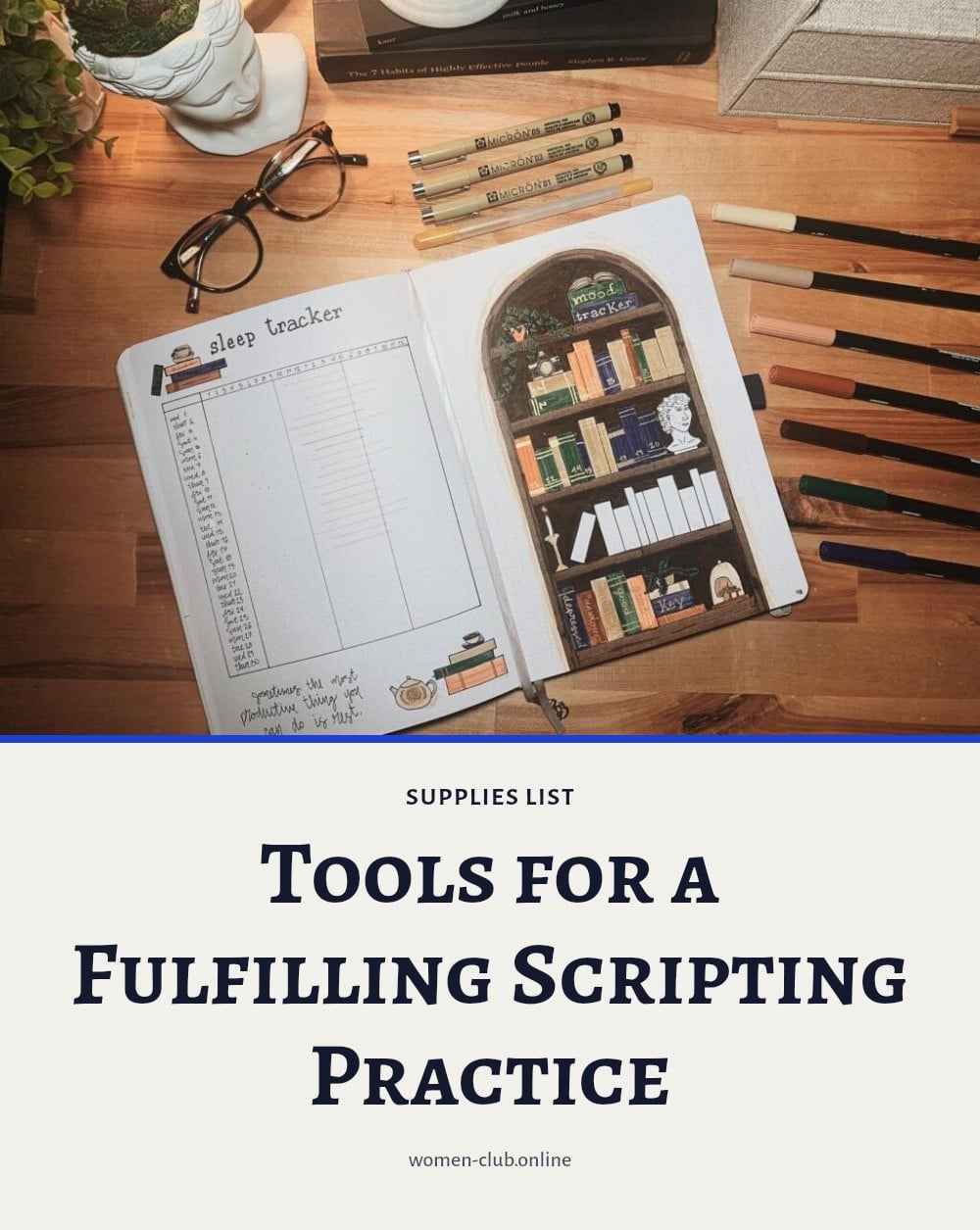
You only need three things to start scripting, and you likely already own them all.
- Dedicated journal: Choose a notebook you reserve only for scripting. Keeping it separate helps your brain associate the act of writing in it with your desired future.
- Comfortable pen: Pick one that flows easily across the page. A pen that skips or cramps your hand will pull you out of the emotional state you want to sustain.
- Quiet space: Find a spot where you will not be interrupted for 5 to 15 minutes. Fewer distractions means deeper focus and stronger emotional engagement.
Step-by-Step: How to Practice Scripting Manifestation

Scripting works best when you follow a consistent sequence. Here is the method that mirrors the TEDx talk on scripting by Natasha Graziano, step by step.
- Define your desired self: Clearly decide who you want to be and what you want to achieve. Be specific and do not let other people’s opinions or societal expectations shape your vision.
- Assess the gap: Honestly look at where you are now compared to where you want to be. Acknowledge the difference without judgment, then identify what is holding you back.
- Clear mental blocks: Address limiting beliefs, especially ones formed in early childhood, that create feelings of unworthiness or resistance. Work on releasing them before you write.
- Speak it aloud: Imagine you are telling a friend about your achieved desires. Stand in front of a mirror and pretend to be on a phone call, describing your accomplishments as if they already happened. This adds feeling and makes the reality more tangible.
- Write in past tense: Open your journal and script your desired future as if it has already occurred. For example, write “I had the most incredible year, achieving X, Y, and Z,” not “I will have.” Include feelings and sensory details.
- Set a date: Write the exact date by which you want to achieve your goals. A specific deadline helps your brain prioritize and prevents procrastination.
- Time it right: Script before bed and first thing in the morning. During these times your brain waves are slower, in alpha and theta states, making your subconscious more receptive to rewiring.
If you learn better by watching, this 15-minute video from TEDx Talks shows every step. The how-to part starts at 6:26.
Best Tips for Effective Scripting
These tips build on the basic method and help you get more out of every session.
- Write physically: Use pen and paper, not a keyboard. The physical act activates the ventrolateral prefrontal cortex, which handles behavior and emotional regulation, making you more likely to follow through.
- Be consistent: Script every single day. A one-time session does little; daily repetition builds momentum and reinforces positive beliefs.
- Detail everything: Include what you see, hear, smell, taste, and feel in your manifested reality. The more vivid the description, the more real it becomes to your subconscious.
- Vary your focus: Script for different areas of your life, such as love, career, or personal growth. You can write in first person (“I had…”) or third person (“She met the love of her life…”).
- Think legacy: Imagine you are on your deathbed. Write down the legacy you want to leave and what you want people to say about you, in the past tense. This clarifies what truly matters to you.
My tip: aim to be 1% better every day. Small, consistent improvements compound over time.
Common Scripting Mistakes to Avoid
Writing Your Current Reality: Your scripting journal is for your desired future, not a diary of today’s struggles. Describing your current problems only reinforces the feelings you want to move away from.
Using Future or Present Tense: Always use past tense. Writing “I will have” or “I have” keeps your desire at arm’s length. “I had the most amazing year” tells your brain it already happened.
Being Vague: “I want to be happy” is too broad to visualize. Specify the details: what made you happy, where you were, who was with you. Vague desires are hard for your subconscious to lock onto.
Focusing on ‘How’: Don’t worry about the exact path your desire will take. Concentrate on the what and the why, the outcome and the feeling. The how often unfolds in ways you can’t predict.
Skipping Emotional Engagement: Words on a page won’t do much if you don’t feel the joy, gratitude, or relief of your manifested reality. Pause to connect with the emotion behind each sentence.
Giving Up Too Soon: Many people stop by February, just like with New Year’s resolutions. Consistency over weeks and months is what rewires your mindset, not a single session.
Expecting Magic Without Action: Scripting aligns your thoughts and feelings, but it doesn’t replace real-world steps. When an opportunity or idea shows up, take it. Scripting prepares you to act, not to sit back.
Understanding the ‘Why’ Behind Scripting’s Power

Scripting works because it speaks directly to your subconscious mind, the part of you that runs on autopilot. When you write in the past tense, your brain treats the experience as a memory rather than a wish. This mental simulation activates the same neural pathways you would use if the event were real, which boosts motivation and makes achievement feel more likely.
The practice also draws from the Law of Attraction, the idea that focusing on positive outcomes can attract them into your life. By repeatedly describing a reality where your goals are already met, you train your brain to notice opportunities and take action that aligns with that vision. Over time, this reinforces positive beliefs and chips away at self-doubt, replacing it with a proactive mindset.
Think of scripting as a rehearsal. Just as athletes visualize a perfect performance before they execute it, you are rehearsing the feelings and circumstances of your desired life. The emotional charge you generate during scripting signals to your subconscious that this outcome is important and attainable, which makes you more likely to follow through when inspired action presents itself.
How Long Does Scripting Take and What’s the Investment?
Consistency is the main factor here. Plan to script for 5 to 15 minutes each morning and again before bed. Those windows, when your brain is in alpha and theta states, make your subconscious more receptive.
Results vary from person to person. Many people notice subtle shifts after a few weeks of daily practice, while more significant changes often take a couple of months. The key is to keep going without obsessing over the timeline.
Financial cost: Scripting costs nearly nothing. A journal and a pen are all you need. That makes it one of the most accessible personal growth tools you can add to your routine.
Frequently Asked Questions
How often should I script for manifestation?
For best results, script every single day. The recommended routine is 5 to 15 minutes each morning and again before bed. These times are ideal because your brain waves are in slower alpha and theta states, making your subconscious more receptive to the new beliefs you are writing.
Can I script for multiple goals at once?
Yes, you can script for different areas of your life, such as your love life, career, or personal growth. You can write separate entries for each goal or combine them into one longer script. Just be sure to be specific and detailed for each desire, and always use the past tense.
What if I don’t feel emotional while scripting?
Emotion is a key part of scripting, but it can take practice. If you don’t feel emotional right away, try reading your script aloud or imagining you are telling a friend about your achievements. Over time, as you repeat the practice, the emotional connection often grows stronger.
Is scripting manifestation the same as journaling?
No, they are different. Journaling usually involves writing about your current thoughts, feelings, or events, often to process them. Scripting is specifically about writing your desired future as if it has already happened, using past tense and vivid detail to align your subconscious with your goals.
How long does it take to see results from scripting?
Results vary from person to person. Many people notice shifts in mindset or circumstances within weeks or months of consistent daily practice. The key is to stay committed and not give up if you don’t see immediate changes, as scripting works gradually by rewiring your subconscious beliefs.
Final Thoughts
For the best results, commit to scripting for 5 to 15 minutes each morning and again before bed, every single day. This consistency helps rewire your subconscious over weeks or months, but remember that scripting is a mindset tool, not a replacement for real-world action. Stay specific, stay emotional, and trust the process.








