
If your mind keeps replaying the day’s events or planning tomorrow the moment your head hits the pillow, you’re not alone. Many women struggle to switch off at night, and the key is often a consistent sleep routine that trains your brain to recognize when it’s time to rest. This article covers practical steps to create a calming bedtime ritual, common mistakes to avoid, and how long it takes to see real improvements.

Key Takeaways
- Stick to a consistent bedtime and wake time, even on weekends, to regulate your internal clock.
- Keep your bedroom cool, between 60 and 67 degrees Fahrenheit, for optimal sleep.
- Avoid screens for at least an hour before bed to prevent blue light from suppressing melatonin.
- Skip alcohol in the evening. It may help you fall asleep but often leads to fragmented sleep later.
- If sleep troubles persist after several weeks of routine, consult a healthcare professional.
How to Create a Sleep Routine to Quiet Your Mind
A consistent sleep routine trains your brain to recognize when it’s time to wind down. By repeating the same calming activities and preparing your bedroom for rest, you signal your nervous system to shift from alert to relaxed. Focus on dim lighting, quiet, and a cool temperature. Within a few nights, your mind learns to associate these cues with sleep, making it easier to let go of the day’s worries.
Why Your Mind Stays Active When You Need to Sleep
Stress and anxiety keep your brain alert
When you’re stressed, your body produces cortisol, a hormone that keeps you awake. Worrying about the next day can make it hard to let go at night. That mental replay of conversations or to-do lists is your brain trying to problem-solve, not rest.
Blue light tricks your body into thinking it’s daytime
Light from phones, tablets, and laptops suppresses melatonin, the hormone that helps you fall asleep. Even a few minutes of scrolling can delay your sleep onset by an hour or more. Your eyes interpret that blue light as daylight and hold off on releasing melatonin.
Caffeine and alcohol disrupt your sleep cycles
Caffeine stays in your system for hours. A coffee at 4 p.m. can still interfere with your 10 p.m. bedtime. Alcohol might make you drowsy at first, but it often leads to fragmented, less restorative sleep later in the night.
An inconsistent schedule confuses your internal clock
Your circadian rhythm relies on regularity. Going to bed at 10 p.m. on weeknights and 1 a.m. on weekends throws off your body’s timing. It doesn’t know when to start winding down, so it stays alert.
Essential Tools for a Restful Night
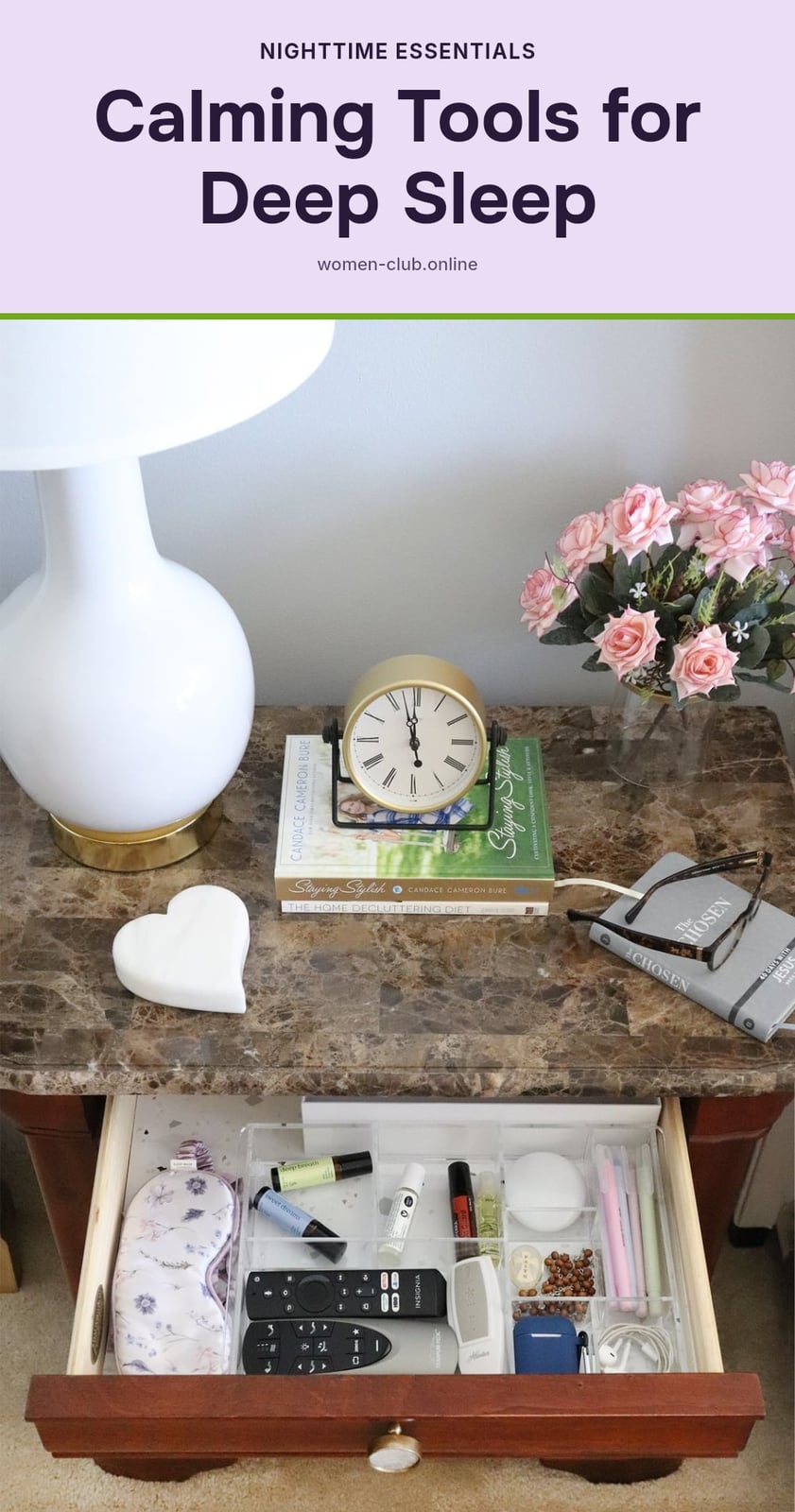
Creating the right environment makes a real difference. Here are the tools I keep by my bed:
- Eye mask: Blocks all light, which helps your body produce melatonin naturally.
- Earplugs or white noise machine: Muffles sudden noises that can jolt you awake.
- Blackout curtains: Keep out streetlights and early morning sun.
- Aromatherapy diffuser with lavender: The scent signals relaxation to your brain.
My tip: Start with just a good eye mask and earplugs. You can add the rest as you go.
Your Step-by-Step Guide to a Calming Bedtime Routine

Follow these steps every night for at least two weeks. Consistency is what makes it work.
- Set a fixed bedtime and wake time: Choose a bedtime that allows 7 to 9 hours of sleep. Stick to it even on weekends. Your internal clock will adjust.
- Start winding down 60-90 minutes before bed: Put away work, turn off screens, and dim the lights. Take a warm bath, read a physical book, or listen to calming music.
- Make your bedroom cool, dark, and quiet: Set the thermostat between 60-67 degrees Fahrenheit (15-19 degrees Celsius). Use blackout curtains or an eye mask. Turn off any electronics that glow.
- Practice mindfulness or gentle stretching: Spend 5-10 minutes doing deep breathing, a body scan meditation, or light yoga. This releases physical tension and quiets racing thoughts.
- Avoid screens and stimulating activities: No phones, tablets, laptops, or TV for the last hour. Also avoid checking email, social media, or having heated conversations.
My tip: If you can’t fall asleep after 20 minutes, get up and do something relaxing in dim light until you feel drowsy. Lying in bed awake trains your brain to associate the bed with wakefulness.
Common Sleep Mistakes and How to Avoid Them
Many people think a glass of wine helps them sleep, but alcohol actually disrupts sleep later in the night. You may fall asleep faster, but your sleep becomes lighter and more fragmented. Tip: skip alcohol in the evening if you want deep, restorative rest.
Screen time is another common trap. Blue light from phones and tablets suppresses melatonin, the hormone that tells your body it’s time to sleep. Put devices away at least an hour before bed.
An inconsistent sleep schedule confuses your circadian rhythm. Stick to the same bedtime and wake time, even on weekends. Intense exercise too close to bed can also keep you awake, so schedule workouts earlier in the day. And if you can’t fall asleep after 20 minutes, don’t force it. Get up, read a book, or do something relaxing until you feel tired again.
Maintain Your Sleep Quality for Long-Term Wellness

Good sleep isn’t just about what you do at night. Your daytime habits matter just as much.
Expose yourself to natural light early in the morning. This helps regulate your circadian rhythm and makes it easier to fall asleep at night. Regular physical activity during the day improves sleep quality, but avoid intense workouts within two hours of bedtime.
Manage stress with daily practices like meditation or journaling. Even five minutes can lower cortisol levels. Be mindful of caffeine and alcohol intake, especially in the afternoon and evening. Caffeine can stay in your system for hours. Eat light dinners a few hours before sleep so your body isn’t working hard to digest while you rest.
When to Talk to a Healthcare Professional About Your Sleep
If you’ve been consistent with your sleep routine for several weeks and still struggle to fall or stay asleep, it’s time to talk to a healthcare professional. Persistent sleep difficulties may signal an underlying condition like sleep apnea or restless leg syndrome.
Always consult a doctor before starting any new supplements or over-the-counter sleep aids. They can interact with medications or have side effects. If your sleep problems are affecting your mood, energy, or daily functioning, don’t ignore it. A professional can help you find the right approach.
How Long Until You See Sleep Improvements?
Timeline: You won’t see results overnight. Most people notice significant improvements in sleep quality after several weeks of consistent routine application. Stick with it.
Cost: The tools that help are mostly one-time purchases. An eye mask and earplugs are affordable. A white noise machine or quality bedding costs a bit more but lasts for years.
Frequently Asked Questions
How long does it take to establish a new sleep routine?
Most people need to follow a consistent routine for several weeks before they notice significant improvements in sleep quality. Your body’s internal clock adjusts gradually, so stick with it even if you don’t see results right away.
Can napping during the day affect my night sleep?
Yes, long naps or late afternoon naps can make it harder to fall asleep at night. If you need a nap, keep it short, around 20 to 30 minutes, and avoid napping too close to your bedtime.
Is it okay to use my phone in bed if I’m just reading?
No, even reading on your phone exposes you to blue light, which can suppress melatonin production and make it harder to fall asleep. It’s best to avoid all electronic devices for at least an hour before bed.
What if I can’t fall asleep even with a routine?
If you’ve been consistent for several weeks and still struggle, it may be time to talk to a healthcare professional. Persistent sleep difficulties can signal an underlying condition like sleep apnea or restless leg syndrome.
How can I stop my mind from racing at night?
Try a calming activity like reading, gentle stretching, or mindfulness meditation before bed. If your mind is still racing, get out of bed and do something relaxing until you feel tired again, lying awake can make anxiety worse.
Final Thoughts
Start with one small change tonight: set a fixed bedtime and put your phone away an hour before. Most people notice significant improvements after several weeks of consistent routine application, so be patient with yourself. Good sleep is built day by day, and your body will thank you for the effort.
This article is for general informational purposes only and does not constitute medical advice. Sleep difficulties can have many causes, and if you experience persistent problems, please consult a healthcare professional for personalized guidance.